Book Signings and Other Things I Know Nothing About

Today I will bring a pen to my first ever book signing. What else should I bring with me? Books. Of course! Although, the late arrival of books (possibly tomorrow) from Amazon means I only need to bring the six I currently have. A pen and six books. I travel light.

Faith Expressions, the Christian gift store downtown in my hometown, has graciously carried my books and now graciously invited four authors, me included, to share an afternoon of book signing. Have you been to a book signing? There is usual a colorful tablecloth, candy, business cards, free promotional stuff, and a Square for an author to easily sell books to people with debit/credit cards. I own exactly one tablecloth. Perfect for the Christmas season, it is bright red and embroidered with poinsettias.

In addition to my pen and books, I’ll bring a placemat and a stand for one of the six books, because that seems like something a book signing would have. And chocolate. Chocolate makes up for all those other things!

Sometimes, the basics are enough.

It is enough to wake up and meet the new day. It is enough to look around your home and realize you already have everything you need. It is enough that God has given you the people in your life. And chocolate. That is enough.

Book Review: Fourteen Talks by Age Fourteen

One difference between parenting littles and teens is knowing what to say. Littles erupt with questions and deeply desire for their beloved grown-ups to answer them. Teens seem to deeply desire you are there when they need you, but mostly hope you stay quiet. During the teenage years, the eruption of questioning reverses from the young to the old, but the old quickly realize, unlike the young, that questions must be rationed. I find a reasonable average of questions to be 3-5, depending on when they last ate.

I am convinced every parent of teenagers only pretends to know what she or he is doing. When I hear a recommendation of a book for teenage parents, I want to hope to find just the right wisdom in that book, but most parenting books seem to me to be aspirational. Raising teenagers is freaking hard and no book has easy answers. Kids are humans and therefore too complicated to be reduced to a manual.

But this book! I cannot remember how I happened upon it, but it is the very best parenting book I’ve read. I borrowed the audio, read by the author, from our local library. In Fourteen Talks by Age Fourteen, Michelle Icard guides readers through talks that overwhelm parents like me. Tough stuff: friendship, sexuality, pornography, hygiene, money, how to dress, privilege, and behavior. She is funny and yet grounded, honest that the role of parents is never to protect kids from the world but to equip them to move around the world safely.

Her acronym is easy to implement into conversations with my teenagers and has been a helpful guide. Icard calls her framework for conversation the B.R.I.E.F. Model:

  • Begin peacefully.
  • Relate to your child.
  • Interview to collect data.
  • Echo what you hear.
  • Give Feedback.

If you have kids or grandkids who are teenagers or soon to be teenagers, this book will challenge you. What grown-ups like to do (when we are not at our best) is to apply our own teenage experience to the lives of teenagers today. This is an excellent method to raise defensiveness in teens and immediately stop a conversation.

A better way, provided by Icard, is to be intentional in deciding when to have a tough conversation. And to respect teenagers enough to give them a heads up. “Begin peacefully” is great advice for beginning any tough conversation, not only with a child, but with a spouse or co-worker. Be careful when you enter into a thorny conversation. Don’t do it when you are tired, hungry, or ticked off at someone, including your child.

Even though teenagers are quickly gaining independence, there is so much they are trying to figure out from moment to moment. In many ways, it has never been more challenging to be a teenager. They have access to every kind of yuck on their devices, and so they need a loving and forgiving guide to be there and begin those conversations peacefully, not out of anger or fear.

When I drop off my daughter at school (the only person I drop off anymore) I remind her “Jesus Loves You,” and she does the same for me. I cannot walk with her through the hallways or around the playground, but I can do my best to prepare her for situations she might encounter. And more importantly, we can remind one another that Jesus’ love does not expire, and it is not revocable. Jesus’ love cannot be undone. Teenagers, like all human beings, easily forget this promise. We make mistakes and then make the mistake of assuming our mistake undoes the promise of Jesus’ love.

Although I can attest to how hard it is to raise teenagers, I can also tell you it is much easier when I get to remind them (probably more than they prefer) that Jesus loves them, all the time.

The Peachy Life

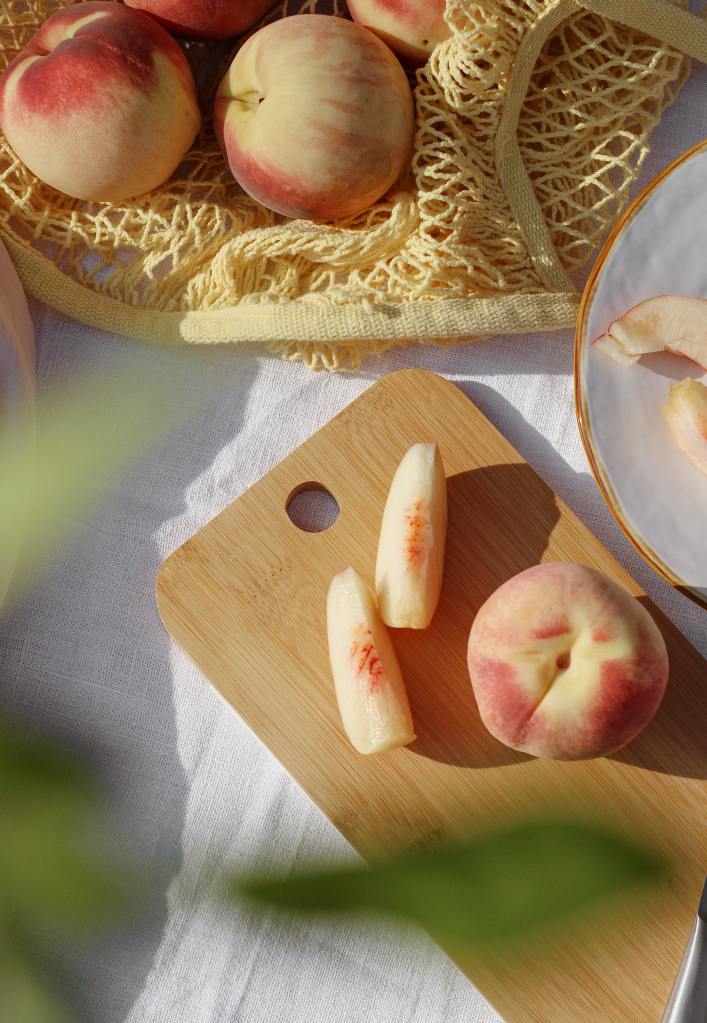
(Photo credit: Nati Melnychuk on Unsplash)

Only a slice remains of the sweet season when you enter the produce section of the grocery store and meet a pile of peaches! Buried in yogurt and granola or piled up beside my morning eggs, I do love myself a peach. It takes a minute and no more to add such abundance to my life, long enough to slice and then handwash the knife.

There are times when even the quick work of preparing a peach seems like too much. To slice up a peach would require too much time, so I don’t. And what a bummer, with peach season in North Dakota so short it’s the pits. (Your eyeroll is justified.)

If I tell myself there is not enough time to slice a peach, I am far too busy. If I tell myself there is not enough time to connect with a friend, take a short walk, read a few pages of a book, breathe a few deep breaths, look into the eyes of the family member speaking to me, or visit with my husband, I have let my life become too rushed.

On this side of 40, I might grow more aware of the needless things I do. Things, I hate to admit, no one would notice if I did not do them. When these needless things do not get done because I am “busy” slicing a peach, consuming the flavor of abundant life, all is peachy with my soul.

Laundry is a Sacred Act

(Photo by engin akyurt on Unsplash)

Welcome to the season of routine! <insert cheering from roaring crowds of mothers> I took a peek at my daughter’s new planner (because she is my mini-me) to discover both birthdays and days of room cleaning all assigned to their proper days. Ah, the power of rhythm and routine.

With age also comes the power of forgiveness when rhythm and routine are disrupted or adapted. Truly, few things are sacred in our lives. If you pause to ponder what is truly sacred in your life, what might that be? Family connections? Health and well-being? Friendship? Sharing? And Jesus, of course. Most questions a pastor asks you can be answered, “Jesus.”

For me, doing the laundry is sacred. The washing and folding and praying for the people who will wear the things you wash. (Disclaimer: I stopped doing my kids’ laundry when they were five because laundry pods are awesome. But I do on rare occasions move their laundry from here to there or wash the random items that are abandoned in the living room.) Tucking away the towels, hanging up the coats, the infrequent scrubbing of baseball caps and shoes. This is sacred work I try not to rush. I hope my prayers become lodged in the fabric, like chocolate stain that will remain there forever. I hope these woven in prayers will speak up, somehow, when my child of any age feels inadequate, overwhelmed, frustrated, pressured, or lost.

I’ve noticed it’s not so tough to encourage a younger kid in her or his faith. It’s the older variety that poses the challenge. How do you pray for the kid, who for the sake of maturity, needs to grow some distance between you? It might be the bigger the clothes you end up moving or washing, the more prayers that are needed to weave into all that fabric! “Big kids, big problems,” you have heard. We can also say, “Big kids, big prayers.” Or, “Big kids, big community,” by which I mean kids need extra love from the people around them.

It’s so easy to step back when kids need healthy distance from parents and guardians, but perhaps it just means we step closer to them in prayer. It is letting go of the influence we once had in their younger years, and trusting the woven-in prayers, and the accompaniment of our Lord to guide and guard them always.

Could daily prayer for kids, grandkids and neighbor kids be part of your new academic year rhythm and routine, if it isn’t already? If you are retired and you miss the feel of the new year, your new homework could simply be the sacred practice of prayer. Pray for families getting ready in the mornings, that their words are kind and their snacks healthy. Pray for kids who eat lunch alone, or who feel alone even though they are sitting with others. Pray for playground peace and collaborative classmates. Pray for supportive friendships and self-kindness.

Just as a parent of young kiddos will tell you there is always laundry to do (thank you, chocolate stains), there are always prayers to pray.

Time Capsule Trumpet

When a friend mentioned her daughter asked to play trumpet in 6th grade band, I was happy to offer my old Selmer. This is the trumpet I’ve packed up, left untouched and moved to four different homes in the last couple of decades. It’s the one I played most days of the week during the school year for roughly eight years.

Opening up the case before taking it to the professionals for a tune-up was like cracking open a time capsule. There was our school song, laminated and crumpled after years of basketball games. (“Sherwood High School, hats off to thee!”) There was the crepe paper, red poppy and American Legion label twisted around the brass for Memorial Day “Taps”. There was my 7th grade handwriting with my name, school and address in the event my trumpet and I were separated at a competition. (Was my mailing address actually Box 1? It’s true!)

Looking back, it seems my trumpet and I were rarely separated during that long stretch of time. Eight years is an extremely long stretch of time for a kid! My recollection of high school band (grades 7 – 12 seated across the gym stage, curtain closed) involves heaping sympathy for the music teachers who, let’s be honest, had little to work with. Yet every day he or she showed up, waving a small not-so-magic wand and hoping for a miracle. I also played for two years in college under the direction of the incredible Gordy Lindquist, a northcentral N.D. legend, made legendary by his ability to tickle the ivories while they were covered up by a sheet, or playing behind his back and in a variety of other contorted and hilarious moves including upside down. You couldn’t help but love being in the room with him, your classmates and your instrument which you played in the ordinary, boring way and not upside down.

Then I tucked the Selmer trumpet into its velvet outline, latched the black case and moved it to four homes until finally, finally a girl will play it. With the “Minnesota Rouser” and “Taps” tucked into the horn’s history, now it will learn new tunes. In the beginning, each note will come painstakingly slow until suddenly, a song will emerge, a new life lived.

Write a Letter to Your Future Self

(Photo by Kelly Sikkema on Unsplash)

“Why is it you feel content?” asked my spiritual director some years ago. He noticed in that moment the weather in my spiritual life was 72 and sunny. This question got me thinking. Why did I feel content? I reflected with him out loud. I was reading, journaling, and working out. Conversations with my family felt good. And I was proud of the work I was doing in ministry.

“You could write these things down,” he suggested, knowing writing things down is one of my favorite hobbies. “Then, when you feel less content, you can look back and remember what it looks like for you to feel content.

His idea jogged my memory. Several years back on the verge of a sabbatical, I wrote a letter to my future self. Although I was filled with joyful anticipation at the weeks of rest and reflection that lay ahead of me, I also felt sad when I considered the pastoral ministry I would miss. I love the work God has set before me, and I didn’t want to forget it when I grew so cozy in the rest and reflection of sabbatical. In my letter, I reminded future Lisa how much I love serving as a pastor.

In those rare moments of clarity, it is worth grabbing a pen, or typing a note in your phone. How often do moments of clarity descend upon us? How often do the five people in my family ride together in a vehicle without fighting? How often does our puppy not destroy a perennial when roaming the backyard? How often isn’t it windy in southwest North Dakota? Right. Rarely.

What might that letter say, if you were to capture a moment of contentedness and pass it along to your future self? How might you assure your future self that you are, actually, enough just as you are? You do not need more money or fancier things. The way you look, feel and move around the world is just fine, beloved one.

Today may not be that particular day of clarity, when the spiritual weather in your life is 72 and sunny. No worries. That day of contentedness is somewhere around the corner. Keep a pen and paper handy.

It Was There the Whole Time

our backyard

There is a peaceful place you yearn to be when life feels hectic. When the pace picks up, where do you long to go, knowing that in your particular, peaceful place, the pace slows?

Humans require a peaceful place with a slower pace every now and then, as noted in the commandment to remember the Sabbath day and keep it holy. The command is not for God but for us. Good comes when we hit the pause button for an hour, a day, or longer, even when it means stranding a bottomless to-do list.

The peaceful place I often imagine is near water: a stream, river, lake. A watery site where birds hover and come to visit. Is this why my favorite color is blue, I just now realize? I know I’m not alone in finding peace by water. It’s where Jesus tended to hang out when he hit the pause button. It is why lake cabins are forever in demand. I love to watch the water in motion, quietly offering life to mysterious creatures below and to happy onlookers like me. Does it have something to do with our very first swim in the amniotic waters? Who knows.

I do know there is little natural water to be found where I live. We are all shocked when the grass is still green in July! Lakes are few and far between in southwest North Dakota. There is a lovely river not far from me, but not so easy to visit.

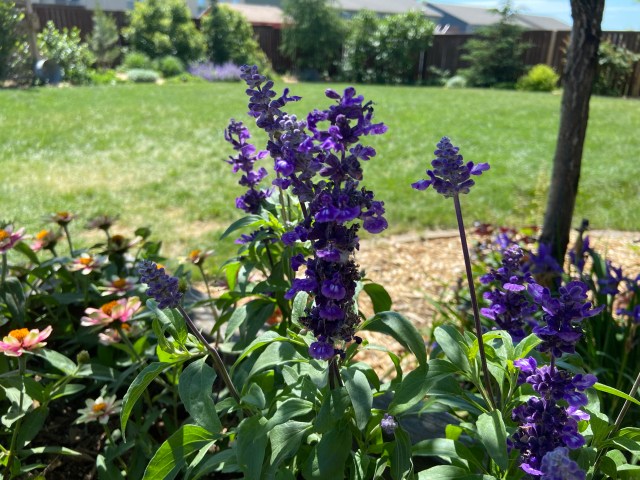
And all this time I long to be spectating waters, it occurs to me, peace may not be so far away after all. The disruption of peace is not limited to the particular places where the pace slows. In the wonky rhythm of summer, there is peace in a deep and renewing breath, in the shifting colors of a yard populated by perennials (thanks, Marcus), and in the broad view of badlands or a field of seeds quietly growing food in the darkness of the soil.

Peace is not only there, it is also here.

Dear Lord, keep me from overlooking peace because I expect it to look like something else. Amen.

Has Neighborliness Lost its Value?

(Photo by Nick Hawkes on Unsplash)

A couple of years ago, Marcus and I planned a neighborhood get-together. We know most but not all of our nearest neighbors and we both believe neighborhoods are safer when we know one another. And familiarity with neighbors makes it easier to locate a cup of flour at the last minute for cookies.

Because delivering invitations is a thousand times easier with a cute 8-year old, Karis and I left invitations in a dozen of our nearest neighbors’ doors. They could RSVP to my cell to host part of a progressive party or simply attend. Two neighbors responded (who also happen to be members of St. John) that they were bummed they would miss it. A week or so later, another neighbor asked if anyone responded to me. When I told him no, he knowingly said, “I didn’t think anyone would go to something like that.” (At least he was honest!)

I am so curious what it might mean when neighborliness loses its value. When we are less inclined to gather, what are we missing? When we do not need our neighbors in the same way as the first generations in the Midwest, what is lost?

It has always mattered to me for our kids know at least some of our neighbors so they have trusted adults if something happens when Marcus and I are not home. In my head, we do actually need our neighbors. And if I need those neighbors, I also care for their well-being. I care that my kids are safe and I care that my neighbors are safe.

“And who is my neighbor?” the first century lawyer asked Jesus to clarify. Anyone who needs help, Jesus began to explain, making the answer more broad until it became specific. Your neighbor, Jesus zeroed in, is anyone who needs help whom you would rather not help.

Humanity has never been great at following Jesus’ command to love our neighbors, especially the ones we would rather not help. It is not new that neighborliness demands more of us than most of us can give. However, what does it mean that bearing arms seems to be easier than neighborliness in particular corners of our nation? Have we become so suspicious and even fearful of our neighbor that someone may be more inclined to purchase an assault weapon than attend a friendly neighborhood gathering with snacks? Are we failing at neighborliness?

Let me be clear, I am not advocating for gun control. I am part of a family who hunts animals. We can have conversations around gun laws without extreme solutions. I am more interested in conversations around neighborliness, which I suspect are just as hard but yet more productive.

As we move through this devastating time of mass shootings in my own country, I promise to pursue discussions around neighborliness. I promise to practice inviting my neighbors to gather, even if it may seem a ridiculous idea to some of them. If Jesus was ridiculous with his mercy, I can lean in that direction, too.

Be Wary of Being Wary of Strangers

(Photo by Marco Bianchetti on Unsplash)

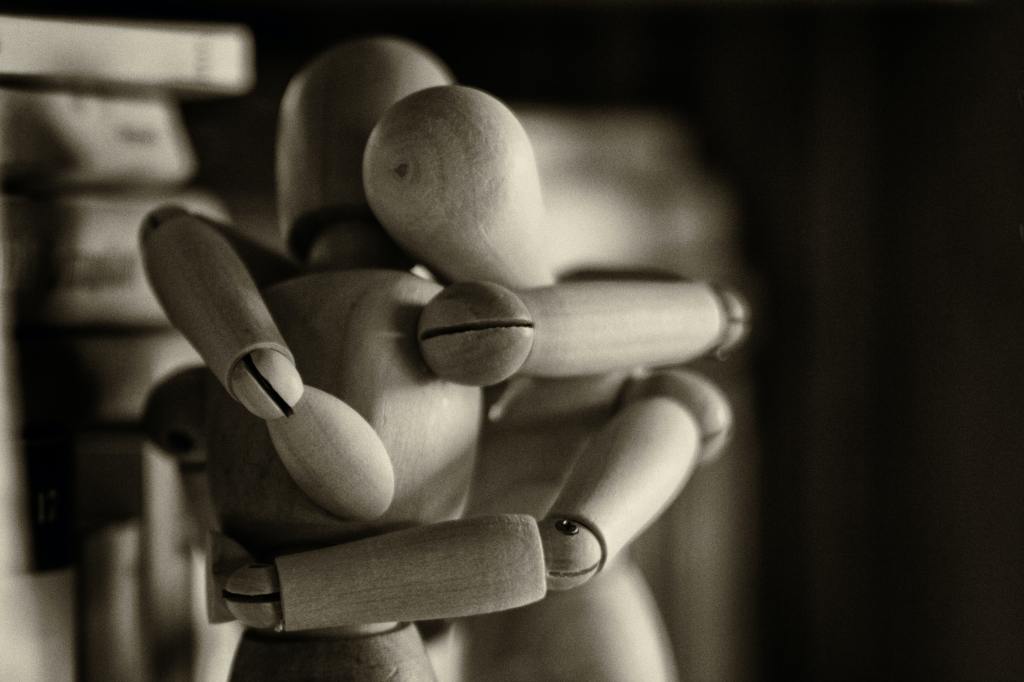
In the past few weeks, two strangers have given me hugs. (Notice your reaction.) Strangers and hugs do not always belong together, I realize. And at times, they do. Individuals have a responsibility to be aware of one another without becoming too wary of one another.

STRANGER #1

Church buildings are regularly visited by people looking for financial help. People who have lost jobs, lost a battle with addiction, lost hope might swing by a church to ask for help. In Western N.D., stories abound of the striking increase in these visits during the Bakken energy boom. Young men came in droves treasure hunting for hope. Nowadays, these visits are irregular.

A few weeks ago, one young man stopped by St. John looking for a help. After listening to his story in hopes of assuring him he is seen and cared for, a fellow human being, we provided a bus ticket for the following morning and a motel room for the night. He was overcome with gratitude, which seemed to me to be genuine. When I walked him to the door, with tears in his eyes this stranger carefully reached out his arms to give me a hug.
Hugs with strangers have a long history in the Christian tradition. The Old Testament is structured around one particular commandment that did not explicitly make it into the top ten. The command that drives the story of the Hebrew people is this: Welcome Strangers. The Christian Church only exists because of first century households who welcomed a stranger named Paul, whose sketchy story involved miracles and name changes.

STRANGER #2

Yesterday I had the honor of presiding at a funeral and remembering a beloved child of God who is held forever in Jesus’ arms. It was a sad day for the community gathered around this family I have known and loved a long time. I made it through the service but not out of the building before my face became a wet mess.

I was nearly to the doors, nearly to safety of my car when a woman I do not know saw me and reached out her arms. “Thank you,” I muttered, smearing her shirt with my tears.

The letter to the Hebrews features a famous verse instructing us to show hospitality to strangers. They might be angels in disguise, we learn, which sounds more like a line from a Disney movie than an epistle. Strangers may not look like angels, but they certainly look like human beings. And sometimes, that is reason enough for a hug.

Stepping Back to See the Map

(Photo by Nick Seagrave on Unsplash)

Listening to a podcast last week, I heard an inspiring story of a mom whose daughter is in college. Each morning, she texts her daughter a simple greeting to let her daughter know she is thinking of her. It is not a manipulative way of checking up on her daughter or a sneaky tactic to start a conversation. It is: “I am here, you are there, and I want you to know I care.”

This story has me wondering how I let my kids know I care without letting my day or my life be shaped by how (or whether) they respond. The most complicated wisdom of parenting is knowing where I start and stop, and where each kid starts and stops. For example, if each of us is a state on a map, there are recognizable boundaries that keep us from spilling over into each others’ lives. As long as I don’t get too stressed or tired, I can mostly see the boundaries and avoid these situations:

“I noticed he/she did not do the dishes. It’s her/his chore, but it would be much easier if I just do it myself and then I wouldn’t need to look at those dang dishes all day!”

“I need to make time for myself to rest, but everyone needs something from me and so I respond to their needs instead of my own.”

There are a million examples of how difficult it is to hang in there with our kids while also challenging them to grow. Parenting is always both at once. It is showing up and stepping back; watering the garden without overwatering. Parenting is so many hugs and also some tough words.

What would make life easier is if each kid required the same proportion of hugs and words, the same volume of water, the same amount of showing up and stepping back. It is God’s greatest joke on guardians and parents, that we get to reinvent much of our parenting style for each individual human we raise! Good one, God of the universe who raised an only child. Some of us are doomed to be lifetime reinventors.

If you look around your life today, can you recognize a spot on the map where you would like to clarify the boundaries? You might quickly see you need to let go of expecting the dishes to be washed every day, or you might disappoint someone who needs something but can actually wait until you are more rested. If you look closely at the map, but you will notice you are not the Rugby, that is, arguably the center of North America. God’s only child is the center, so you can just be you.