You’ve Probably Watched the Same Movie Twice

Even though there many movies, chances are you have watched the same one twice. You could fill your day with new movies for the rest of your life and never catch up! And yet there are those movies you will sit through over and over again.

  • Which movies will you watch more than once? Why those movies?
  • And why is it more common to rewatch a movie than it is to reread a book?

It takes less time to rewatch a movie than to read a book, unless the movie is “The English Patient.” Most books require more time than a movie. But. Let’s say you decide it is worth the time to reread one book.

  • What book would you reread?
  • Why that book?

What might be worth reading more than once?

There may be Scripture verses or passages or stories that are significant to you. You might return to those words for a particular reason. I repeat Psalm 63 to slow down my mind when it gets too overactive, like a time-out for a toddler.

While on internship, my supervisor introduced me to Bowen theory, a way of understanding our relationships. He lent me his case of eight cassette tapes, which I listened to in my car. Remember those plastic cases that held the cassette tapes in place? Retro. Remember when you slid cassette tapes into your tape deck? Remember when your cassette tape got stuck in your tape deck and you had to jimmy it out with a butter knife?

Anyway after I listened through the lectures, I ordered my own case of cassettes and listened to the lectures once a year. Then I had them converted into CD’s and now CD players live in the land of tape decks. But for a dozen years, I relistened to the lecture to keep learning the theory that has proven most helpful for me in ministry and daily life.

This morning, I looked through the books in my study at church and wondered which ones would I reread and why? The initial stack is a few books tall. There is a book on Bowen theory, an enneagram resource, a theology book on Luther’s writing, and a preaching resource. This exercise will take a second look to curate a stack of yearly reading. With podcasts and audiobooks, it would not be difficult to set aside time for rereading. No cassette tape hazards.

What we read/watch/listen to shapes our thinking and shapes our doing. You reading this blog puts ideas in your head – yikes! How might your reading shape your life in a way that nourishes your faith? In a way that nurtures your true self? In a way that encourages you to be gentle on yourself and let go of what needs letting go?

If you are willing, look back and find one book or podcast, poem or lecture got you thinking. Choose one passage of Scripture and reread it each morning for a month. Enjoy the words enjoyed once before. They may tell you something new the second (or sixth) time around.

Photo by Edgar on Unsplash

What Did You Learn This Week?

The kids may have been the ones returning to school the last week or two, but you, beloved child of God, must have learned something, too!

Turn around to see the past week. What did you learn?

  • What did you learn you could do that you hadn’t thought you could do?
  • What did you learn that you miss?
  • What did you learn about someone you love?
  • How did you spend your time? What does that teach you about your values?
  • How did you spend your money? What does that teach you about your values?
  • What did you learn about yourself that actually you had learned before, maybe several times?
  • What did you learn that made you change your mind about something (or someone) you thought you knew?

Being human is such an experience in lifelong learning! Here are a few things I learned in the past week:

  1. The job of a teacher continues to be one of the most remarkable jobs in the world. So often in America we make the mistake of valuing jobs based on pay. But the indelible mark a teacher can make on a student is, I hope, a great reward. Thank you to the teachers who have made my kids more confident and wise.
  2. In England, cilantro is known as coriander. Who knew! Thank you, Cody Rigsby. Perhaps someday I may need this information.
  3. Tweens REALLY prefer not to listen to their mothers. “Are you sure you want to wear a sweater when the high is 85 degrees?” Yes she was sure. And then she was hot.
  4. Letting go happens in fits and starts. My boys are now more like men, my daughter is settling into middle school. It is easy to step too far back, or easy to hover too closely. Yet like all relationships, what matters is a particular kind of presence. A presence that is not demanding. A presence that exhibits how you both care deeply and respect the other person’s boundaries.

Learning can be exhausting, which may be why kids don’t like to talk through their day the moment they get in the car, even though I want to hear all about it! But thank goodness for learning. How else would I know that cilantro goes by more than one name! What a world.

Photo by Eric Brehm on Unsplash

A Key Word to Parenting Teenagers (when they wake up)

When parenting littles, there is constant urging to go to sleep. At bedtime and at naptime, we beg the tiny creatures to please, please, please close little their eyes. In the morning when they get up at 5:30 am because the sun is awake, we plead with them to go back to bed as strategically as one might negotiate with a terrorist.

The opposite is true when parenting teenagers. There is constant urging to get out of bed! When they sleep through breakfast and yet require a late afternoon nap, we beg them to open their eyes and stay out of bed.

Parents are required to respond differently to their kids’ sleep patterns as littles morph into teenagers. Respond is a key word in the work of parenting, which you already know because I bolded the word, twice! Responding means something different than reacting. To respond is to have thought through how you want to proceed.

Here are teenage examples:

  • She sleeps until 2:00 pm even though you asked her to start doing her chores by 10:00 am. Do you yell, imply that she is lazy, and assign her more chores? Or, do you wait until you are both calm and talk through a better sleep schedule, explaining how rest makes us better humans? (true story)
  • He rushes through chores to get to gaming and forgets for most of the day to take his clothes out of the dryer so that other people in the house might also do their laundry. Do you take away the controller and imply gaming is a waste of time and why can’t you do your chore from start to finish? Or, do you dump the clean and dried laundry on his head while he’s gaming, gently reminding him he’s forgotten to finish his chore. (true story)

The humbling work of parenting all ages, and in this case teenagers, assures you that you are never in control. It is the one guarantee. You cannot will a teenager to be who you want them to be. Your teen will never be exactly who you thought he or she might be. In the wild and privileged work of shaping people’s lives, you can only be in control of your own response.

When you are tired or hungry, your response to your kiddo will be abysmal. Don’t respond quickly in those times. Take a breath and explain to your beloved teenager that you need a moment to consider how you want to respond. This might be one of the best life lessons you pass along. Most of our responses to another human being (unless 911 is the obvious response) need not be so quick.

I wonder if a mistake we make as parents is to assume we should know how to respond. I’ve been a parent for 17 years. Shouldn’t I know by now what to do? Um, no. I don’t. That’s why I often need time to consider my response. This is one way to love the people entrusted to you: don’t hurry. You waited nine long months to meet these creatures who at first refused to sleep and later refused to get their butts out of bed. Each day they remind you how little control you actually have, and some days you get to dump clean laundry on them.

Photo by Rehina Sultanova on Unsplash

Please Don’t Make Me Polka

Summer is a delight. Where I live, one delightful summer day comes at the cost of a month of cold and terrible winter days. One month of winter opens the door to the taste of blueberries and the smell of fresh-cut grass. All the snow-shoveling makes a path toward cookie dough ice cream on a steamy day and the sounds of the crowd as you spectate your favorite summer sport. Summer is a delight.

Although, I find summer to be something of a bad dancing partner. It lacks rhythm. It is a fun time, for sure. But there is no “settling into summer.” The days are unpredictable when we spend so much time outside. Summer activities pepper the days but also change places on the calendar when weather does not permit. You planned for an outdoor gathering with friends? Or a day on the lake? Or a trip to the zoo? Or the last day of seeding a crop? Now you must listen to fall back into the rhythm because your dancing partner has none.

It took nearly 10 years for me to realize why dancing with my husband is slightly frustrating. He loves loves loves to dance so much more than I do. He especially loves to polka, which is popular in southwest N.D. I hold on tight as he bounces up and down. If you watch him on the dance floor you just hope he doesn’t swing an elbow into someone’s eye.

I could never seem to find the same beat to the music. He would move and I would be constantly catching up. But then I realized he was just moving, but not necessarily to the rhythm of the music! I won’t say he has no rhythm…so let’s move on!

The daily rhythm of summer can be slightly frustrating. We shape our days by the weather in this season more than any other.

  • How do you let go of what you thought would happen today, and how do you fall into a new rhythm?
  • Or even bigger, how do you let go of what you thought might happen in this season of your life and fall into a new rhythm?

Like dancing with my husband, life may not move to your rhythm. You fall behind until the rhythm catches you. Can you notice in your life where you might be waiting for the rhythm to catch you? Where in your life do you feel some discomfort, or even frustration? Can the Spirit be your dancing partner for now?

When you feel behind the rhythm, are you trying to take the lead that isn’t yours to take? Perhaps the Spirit has you in an elbow-swinging polka and all you can do is hold on tight! And the seasons come and go, temperatures rise and fall, snow-shoveling makes away for summer sports, and the rhythm catches you. And that is when you realize you weren’t the one holding on tight. You were the one being held.

Photo by Ardian Lumi on Unsplash

Living Is Learning

Today marks the beginning of a new year of living and learning. Today I am grateful to say hello to 45! Even though last night my dad switched the numbers on my birthday cake and we were all confused, today is indeed the dawn of a new year which is not Year 54.

Isn’t it amazing that even after all the years you have lived in your own body, there is still more to learn about you? I find that to be wild. If anyone should know you, it is you. And yet, you are constantly living and learning what you need, how to articulate those unique needs, and how to move along when life falls apart, even for a few minutes.

Can you look back and notice what you have learned as you have lived these past few months or past year?

  • What have you learned about yourself? Does that surprise you?
  • Can you look further back in your family to see when you learned that? From whom?
  • What needs have you been able to articulate in order to live more openly and honestly?
  • What might you let go to free up your hands to let Jesus hold them?

Living has helped me learn how much I need one hour to myself nearly every day. This is a luxury not afforded to everyone. In seasons of caregiving for kids or adults, time to yourself is truly a luxury. And yet, for me time to myself is daily bread. I do need to be given this day and most days the daily bread of time wasted with Jesus. Time to write or read or soak up the stillness in prayer.

It surprises me that I didn’t realize this years ago, and that it has taken years to figure out how to meet this need. But once I could articulate that an hour to myself is necessary for my own well-being, everyone around me understood. The staff with whom I work know that from 8-9:00 am I am alone in my office. At home, when I am in a particular space with my journal or a book, people tend to let me be.

I come from a family of introverts, which means growing up I learned the importance of time alone. We do not need to be visiting or playing games to be together as family. We can simply share space, which I can see in my own kids now.

Living is learning. And paying attention, we also help the next generation in our families learn to live.

Photo by Rakesh Sitnoor on Unsplash

What Will I Learn Today?

What will I learn today from a book I read, or an article I skim? What will I learn from the ancient Scriptures or from more recent words reflecting on the ancient ones?

What will I learn from my friends, my kids, my colleagues? What will I learn from a stranger I meet?

What will I learn from sitting in quiet or moving through a boisterous sanctuary tonight?

What will I learn in my prayers for help, for forgiveness, for a road map? What will I learn in my prayers for others?

Have you ever noticed, some of what you learn from day to day is actually re-learning? Sometimes, you already knew what you learn again: The book does not teach you a new thing, but reminds you of some old wisdom you found helpful long ago. The Scriptures tell a familiar story of God’s mercy. Your friends remind you what you once knew and often forget: you belong and are loved. Your prayers place you where you have spent so much of your life: in the loving arms of Christ.

What will you learn today? The merciful promise of a God who never tires of teaching you.

Photo by Element5 Digital on Unsplash

How Lent is Like Bowling Bumpers

The inventor of the bumpers knew that bowling can be a spirit-crushing “leisure” activity. Filling the gutters with friendly bumpers makes the sport more fun for new bowlers while building confidence instead of crushing their spirits. The bumpers serve as an impenetrable boundary.

Because of the Lenten devotional “Bitter and Sweet: A Journey into Easter” by Tsh Oxenreider, boundaries have been on my mind. Lent calls us to pay attention to our boundaries and make more room for a life filled with Christ.

  • What boundaries do you set around your own time to rest? Rest is not the same as distractedly scrolling or taking an intense vacation. Rest means to accomplish nothing.
  • What boundaries do you set around communication with co-workers? Can people contact you whenever a question or idea floats through their brain, or only at certain times of the day when you, too, are in work mode?
  • What boundaries do you set around your kids to keep yourself from getting in the way of hard things they can do without your help? Do you let their responsibilities be their responsibilities, or do you keep overstepping because it’s just easier to do it yourself?
  • What boundaries do you set around your daily schedule to prioritize what you know you need to do in a day? Do you allow other people’s plans for your time to take over?

Boundaries are complicated. There is emotion involved.

Earlier this week, I let a meeting go too long and was one of the last moms to pick up my daughter at school. It was cold outside. She was dressed for winter and fine, but I felt horrible. I had ignored a boundary in my schedule and oh the mom guilt!

Lent can be an intentional time to slow down and notice boundaries. Most of the time, the people in your life want you to be well and that works best when you honestly communicate the boundaries you need. Use these remaining weeks of Lent to practice.

What bumpers can you place in your life to keep you focused on Jesus? How can a renewed sense of boundaries in a particular area of your life build your confidence, like a new bowler relying on the bumpers?

Unlike the bowling alley’s bumpers, your bumpers are not impenetrable. You will make mistakes as you practice setting boundaries. Fortunately for me, 10-year olds are eventually forgiving! And the pins are reset and we begin again.

Photo by Karla Rivera on Unsplash

The Great Eight

As we close the book on 2022, here are my top eight favorite reads.

FICTION

  • “The Lincoln Highway”, by Amor Towles. When a friend recommended this book, the sheer volume of this volume left me feeling afraid! However, a few chapters in and I could hardly put it down. It is written from the perspective of several characters. With its light sprinkling of historical nonfiction, this was a fun read.

NONFICTION – HISTORY

NONFICTION – HEALTH/MEDICINE

NONFICTION – MEMOIR/ESSAYS

NONFICTION – PARENTING/SELF-HELP

NONFICTION – FAMILY SYSTEMS/SELF-HELP

In order to boil the list down to these eight, I had to leave out two series. Karis’ 4th grade teacher introduced her to Kate DiCamillo and Patchett dedicated an entire essay to DiCamillo in “These Precious Days: Essays.” Louisiana, Beverly and Ramie became endeared characters in our lives, along with Inspector Gamache. Gamache, the impressive creation of Louise Penny, has filled my ears (via air pods) these last few months. I am currently enjoying #8.

Photo Credit: Tom Hermans on Unsplash

An American Advent: The Story That Leaves Us Hanging

You are a gingersnap away from An American Advent turning into Christmas. We have now sledded through Habakkuk, Esther and Isaiah.

  • First, we reflected on a word in which I encourage deeper reflection before you sit among differing opinions at the Christmas dinner table: justice. Justice happens when people work toward the same equitable goal. Justice is a touchy topic in America today, often confused with political positions.
  • We spent time with Esther, who bravely believed she need not wait for someone more important to make things better. On the news, America’s messes are the fault of politicians, which lets the rest of us off the hook. We complain as we wait for the important people to make it better. But Esther would not wait.
  • Last week we named how hard it is to begin a new tradition when we prefer old, familiar patterns. For example, how are the patterns of your family of origin troublesome when you gather for the holidays? When God’s people were caught in an old pattern of rebellion, Isaiah proclaimed the coming of a new pattern – one of love that would begin in a manger.

Finally, the Narrative Lectionary reading for the last Sunday in Advent is reserved for Joseph. We know so little of Joseph, it seems a strange way to conclude Advent. Only a dozen or so verses are dedicated to him in all the Gospels. The Bible calls Joseph “righteous.” We gather that he both knew the rules of his religion and followed them, as was expected. If we imagine Joseph’s religion to be a path, Joseph knew the way because he knew the rules.

What happened in Joseph’s dream in Matthew 1:18-25 might seem a likely prelude to Jesus’ birth in Bethlehem. An angel appeared to Joseph to explain Mary’s pregnancy. (Either Joseph caught on quick, or the angel’s words here are abbreviated. Explaining a virgin conception in a single verse?!) In his dream, Joseph needed to understand why his fiancé was suddenly pregnant, however, this dream is not only about Mary expecting! This dream is the beginning of Jesus upsetting the righteous.

Throughout his life, Jesus upset righteous people like Joseph. He stepped onto people’s religious paths and begged them to see God as more than a religion for the righteous. God loved God’s people dearly, more than God loved rules. God loved the people more than God could put into words. So, God squeezed God’s tender love into one Word: his own Son, who would later be executed by the righteous for not following all the rules.

But this is an Advent devotion! Let’s not speed ahead to Good Friday.

This is An American Advent devotion. You are reading this in a time when many Americans have mixed up our politics with our religions, neither of which proclaim the birth of God’s embodied love. Both your political party and your own religion at times will disappoint because both are human inventions. The Word made flesh is our only hope.

  • The leaders of your political parties are not your saviors and they will not set you free. Only the Word made flesh sets you free.
  • People who follow the political party that opposes yours are the very people you need to work together for justice. If you draw a line in the sand between you and those with whom you disagree, the Word will annoyingly erase it.
  • Sitting back and blaming the leaders tricks you into believing you have nothing to offer to make this nation better. The Word proclaims hope through ordinary people like you.
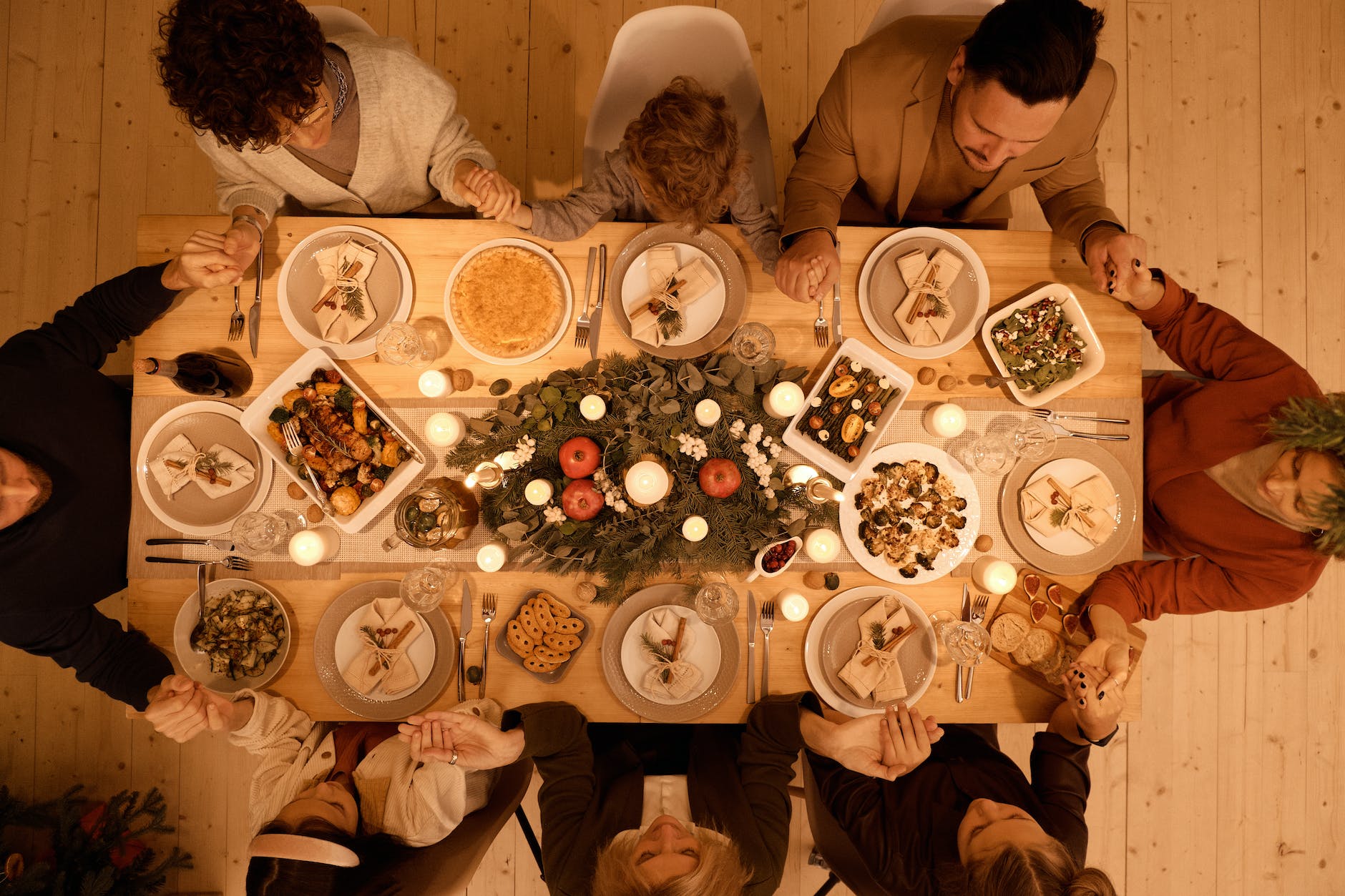
  • Old patterns, even deep divisions between people on the left and right, can change. For you, it might begin at the Christmas dinner table. The Word is present when we pass the peace along with the mashed potatoes and gravy.
  • Religion is more than rules. At its best, religion pushes the faithful to recognize God’s love for all people and all nations. This Word has no margins.

Your wait through Advent is but a few more days. Despite our political disagreements and the old relationship wounds acquired during the pandemic, a few songs will unite us in the week ahead. Together we will sing of the angels, the shepherds, and the little Lord Jesus, no crying he makes. Our own cries of blame and bitterness will quiet into a silent night while candles real and battery-operated outshine our divisions, if only for a moment.

Christmas is the story that leaves us hanging. The Word made flesh does not fix our America. The Word made flesh instead insists on hope: hope that justice calls us to work together; hope that ordinary people can heal extraordinary division; hope that peace can indeed be passed with the mashed potatoes and gravy.

Blessings on your Christmas, that the Word made flesh might make an appearance at your Christmas dinner table dressed like you. Amen.

Photo Credit: Nicole Michalou on Pexels.com
An American Advent: New Things I Now Declare

New traditions are a bugger. Early in our marriage, I had no idea. I imagined my husband and I would start some of our own traditions. Perhaps weekly movie nights would be our thing, and a predictable and seamless sharing of holidays with our families of origin. Each Fourth of July, host our friends and serve our own unique meal, and each night share highs and lows with our kids.

Why are new traditions such a bugger? Because human beings are creatures of habit and practitioners of patterns. It’s why long-term diets are next to impossible and saving or spending money differently only gets harder with age. We learn one way and tend to stick with it.

Family patterns are no different. If you spend time with your family of origin (the family in which you grew up) this Christmas, you will notice patterns if you are willing to pay attention. Arguments begin the very same way. The same person will exasperate you and you will react in the same way you always do. Family patterns are the deep ruts of country roads.

This weekend’s Narrative Lectionary reading for the third Sunday in Advent has to do with patterns. God’s relationship with God’s people had developed a deep rut kind of pattern. God loved the people, the people turned against God, God opened God’s arms and they returned to God. God loved the people, the people turned against God…wash, rinse and repeat.

Into this old, endless pattern, the prophet Isaiah breathed a new one. Speaking for the Lord, Isaiah said, “See, the former things have come to pass, and new things I now declare; before they spring forth, I tell you of them.”

The new pattern emerged several hundred years later with the birth of the one for whom we wait this Advent. The Messiah dared to break the pattern. God’s people could not turn away from a God who needed holding, needed feeding, needed loving. God stepped out of God’s power to step into your life for good. The pattern of humanity turning away from God was broken, not by God’s people finally getting it right, but by God declaring a new pattern.

If God can change the pattern of God’s relationship with God’s people, why in tarnation is it so hard to stick with a new tradition?

I’ll tell you why. Because the forces at work in our families of origin are powerful beyond measure. The traditions of our family and the habits that then become our own are forever our default. Like an addiction, those old habits take over the wheel whenever we feel too tired to steer ourselves.

But there is hope! In Isaiah 42, the Lord named the new pattern, which I think is the hardest step. Naming a new pattern challenges not only the existing pattern but everyone who has a stake in it. If you decide to host Christmas and cook lasagna when your family of origin has only EVER eaten ham, then you are in for it. But you’ve named the new pattern; you have the steering wheel: lasagna, baby!

New patterns are magnets for resistors. But if your new pattern matters to you, and you sincerely explain it to your family, then please keep driving. You must know the way, and eventually the others may come along. If they don’t because they insist on ham and only ham everlasting for Christmas, then more lasagna for you. You’ve created a new pattern because it matters to you, and although you would prefer that your family of origin enjoy it with you, not every new pattern continues that way.

The pattern God declared in Jesus Christ, however, cannot be discontinued. The pattern of God’s love wrapped in bands of cloth and lying in a manger smooths out the old ruts of our lives. No new tradition, or old and worn tradition can undo God’s desire to be with you.

Photo Credit: Marlin Clark on Unsplash