Advent Week One

You have only four weeks to get ready for the arrival (advent) of love in a manger.

Not four weeks to choose the most amazing presents and bake the most delectable cookies. Not four weeks to wear yourself down to design the perfect Christmas.

Christmas is most perfect when we don’t fuss with it too much. God did a fine job being born in a manger, filling a human body with the loving presence of the Almighty.

It won’t get better if you do too much. If you beat yourself up for eating too many cookies or get crabby with your family because they don’t appreciate all your hard work.

Work less hard toward the perfect Christmas. Light a candle and reflect manger love in conversation, stillness and gentleness with the friends and family whom God entrusted to you.

And grace lightens the darkness through you for four whole weeks.

How to Remember the World is Much Bigger Than You

(Photo by Pixabay on Pexels.com)

A famous biblical story features a made-up dude named Job (pronounced differently than it looks). Job had it rough and justifiably wept and wailed. We read in the story how not to help our grieving friends, but in the end it is no surprise that God has the last word.

God zooms out on Job’s view of the world. “The world is much bigger than you,” God relativizes to a miserable Job in a dozen ways. God points Job to creation, showcasing the larger-than life creation work goes on day in and day out without Job or anyone’s help.

Like a proud child, God points. “Look at the sea, I did that! See that cloud? That was me! The snow and hail? It isn’t always lovely, but it’s my work. And the ostrich’s wings? I gave those wings the power to flap, baby!”

Last week, I felt a slice of Job’s pain. And God pointed.

“Feel the warm sun on a November day? I made that heat!”

“Taste the fresh bread. Grain was my idea!”

“That gracious card someone sent you? Don’t you love it? I invented kindness!”

“You heard that song and faith welled up in your throat? You are welcome.”

Okay, God. I remember now. The world is much bigger than me.

This is Your Soul. This is Your Soul on Hate

(Photo by Aaron Masaryk on Unsplash)

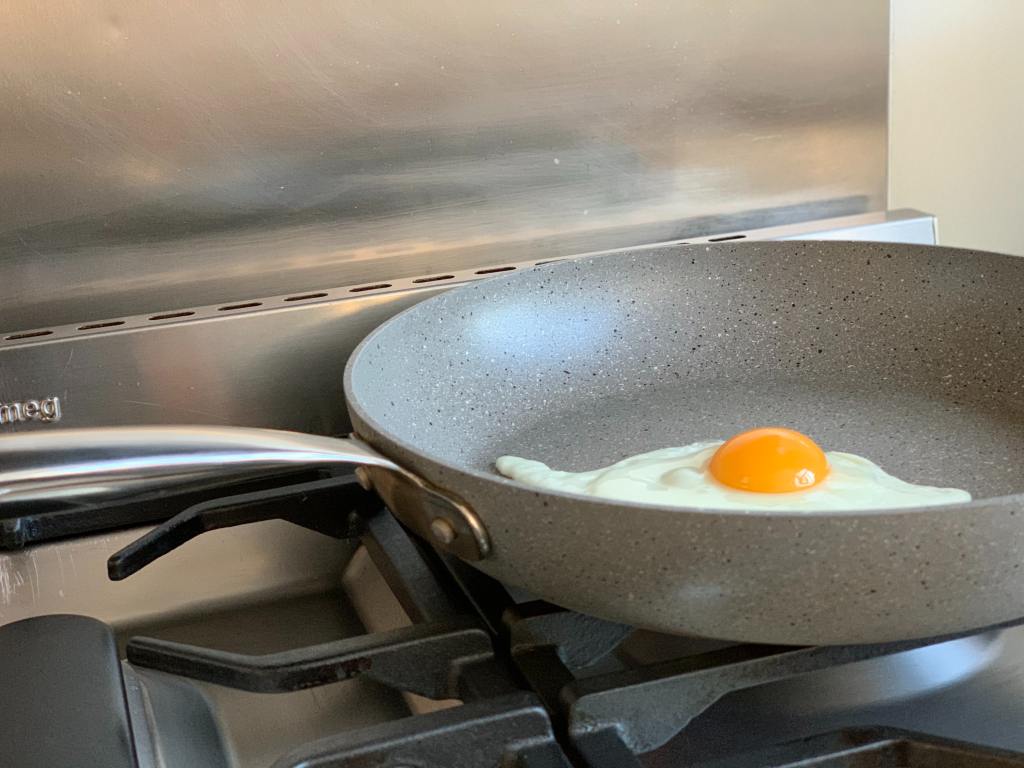
If you are as old as I am, you may remember the powerful commercial by the Ad Council to illustrate drug use. Above a sizzling frying pan, you saw an egg and heard the monotone words: “This is your brain.” The egg was cracked and dropped onto the pan, followed by these matter-of-fact words: “This is your brain on drugs.”

Drugs fry your brain, we understood without question, yet questioning how much we wanted eggs for breakfast anymore.

What the Ad Council did not mention is drug use that becomes drug addiction can divide families…can alter one’s perception of one’s self and one’s neighbor…can steal hope and shape the future.

That old ad keeps coming back to me because something is happening in Christian communities, or at least in the one I serve as a pastor. The same thing is happening among some groups of friends and certainly among families.

I’ll stick with what I know as a pastor. The one body of Christ I’ve been called to lead has been disrupted not only by a pandemic, but also by a strange strain of sizzling hot hate. It is deep hate against “the other side” and I see it most clearly on Facebook.

Clearly I don’t see many people, so once in a while I will check a person’s Facebook page if they pop into my prayers. Sometimes I can learn something about the person’s life that might need specific prayers.

What I might find is deep anger, mistrust, and sizzling hot hate in shared posts and capital letters. Hating quarantine. Hating a political party. Hating wearing masks. Hating. Hating.

I see it on the pages of people whom I know to be sincerely generous and kind. I have walked with them through tragedy and confirmed their kids and baptized their grandkids. I know them past their Facebook pages and the hate that sizzles on their pages.

And I worry so much about their souls. Not in the “will they go to heaven” sort of way. Jesus already took care of that worry. But I wonder in the “how are you surviving” sort of way. What is such hate doing to the way you are loving Jesus and seeing the world and being in relationship with your neighbor?

I think you can remove the word “drugs” in the egg ad and replace it with the word “hate”. Hate can divide families…can alter one’s perception of one’s self and one’s neighbor…can steal hope and shape the future.

I suspect if you are reading these words, you may not be the hater. But if your Facebook page does reflect sizzling hot hate, take a quick inventory of whether it’s really you in there. Is that really you on your Facebook page, or have you let hate shape who you are on social media because it is what’s trending?

An Instragram post on @henrinouwensociety yesterday reads: “Prayer converts the enemy into a friend.” If that is true, then prayer may be able to take the sizzle out of hate. It may be able to mend broken relationships. Certainly, the death of Christ did something even greater – set forgiveness where there was none, set life where there was death.

Who knew a pandemic that in theory would bring people closer together to fight harder against it, (think The Great Depression and WWII and 9/11) would be the thing that lets loose the hate?

Ending a Staycation

(Photo by Carolyn V on Unsplash)

In the spirit of returning to the simple, I spent a week at home.

The usual fall weekend family getaway to Minneapolis or Rapid City or Sherwood was set aside for a staycation. I cleaned a few closets, baked bread, read books, remembered how to exercise, and took extra walks. I made an impressive Bloody Mary bar for my husband and discovered “The Good Place” on Netflix.

It was a very good time.

I also took my oldest kiddo to the DMV where they let him loose with a license.

It was mostly a good time.

When none of that was going on, I rested. Have you stopped to notice you require copious amounts of rest these days? Sit still for a moment and notice the compounding worries and questions that are now part of your daily life in Covid-19 times. Never before did those worries occupy your mind. Now, they do. Judging by the number of cases in our country, those loitering worries are not going away soon.

And yet, those worries do not define you nor do they get to take over your life. You are beloved child of God, free from the greatest worries about your forgiveness and salvation, and free to receive Christ’s love and utterly free to give it to your neighbor.

Channel your inner Marie Kondo and part ways with a worry. Name one worry and dare yourself to let it go. Bid that worry farewell and let God worry about it instead of you. God is remarkably good, always good, at shouldering your worries. Then do a profoundly simple thing you need so much of right now: Rest.

Advent All Along

(Photo by Valeria Boltneva on Pexels.com)

We are a mere three Sundays from the first Sunday in Advent. Advent is a season, or time in the year when we turn down the volume. We dim the lights and slow the pace. Counter to our culture, we recklessly insist on hope and pray exclusively for peace. Week after week as the nights stretch out, we light more candles to push against the dark.

Advent and Lent are both seasons that lead to the two biggest celebrations of the church year, and both seasons call for quiet. They demand a thoughtful kind of waiting. For four weeks of Advent (literally “to arrive”) we are waiting for the arrival of the embodiment of God’s love in a way God had never shown up before.

Last year, our congregation journeyed through Advent with Amy-Jill Levine and her “Light of the World” book. She opens up the old stories with her even older Hebrew stories. And…she is delightful. This year, I may wait through Advent with “Present over Perfect”, by Shauna Niequist or “Waiting, Accepting, Journeying, Birthing”, by Sarah Bessey. I can’t decide. Both wise women push against the kind of dark that calls women to do more, be more, and have more.

Perhaps there has never been a more intense Advent for so many women in America. I heard Kristen Howerton tell Kate Bowler in a recent podcast the gift of feminism is that women can do anything. We just don’t have to do it all at once. And yet, women are keeping up with the majority of household work, bending our schedules to align with the hybrid schedule, usually leading the way in our marriages, scheduling kids’ appointments and activities, and working extra hard in our paid work. Oh, and the groceries! And now it is the eve of Christmas Eve and we do the shopping, send the cards, bake the goods, wrap the presents, and hide the freaking elf.

All this time before we even reach Advent, we are waiting. Waiting for “normal”, for less intensity, for a vaccine, for the busy lives we knew before and didn’t really like to come back. Every day we wait for the intense fog of our daily lives to lift. And it will, but not yet.

Not yet. Those are Advent words.

Life is not as it should be, not yet. Every day is Advent, not yet as it should be yet demanding reckless hope from you and prayers exclusively for peace for you. All this pandemic time, we have been waiting. So dim the lights and turn down the volume. Light a candle and insist the love of God that took shape in Jesus Christ is worth the wait.

While you wait, do not do more. Stop that. It’s ridiculous. There is no award for cutest tree, most precisely-wrapped gift, or most exhausted mama. There is only the love of God for which you need not wait.

Three Things to Make in Your Own Kitchen

(Photo by Helena Lopes on Unsplash)

There are a baker’s dozen reasons to hurry things along in the kitchen.

You don’t have much time, you don’t even like to cook, no one ever taught you how, you’ve misplaced all your pots and pans, or you simply prefer take-out. Some shortcuts only make sense: frozen tater tots, canned beans, Annie’s Mac and Cheese, corndogs, your favorite take-out place.

I do wonder, however, if too much efficiency in the kitchen means cutting short the connection to the cooks who came before you and those who will come after you. Like the communion of saints at the Lord’s Table where we are connected with all the saints of every time and place, there is a sacred generational connection that happens among cookbooks and cutting boards.

Perhaps nothing we do in the kitchen is new. Long ago, a cook figured out how to bake bread and cook meat. Sifting and kneading and braising and broiling are human inventions. Not so long ago, my mom taught me some things that her mom taught her. There may come a day when my kids say the same. Cooking leaves a mark in the world.

Tamar Adler put it this way: “Cooking is both simpler and more necessary than we imagine.” The sacred space of a kitchen is occupied by so many generations all at once. And so I offer you three simple and necessary recipes in a moment when the world is occupied by so much anxiety. May your kitchen be a place of peace.

Chef John's Buttermilk Biscuits

Buttermilk Biscuits

You need only 10 minutes to mix them together and 15 minute to bake and 2 minutes to watch them disappear. The only problem is that I tend to consume equal amounts of biscuit dough and baked biscuits.

Original Nestle® Toll House Chocolate Chip Cookies

Cookies

I’m a fan of Tollhouse’s version of chocolate chip cookies because my kitchen growing up was never without them. A friend once told me our house always smelled like them. But again, the problem with the dough…

How to make your own homemade coffee creamer

Coffee Creamer

To the saint before me who invented sweetened condensed milk. Thank you and damn you. If I had to choose only one drink for the rest of my life, it would be sweetened condensed milk. After that, I would choose a good cardiologist. For now, this makes your coffee extra special, which you deserve in the sacred space of your own kitchen shared by so many generations at once.

How to Teach Your Kids About Voting

(Photo by Glen Carrie on Unsplash)

Kids are watching. Always, they are watching.

A thousand times I have told parents at visits prior to baptism, at confirmation orientation, and in conversations here and there that kids learn the Christian faith not from cool pastors, but primarily from parents and guardians. Kids make sense of what matters by watching what the humans whom they trust do (not say) each day. And so, kids learn how to handle an election by watching what the grown-ups do. Dear God, what have they learned in 2020?!

It was helpful to listen to today’s episode of NPR’s Life Kit podcast: “How To Talk To Your Kids About Civics” on this election-eve. A big take-away for me is the importance of exposing kids to more than one viewpoint. Kids who learn a narrow way to look at the world are less equipped for difficult conversation. The podcast highlighted parents who call the principal when yoga is introduced, or the plight of Native Americans is told with honesty. Parenting to protect from exposure can keep kids stuck in a narrow worldview.

And here we are in 2020. There is a strain to protect a worldview on the left and a worldview on the right, with a deep resistance to difficult conversation. And kids are watching.

Do you know why you believe what you believe? Is there a story in the big book of your life that shaped what you believe? Or maybe your pages hold opposing stories and you haven’t quite worked it all out yet. You are open to the conversation.

Listening to stories is the teaching tool of the gods. Instead of telling my kids who to vote for, I’ll tell them the stories that shape what I believe. I want them to know my view of the world, and also that it is limited by my understanding and experience. It is not meant to be their view of the world, but I do hope it helps them make sense of their own view of the world.

I have heard parents say and we have all read parents’ post ugly words against other humans because their view of the world was threatened or challenged. This is not how I want my kids to learn what I believe.

Start with the stories and let the conversation unfold in the questions. And perhaps 2024 will be an entirely different story.

The Show That Inspires Me to Make the Bed

(Photo by Adam Winger on Unsplash)

Do you make the bed?

A few months ago our church staff read the book Liturgy of the Ordinary, by Tish Harrison Warren. One ordinary practice she highlights is making the bed. It was fascinating to discover who makes the bed and who does not! I sort of assumed making the bed was a boring grown-up thing we all do, but alas, it is not.

I don’t recall a time when I did not make the bed. It was expected of me as a kid, and my dad taught me a cool trick he’d learned in the army to make the corners tight.

I don’t recall enjoying making the bed, however, until watching Downton Abbey! The way Anna and Mrs. Hughes could whip those crisp, white sheets into shape and pull them as tight as a bad Botox job. In the mornings when I make the bed, I channel my inner-Anna and pull those sheets tight!

The other joy in making the bed, washing the dishes, or running hot water for a shower is the reminder to use those everyday moments for prayer. When I make my bed a generic version of the fancy Downton Abbey beds, I pray for the people who spent the night without a bed. I pray for people without enough food when I wash a dish. And I pray for the human beings who will never experience the luxury of a hot shower.

Do you make the bed? Do you channel your inner-Anna? No judging. I learned in our staff book study that you can in fact be a very cool grown-up with a messy bed.

The Food of Mondays

(Photo by Ola Mishchenko on Unsplash)

Mondays often have me thinking about food.

On Mondays (this pastor’s Sabbath) I like to hang out in the kitchen and prepare snacks and treats to intercept my kids’ reach for store-bought granola bars and Cheez-its.

They have eaten enough peanut butter protein bites to last a few lifetimes. Rice Krispie Bars with peanut butter are a new favorite. Of course, if the cookie jar is empty the chocolate chips cry out to become cookies. “Help!” they yell. “The chips are down!”

Last week I discovered the world’s most delicious pumpkin bread recipe, complete with a sugar sauce that might be the death of me.

On Mondays I also dream of grown-up food. Most recently, I feel inspired by Tamar Adler’s book, “The Everlasting Meal”. Her cooking is very grown-up, yet also simple and dreamy and good for you. She has made me so hungry for eggs and vegetables.

I’m also inspired by my friend’s Instagram posts @realdakotakitchen. She makes real food for a family with real kids who are slightly but not too grown-up.

Food is among my favorite conversation topics and making it is a favorite thing to do. For me, being thoughtful and strategic about food is a way I care for and connect with my family. It is easy to overlook food’s magnetic power, and easy to get bored with the few things I can actually make well.

99% of us need an abundance of inspiration in the kitchen. The other 1% are the inspirers who make my Mondays, and hopefully yours, even better.

Someone Else Can Unload the Dishwasher, and Other Magic for Today

(Photo by Artem Maltsev on Unsplash)

There are days when being a mom feels like wizardry.

It is slightly magical what a wizard can do in a meager amount of time in the morning. Mom the Wizard notices she can finish a load of laundry and get supper cooking in the crock pot before anyone opens their eyes from beneath their covers.

Not only that, but the Wizard can plow through several work emails, order the groceries, and finish last night’s dishes. Of course, the coffee has been made and a cup or two consumed and the Wizard has also scheduled a few of her kids’ doctor appointments.

Then someone rolls out of bed and the Wizard realizes it’s still only morning! Wow, it is amazing to be a wizard.

But soon, the Wizard’s magic spells become a hindrance. The Wizard’s apprentices expect the Wizard to empty the dishwasher when it isn’t exactly the Wizard’s chore. But the Wizard’s apprentices are left spellbound, so the Wizard begins to open the dishwasher door and dry off the tops of the glasses that never get dry, when she stops.

“Wait,” it occurs to the Wizard. “Someone else can unload the dishwasher.”

The “Hallelujah Chorus” can be heard, just barely, coming from nowhere.

This has the Wizard thinking. “Someone else can probably do most of the laundry. And wash the dishes. And get supper going.”

The Wizard realizes that even with a book of magic spells, raising kids in a global pandemic is intense, demanding, and emotional.

It is as though someone has cast a magic spell on her, the Wizard. She fully knows not all things are for her to do. Wizards work best in good company, and even wizards are only magical when they give their magic away.