How to Successfully Avoid Your Daily Devotions

(Photo by Saad Chaudhry on Unsplash)

Each of your days begins with the reliable promise of 24-hours. On some days, those hours stretch out languidly, and on other days the hours rush past. One by one, they disappear, like when you blow on the seedhead of a dandelion. Now you see them, now you don’t.

Finding a rhythm during my sabbatical has been tricky, but my days go more smoothly when I begin by reading a daily devotion and spend some minutes in silence. Today, l successfully avoided both.

How? I slept in a bit, made a yummy donut run with my daughter, bought a cart-full of groceries (two teenage boys to feed), and spent the rest of the morning making (and sampling) monster cookies. During my sugary morning, I listened to a sermon from a preaching conference called the Festival of Homiletics, a podcast wondering how customized our lives should be, and another podcast offering great wisdom about summer screentime for families. In other words, I consumed cookies and information, two of my favorite things!

And right…no daily devotions.

The hours in a day have a habit of marching ahead. How often do you take a good look at your day before it slips away (like the dandelion seedhead) and ask yourself what is at its center? Does the center of your day have to do with accomplishing tasks? Looking good? Sounding capable? Or just getting through it? What is it that holds your day together; the string that connects the hours as they unfold? And what does the way you begin your day have to do with the rest of your day?

Before the hours of a new day arrive, I invite you to wonder how you might begin the first hours, and what difference that might make. How can the center, that is, what holds your day together, position you firmly in the love of God in Jesus Christ?

The spiritual practice of devotions (or a walk or a prayer or a guided meditation) might remind you the days filled with hours do not go on forever. You have only so many days, only so many hours, and no matter how you spend them, each one is pure gift from the God who is love.

On the days I successfully avoid reading devotions, I tend to forget the gift of each hour and who gave them to me. The hours march on and therefore so do I until suddenly the seeds are all caught up in the wind and I turn off the last light. Perhaps tomorrow I will be less successful! And maybe even a tiny bit wiser.

A Mom on Sabbatical

Photo by Pixabay on Pexels.com

What have I learned in nearly two weeks of sabbatical time? I can sum it up in two words: slow down.

A year or two ago, I stopped at the post office to mail a package. It was a quick stop between Walmart and a haircut and I was hustling. Hustling is a drug that keeps you moving. It makes you feel amazing and unstoppable and completely unaware of how addicted you’ve become. I was pushing my pin number into the machine on the post office counter, but the machine kept rejecting my card.

“It worked when I was at Walmart a few minutes ago,” I assured the nice man at the counter, saying between the lines that there is actually money in my checking account! “You can slow down,” he gently prodded, seeing how flustered I had gotten. After a few more useless tries, I abandoned the debit card and handed over my credit card.

Later, I would realize I mistyped the four numbers of my pin. In my mindless hustle, I had thrown it off by a number enough times to lock up my card.

Now, nearly two weeks into this slower season of sabbatical, I am noticing more. I notice when I am tired and need more sleep, and then I go to bed earlier and sleep. I notice I tend to eat more when I’m in a hurry. I notice how easy it is for any one person in my family to default to a screen for distraction. I notice the majority of my breaths are shallow.

I notice how fun it is to prepare food when I don’t have to rush. I notice how much more meaningful conversations become when I’m not watching a clock to get back to work. I notice I take more time for contemplative prayer and daily devotions. I notice my families faces (even though not all teenagers appreciate such noticing).

“You can slow down”, came the wisdom behind, of all places, the post office counter! I’m listening. I’m slowing down.

What might that look like for you today? Notice when you are walking fast without needing to. Notice when you read, eat, or talk too fast. Notice your breaths and whether they are deep or always shallow.

In the noticing, often called mindfulness, Jesus’ presence becomes obvious. If there is one thing we do not attribute to Jesus, it is hustle! He was in no hurry moving from village to village, miracle to miracle, conversation to conversation, prayer to prayer.

How might the practice of slowing down help you notice the peace of Jesus’ presence today?

What You Hold, and What Holds You

(Photo by Jon Tyson on Unsplash)

Moms can be so fast. We catch rolling objects about to fall from the counter and crash onto the floor. We catch tiny people when they nearly tumble off the couch. We catch and we hold. Moms are trusty catchers and holders.

In my morning prayer, the last words of Psalm 63 (a prayer to God) caught me: “My whole being clings to you, your right hand holds me fast.” Moms juggle, God holds. Moms multi-task, God holds. Moms schedule and administer, God holds.

Always there are changes in your life. Beginnings and endings, trials and tribulations, joys and sorrows. Moms orchestrate through those changes and all the while, God holds. It is the one constant. You who are busy juggling, multi-tasking, scheduling, administering, grieving, worrying, celebrating. God holds.

God holds all the stuff. God holds the promise that you do not do the wild and wonderful work of being a mom alone. And God holds you. That’s the greatest gift of all. You who catch and hold so much from day to day are already held in the constant love of the God who will hold you forever.

The More Absurd Mom-Chores

Today I think I will clean inside the refrigerator so that tomorrow it will look like I did not clean it at all.

One month ago I washed the windows so that one month later it would look like I didn’t.

I also make our bed, re- (and then re-) organize the kitchen cupboard that provides temporary housing for snacks that quickly disappear, and on rare occasion I have been known to fold and sort clothing and accessories belonging to my daughter’s dolls (under her direction and supervision).

All of these chores can be filed together under the letter “A” for absurd. These are absurd ways to spend time. I know my work will be unnoticed by most everyone but me, and my efforts will be undone rather quickly.

Yet for a brief moment there is order where there had not been. Like God speaking into the chaos and nothingness at the start of God’s first day on the job, it all makes sense for just long enough to take it all in; to believe that order might be possible after all.

And then someone raids the refrigerator, or soaks the windows when he meant to water the grass, or confuses the drawers that belong strictly to the doll’s stockings with the drawer designated for headbands.

What order?

Like a day that does what it does instead of what you expected it to. Like kids for whom you dreamed one dream who now occupy their own quite different dream. Like you, who woke up ready for this day and now you feel as undone as the formerly-organized snack cupboard; as dis-orderly as my refrigerator will be by the time the sun tucks itself beneath the horizon.

We are meant to be both done and undone, we human creatures. To be both orderly and dis-orderly, both lost and found, both “W” for wise and “A” for absurd. You have noticed the order God once pronounced long ago for the very first time did not stick. But God stuck around; kept speaking as stubbornly as the mom who continues to do the absurd chores. Even when it doesn’t look like we did them at all. But we did. We sure did.

Home from Introvert Bible Camp

After five days of silence and a long, quiet drive on the unending pavement that is I94, I am home.

Last week began a three-month sabbatical from my work as senior pastor. At a hermitage in Northern Minnesota, my sabbatical commenced with a silent retreat that positioned me as unavailable to my family and congregation. It was a week of fast learning for all of us, me in particular, that I can step away (far away) and all is well. People continue to be cared for, kids are fed, and sometimes my husband can find a new shampoo bottle in the drawer in the bathroom when his runs out, although sometimes he cannot, like this week.

Who excitedly transforms into a hermit for five days in a tiny cabin tucked among a dozen or so other cabins occupied by fellow hermits to whom you cannot speak? Hermit, by the way, refers to someone who escapes everyday life in exchange for the quiet. It was like Bible Camp for Introverts. Nap, walk, read or write for hours. Food and water is left on your doorstep and time is spent listening to God, which means listening to the woods and its creatures, listening to your body and responding when it needs food or rest, and listening to the Spirit’s whispers in your prayers.

I learned (again) that we actually need very little, and the less there is (food, water, furniture), the more it is valued.

I turned off my phone Monday afternoon and did not touch it again until Friday. I missed it only twice, both times when I had an urge to Google an author whose work I was reading. Thank goodness that was not an option. You know what happens when you want to Google one thing. It’s “If You Give a Mouse a Cookie” every time! On your way to Googling, you stop to check your Instagram feed, which reminds you to send an email, at which point you decide to look at your bank account, and on and on. There is no such thing as a quick Google.

All genders can be seen ambling along the paths at the hermitage, but one day I noticed a half dozen or so women roughly my age. Later, I saw them congregate in the main building on my way to the shower. (Yes, hermits do shower, thank the Lord.) It appeared to be a women’s retreat. How brilliant! A gathering of women, perhaps moms, who took a couple of days to respond to no one’s needs but their own, answered no one’s questions, explained to no partner that your shampoo can easily be found by pulling open the drawer!

Moms often give in a way that makes it slip from our minds how we, too, are children of God. Children, all children, need to be known and loved and released from the mental load, if only for long enough to sneak into the woods for a few days of quiet.

A Quiet Week

(Photo by Pixabay on Pexels.com)

Today begins a three-month sabbatical for me, compliments of a generous congregation in southwest North Dakota. They have gifted me with three months to spend time with my favorites: family, books, pen and paper, and quiet. My first stop is a particularly quiet one: the woods.

I am returning to a place of silent retreat, where I will leave all devices behind. It will be a quiet week when the noise my phone makes and the voices in my head reminding me to do this and do that will fade away. Rest will be priority; reading and journaling the lone items on my to-do list. Each day will be guided by the Spirit’s words – which I will actually hear over the voices that have then faded away.

Listening is much easier when we do not try to hear everything all at once. I hear nothing when I expect myself to hear everything. There are invisible volume buttons to adjust. Turn down the work volume once I get home. Turn down the mom guilt dial when I am doing my best at work. Turn down the unrealistic expectations for myself volume at home and at work and suddenly I might hear God reminding me to let go. Let go of trying to hear everything, God might whisper, and the quiet will tell you the one thing you truly need to hear.

It is enough simply to be. Next week, after an ear-full of quiet, I may tell you what I heard.

Week 3 of 3: The World Needs You to Pray (yes, the world)

(Photo by Louis Hansel on Unsplash)

Have you noticed lately the size of the world?

A couple of weeks ago, I told you prayer is a conversation and relationship with God. Listen, talk. Talk, Listen. Last week, I told you prayer begins in your home. Prayer for family members changes your relationship with them.

Now, widen your perspective beyond your own relationship with God, beyond your relationships with family members, and take in a view of the wider world. Could your meager prayer really do something in the great big world and universe in which we live?

Madeleine L’Engle write a book called “A Stone For a Pillow”, part of a trilogy commentary on Genesis. In it, she tells the story of a time her friend confided in her, telling Madeleine a secret. Soon after, that friend wrongly and angrily blamed Madeleine for leaking the secret. Madeleine was ticked. She earnestly prayed to process her sense of hurt and betrayal. Who had actually betrayed the secret? She would never know. And would her friend ever confide in her again?

In one of her prayers, she heard herself say and mean, “Oh God, bless the bastard.”

Site IconLisa Lewtonlisalewton.com

Visibility:Public

Publish:Immediately

Suggestion:Add tags

Share this post

Connect and select the accounts where you’d like to share your post.

  • Lisa Lewton
  • @LewtonLisa

Connect an account(opens in a new tab)Customize your message198 characters remaining

Twitter settings

Blessings are sticky business in which human beings are entrusted to one another. If it is the people whom we love and who love us back that receive our blessing, our wide world shrinks. It is easy to bless people who like us, but something else to bless the one who betrays us.

In a time of deep divide and animosity in the world, what might happen if we pray for the ones who think and live differently? Could the world take a deep breath if we replace angry rhetoric with curiosity and humility? If our response to the news is a prayerful question instead of condemnation, you know what changes?

You.

And if you change, and then a few other you’s change, and a few thousand you’s change…you get the idea.

Your prayer means something for you, for your family, and for the world. Your prayer might be no more than, “Bless the bastard.” If you don’t believe your prayer means something, try for a week to pray for people you do not like and if it doesn’t do anything to you, you’ve lost nothing. If it does work…Look. Out. World.

Week 2 of 3: The World Needs You to Pray (prayer at home)

(Photo by Hanna Balan on Unsplash)

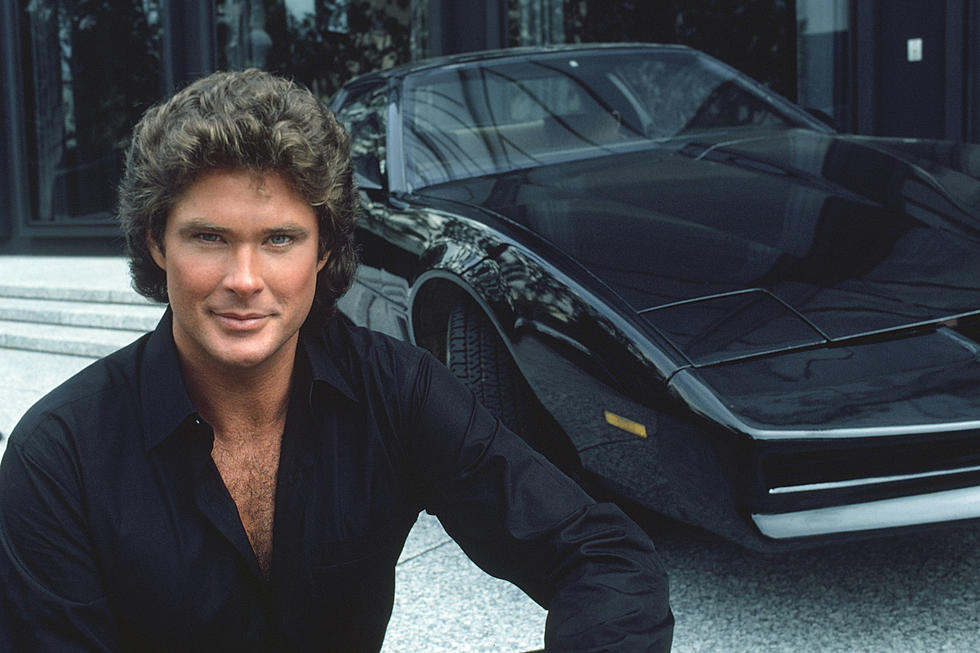
“KITT,” I would say with authority to the invisible watch on my wrist, “I need you to come pick me.” In real life KITT did not, but in my imagination, the talking car immediately responded, like I was totally David Hasselhoff in “Knight Rider”, and away we would go.

My eight-year old self (and yours) never imagined actual communication through a watch, but now it’s a thing! I splurged on an Apple Watch and spent too much of a Saturday talking to my watch, gazing at it, and being confused by it. I adjusted my fitness goals, set my alarm, read the news, called my dad (like Knight Rider to KITT) and checked the weather a ridiculous number of times. My watch knows me well because I taught it what matters to me, such as moving around during the day, waking up early, and determining how many layers to wear when I go outside.

Prayer is something like being obsessed with your Apple Watch. The more time you spend, the more you are known, both by God and your own self.

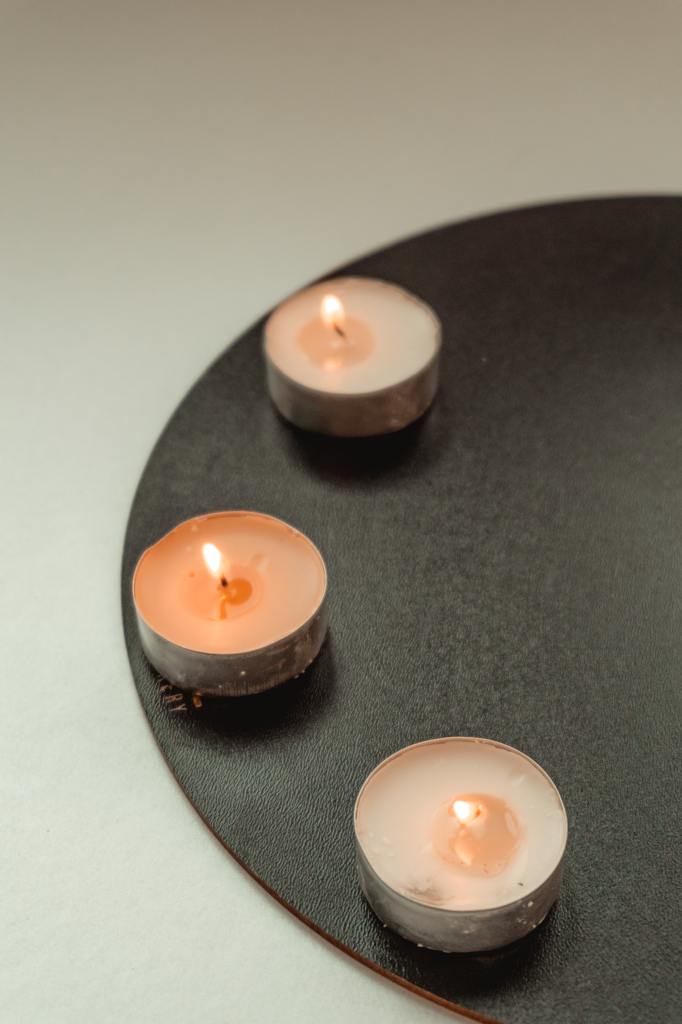
If you wonder what to pray about, do not look far. Look at your own body and then at the bodies who are closest to you (maybe not in terms of proximity). Start there. Pray for God to help you know yourself, to understand why you feel the way you do in regard to your own life. Pray for wisdom and imagination. Lighting a candle or three helps.

Then, pray for those who mean the most to you. Pray for your spouse, your parents, your kids, your siblings, your aunt and uncle, grandparents, and cousins. Pray for them one by one, even if it takes some time. You are not praying for something to happen to them. Remember, you are not God and God knows more than you. You are praying for wisdom and imagination for them. For their well-being, for the peace of Christ’s presence to enfold them.

“Prayer is the place where priorities are re-established,” wrote the late Eugene Peterson.

You discover when you pray for your own self and for those closest to you that your priorities shift. You find yourself closer to God. You feel closer to family members. Prayer is not complicated, but it does take time and it may reroute your plans for life. What you had been worrying about might fall away. What had never occurred to you before might appear in your brain. You might come to realize how hard you can be on yourself. God’s resounding grace reclaims its space in your soul when you pray. And you remember you are known already, without the hassle of the Apple Watch, or the Hasselhoff with KITT. You are known, you hear your heart sing whenever you pray.

A preview of next week: In the last week of this short series on prayer, we will wonder what difference your own prayers make in the wider world.

Week 1 of 3: The World Needs You to Pray (First, what is prayer?)

(Photo by Patrick Fore on Unsplash)

Welcome to a three-week focus on prayer practice. I hope this mini-series meets you where you are and invites you to be gentle on yourself in your own unique practice of prayer. (For a deeper dive into prayer, perhaps a book by one of my favorite authors, Father James Martin, is for you.)

A few weeks ago in a Zoom conversation with my spiritual director, I found myself in tears. Pastor Brice has met with me nearly each month for the past 17 years, beginning at the infancy of my pastoral life. His work as a spiritual director is to direct people to recognize God’s presence. My time with him opens my imagination to the mercy of Jesus Christ in my everyday life.

I entered this particular conversation carrying a few heavy burdens. I was anticipating the long stretch of Palm Sunday to Easter Sunday, working diligently to equip the leadership of our congregation to make no-win decisions related to the pandemic, responding to my own kids’ distinct needs, caring for my spouse in the annual high stress of beginning the last quarter of the school year. In a nutshell, I was tired. If you look around, you might notice pastors or deacons who are tired. We carry the weight of people’s displeasure for decisions related to the pandemic, while at the same time are experiencing personal fatigue that has accumulated for the past 15 months. I write this not to lure you into sympathy for clergy, but to give you an unusually honest glimpse into the lives of the people who care for your souls.

With Pastor Brice, I spend roughly 20 minutes in contemplative prayer. I light a candle and stare at it for much of our time. What is it about contained, dancing flames that slows down my breathing and loosens my shoulders? Brice will express a few winding thoughts to move my own thoughts out of the chaotic parts of my brain. I open my eyes just enough to scribble some of his Spirit-filled wisdom onto paper, to capture the moments when I recognize God’s presence. That day, I scribbled around tears that fell on my paper; tears that interrupted the hustle to the empty tomb.

In a podcast with Kate Bowler, Father James Martin describes prayer as intentional, conscious conversation with God. He said, “It’s a back and forth. It’s you sharing yourself with God, and it’s also God sharing God’s self with you in different ways.”

In that moment with my spiritual director, I had finally let God get a word in. When I did, I heard God tell me to quit talking about Jesus long enough to let Jesus do the talking in me and to me. I heard the Spirit in the tears that relinquished me of my responsibility to make a community content. I heard Jesus’ promise to care for all the people, including me.

Prayer practice might look like this for you, if even once in a while. Like any conversation, it does require your attention. Maybe on a walk, in the shower, or while you’re sautéing onions. You might wear some type of air pods to deter people from talking to you while you are in conversation with God.

As you do that, make sure to listen. After all, God, your most faithful conversation partner, has already been listening to you.

A preview of next week: Prayer changes the way you look at your own life, your family, your marriage, and your work. It is the quiet path toward being more gentle on yourself, and more aware of God’s presence.

P.S. Spiritual Direction is not only for pastors. I would recommend it for anyone who would like to deepen your relationship with God. Pastor Brice is obviously my favorite. I did spend time at a monastery several years back and found that to be renewing as well.

P.P.S. I try to publish a weekly post on Mondays, but if you don’t want to miss it, you can subscribe to my blog on the right. Subscribing will also give you a sneak peak at a few extras, including excerpts from a book I expect to self-publish this summer, called “Spiritual Longings in a Woman’s World.”

P.P.S. I find you awesome because you read all the way to the bottom of this post.

The Great 3 Days: Hope is Freaking Hard

(Photo by Julia Volk on Pexels.com)

It is Easter Eve and all through the world pastors are hoping.

Pastors are hoping to wake up tomorrow feeling healthy and joyful and refreshed and ready for a long stretch of a morning. (Woe to pastors’ kids or spouses who keep them up too late tonight.)

Pastors are hoping to be overwhelmed today by imaginative ideas to preach a familiar story. (Or, if they are a J on the Myers Briggs like me, their sermons are finished and printed and quietly waiting on their desks for a final round of editing tomorrow morning.)

Pastors are hoping for safe gatherings in church buildings, or where such gatherings are not possible, they hope the disappointment felt in the congregation can somehow be lifted by this familiar story.

Pastors carry an abundance of hopes today in the middle of The Great Three days. Yesterday we remembered Jesus’ death on the cross. Tomorrow we remember the stone was rolled away. But today, if we live into this story there is nothing to see here but a regular cave tomb that a wealthy person let the Jesus followers borrow. There was so much worry among the powers of the day that a Jesus follower would steal his body and claim he had been resurrected, that they somehow set an unfathomably large rock in front of the entrance to the tomb.

I searched for a photo for this post of a tomb sealed by a rock, but I could only find pictures of a tomb where the rock had been rolled away. We move so quickly to Easter Sunday that we cannot even picture the tomb with the rock still in place. It is not hard to hope in what we know will happen at the tomb. It is freaking hard to hope in the everyday.

Do we dare hope to find the perfect marriage partner? Or hope the marriage partner we chose will be the one we can stick with? Do we dare hope our kids will not get into mounds of trouble? Can we hope the career we chose will work out? Or to retire while we are healthy enough to travel? Or that we will have enough money to retire? Do we dare hope the world isn’t falling apart? (This is a question asked every day there has ever been a world.)

What is a hope you have that you find freaking hard to hope?

A pastor’s job is to be preposterously hopeful. We have this great big hope that in the end, after marriages break or don’t, after kids disappoint and don’t, after jobs disappoint or don’t, after retirement or not, after the world actually doesn’t fall apart, it will all work out. The story that matters has been written. The enclosed tomb we look at today rolls open tomorrow. Allelu…. oops. Too soon.

Everyday hope is indeed hard. That I do know. I also know tomorrow morning we will proclaim with hope together in Christian churches around the earth and who knows where else the one hope we know. The stone moved. There is new life for you now and in the end, as long as you don’t try to move the stone all on your own. Then you can only hope for a backache.