Kelly Corrigan’s Lovely Oh Wells

(Photo by Helen Cheng on Unsplash)

You know those moments when the words find you. When you read a passage in a book that names exactly how you feel. Or a phrase from a song touches you. It happens to preachers, when someone listening thanks you for words they needed that you may or may not have said.

This 6-minute episode of a podcast found me at the right moment. I’m a fan of Kelly Corrigan, author, podcaster, and person who wonders out loud. She also wrote a lovely children’s book called “Hello World!”, calling young humans into the wonder of the world and its inhabitants.

Back to her podcast episode, where she gracefully names some of the disappointments we experience and concludes with the refrain: “Oh well.” These two words are like Teflon for the moments we simply must let go. They resemble the life-giving reminder to be gentle on yourself. And they sound like Jesus’ promise of peace, unlike anything the world gives (John 14).

There are some reminders that never completely sink in, or maybe they do, and they’ve sunk so deep we hardly notice them. As your life changes, however that may be, and the story isn’t the one you had in mind, “Oh well.” The earth spins and we start over. We can cling to regrets and grudges, or we can let them go. “Oh well.”

No circumstance changes who you already are, beloved human of God. “Oh well” keeps us from shooting for perfection. You are you with your flaws and your everything. “Oh well.” You are loved just as you are, and that is well enough.

Renaming Mondays

(Photo by Elena Mozhvilo on Unsplash)

If you could rename today because you believe “Monday” is a worn out word, what might it be? What would you call this day if you could call it anything you choose? Let’s pretend that next week on this day, you could invent a completely new name, and every week after. (I realize this would be confusing for Amazon deliveries, and would eventually get annoying. But for now, shed your practicality. We’re pretending!)

I might call today “Bake and Breathe Day”, which puts the word “Monday” to shame. Today might be your back-to-work/school day, but for me it is a day off. I would choose this clever name due to the way feeding teenage boys seems easier if I do some baking on my day off. And, I try to spend some of this day taking a deep breath and writing (like right now).

Even though you cannot rewrite the calendar, you can rename this day for yourself. You can look around your life and note what it is that you need today. If today is tough, could it be “Please More Coffee or Water Day”? “A Walk Might Help Day”? “Be Extra Gentle on Myself Day”?

Maybe you love Mondays because you return to the action of the week. “Bring It On Day” might work. Or just, “Ready Enough Day”.

Last Friday, what I needed most was a long walk by myself. That day could have been called “Long Lonely Walk Day”, except that sounds way too somber! Also it might already be the name of a Western. I can’t be sure.

This might be a chemo or radiation or dialysis day for you. “Healing Day” fits. It might be a day you have to face something you happily avoided all weekend. “Reckoning Day” is nicely dramatic. My Tuesdays often become “No More Freaking Cookies Day” after I’ve done all that baking (and sampling) the day before.

A day has a tendency to get away from you. But this is the only one like it you’ll ever get. You have a particular need today, you beautiful human, that you get to name. What might you rename this day? I hope you will think of one, and I’ll give you a few others. Today and every day (even Mondays) are your “God Is With Me” days. Or, “Covered In Mercy Day”. Or, “I Don’t Care To Name A Day, But I Do Care That God Names Me Beloved.” Hmmm, kind of long. Good luck.

The Snack Dilemma

(Photo by Lucian Alexe on Unsplash)

In the ever-expanding folder of mom-guilt is the quality of snacks my kids consume. Early in their lives this was easy. Their plates were exclusively healthy choices: fruit, vegetables, tiny bites of cheese, a handful of Cheerios. When faced with squash on their plate today, my husband and I remind them they used to love squash, among a variety of other foods they deny ever enjoying! Avocado? Yes! Sweet potatoes? Affirmative.

My oldest son loved Kashi oatmeal for breakfast. If you’ve never tried it , the taste resembled what you might imagine a woodpecker’s breakfast also tastes like. But he LOVED it. It’s all he knew.

And then his eyes were opened to all the snacks he now prefers.

Which is why every trip to the grocery store presents the dilemma of the snacks. My kids told Alexa to add Cheez-Its to the list. Now what?! There is no avocado version that might at least trick them into consuming a healthy version of Cheez-Its. But it’s the cereal aisle that deepens the dilemma. As Captain Crunch and Barney Rubble stare you down, you alone have to muster the strength to take an honest look at the grams of sugar now conveniently displayed on the front of the box. You can follow your nose or go cuckoo and come home to kids who call you Tony the Tiger’s famous line. Or, you can find 13 grams or less to be a fine cereal guide.

In the end, however, what matters more than what I buy is what my kids choose to eat. Like most of the reality of raising kids, I have very limited control. Regardless of my choices, their choices are really their own and not mine to make. Will I always be the one buying their groceries? Nope. The snack dilemma isn’t mine to solve, but rather it is mine to equip them to solve on their own.

Which should make the mom-guilt file stop expanding, right? Why doesn’t it work that way? Only the famous cereal aisle leprechaun knows. I do believe that regardless of the snacks I buy, the cookie jar should never be empty. This is wisdom from my mom. Healthy snacks are one thing; cookies keep us from worrying way too much about it.

So…What Does a Pastor Do?

My desk

A pastor writes words and words and words. Words for preaching, words for worship, words for prayers, words for thank you notes and words articulating something for the church newsletter. When we aren’t writing, we are listening to others and walking with them through terrible times and also joyful times. It is likely we are consuming coffee at the same time . When we aren’t writing or listening, or leading a worship service or a class or a meeting, or reading someone else’s words, we are probably planning worship.

Roughly 50% of my time is dedicated to worship planning. Lucky for me, this requires creative writing. I am a grateful girl to incorporate what I love to do with what I need to do for my work. Not all pastors love writing, so not all pastors worship plan the same. I deeply enjoy reading the texts for the month ahead to see where the Narrative Lectionary is taking us, which is what you see in the messy desk photo above. There is a tall glass of water, a bulletin in progress, and Exodus burning with possibilities (you’ll appreciate my pun if you hear next week’s story). Last spring, my colleague and I looked through the 2021-2022 (Year 4) texts to identify themes. So, I already know October texts pose the questions “What is God up to?” and “Where do I go looking for God?” Having named these questions made it easier to prayerfully write a relevant call to worship and various prayers.

Do you get to incorporate things you love to do into the paid work you do? This was a sabbatical learning for me. Why don’t I lean farther into what I love to do and find ways to do more of it in my daily work? Can’t this be an asset for an organization, whether it is a church or a business or even a family? Once you discover what you think you are good at, is it possible to focus more of your time doing that very thing?

If you are retired, how might that thing you love to do benefit someone else? If you aren’t sure what you are good at, ask someone who knows you well. In the blink of an eye that is life, how might you infuse a bit more joy into the day-to-day?

When One Feeling Isn’t Enough

(Photo by Tengyart on Unsplash)

Last week, I spent a few days with my colleagues in Western North Dakota at an annual theological retreat. We both retreated by resting and catching up, and engaged in theological learning and discussion. It’s no secret that Western North Dakota is not the most desirable location in the country to do ministry! Lutherans leaders often prefer to land in a metro area, and so what leaders in other areas might miss is a tight-knit collegial community. It is tight-knit because we know we need each other to survive! There is no sense of competition among churches, but instead a culture of support.

And so when the conversation at our retreat centered around processing the past year and looking ahead at the work yet to do, there was a flood of feelings. There was grief and hope, disappointment and gratitude, mercy and frustration, all at once.

Did you know you can feel at least two feelings at once? You do it all the time. You feel love for your spouse and also utter shock that the two of you are still married. You feel gratitude for your child and ongoing irritation that said child continues to leave a trail of messiness throughout the house. You feel content in your life at the same time you feel curious that there might be something more.

There are so many feelings in the world right now! It might be helpful to remember your neighbor may be as confused about her feelings as you are about yours. I live in one of the Covid-sickest parts of the country, so while I’m grateful people have started reconnecting at the church I serve, I feel deep concern for people’s health. Should we be gathering? I think, yes. Should we be cautious? Also yes. Is it good for our souls to gather in the same space? Absolutely yes. Even now? I think, yes.

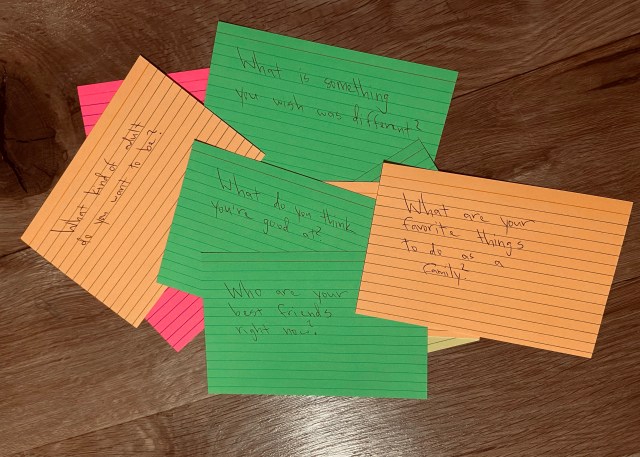
Argh. It’s no small task to be human these days, with so many feelings bubbling inside of us. I encourage you today to take note of your feelings. Here is a link with a list of feelings if you need some help. Then, you might ask a friend or people in your family to do the same. My very favorite tool to engage you in conversation around feelings with your own self or with others feelings are GROK cards.

There is a lot going on in your life if you start to dig around a bit. As I learned in a room full of pastors, deacons and a flood of feelings, naming the truth of what we are experiencing is an invitation for Christ’s healing love.

Why You May Never Want to Be Lutheran

(Photo by Trae Gould on Unsplash)

If the term “Lutheran” is unfamiliar, it is a way to practice the Christian faith. There is a wide variety of denominations (branches of the Christian church) within the Lutheran faith that range from more conservative to more liberal, based on how that denomination reads the Bible. I serve as a pastor in the Evangelical Lutheran Church in America (ELCA). As I refer to the Lutheran faith in this post, I am speaking of the ELCA because it is the Lutheran practice most familiar to me.

I am a Christian who is Lutheran, which is something you may never want to be. Yesterday I complained to my colleague how challenging it has become to choose hymns for worship, when the tune that is more familiar might be the one with the term “scepter”. Prior to “Game of Thrones”, that word, for some people, might have called to mind Christ the king, but now, it is less likely.

We love our old hymns and our old ways in this relatively old faith tradition. In the 500+ years the Lutheran faith has existed, the world has experienced droughts and wars and fascist leaders and economic disasters. Hurricanes have devastated countries and native people in parts of the world have been mistaken for objects.

Each time tragedy strikes, the Lutheran faith has had something to say, albeit sometimes too late. You may never want to be Lutheran because we have a deep-seeded belief that this world’s tragedies do not become our story. We need not be consumed by the state of the world, no matter how messy that state may be, because we proclaim a faith not shaped by hand-drawn boundaries. To be Lutheran is to be less caught up in “faith over fear” and much more caught up in “faith for the sake of our neighbor”. A Lutheran’s focus does not land on personal freedoms and rights, but on our neighbor’s well-being.

But that’s just a Lutheran thing. Again, it might not be your thing.

This old world has a way of returning to times of unrest, based on how much we don’t like “the other”. We simply change how we identify “the other”. “The other” has been the Jews, the slaves, the Yankees, the AIDS victims, the women, the immigrants, the homosexuals, the blacks, the Native Americans, the liberals, the conservatives. When Ecclesiastes wrote almost 3,000 years ago that there is nothing new under the sun, he may as well have written that yesterday!

A couple of weeks ago I deleted Facebook from my phone. To post devotional material for Devotions from the Badlands and my writing page, I have to go the long way and log on from my laptop. That simple omission from my iPhone has brought a great wave of relief. I no longer lazily click the blue logo that lures me into the maelstrom of memes and misinformation. I feel so much better! And to tell the truth, I’ve been sleeping better, too.

Even I, who know a few things about the Lutheran faith, can get turned around amid the intensity of this pandemic. Even I can forget that God alone is our refuge and our strength, which Lutherans interpret to mean we wonder how to provide refuge for the neighbor who lacks strength. For example: the immunocompromised, people too young for vaccinations, families who have experienced so many quarantines because they have followed the CDC’s guidelines, long-term care residents, and people who live in impoverished American neighborhoods where the average life expectancy now falls even further behind where you likely live.

The Lutheran faith is not for everyone. It’s much easier to keep the anger streak going on Facebook than it is to face the needs of our neighbor. Logos like “faith over fear” are much more compelling than “faith for the sake of our neighbor”. That would make a terrible meme. It’s not catchy at all. Not even the word “scepter” could redeem it.

I suspect there is a well of good questions that might create conversation with kids to notice how our actions impact the vulnerable. What our faith has to say when we share memes that demean another human being. Who “the other” is right now and when you were growing up. How the needs of our neighbor matter more than our being right and more than our individual rights.

The Lutheran faith is old, but not as old the Savior (with the scepter) whose love was first and foremost for “the other”.

Garden Variety Apocalypse

There is an impressive garden I pass by on my walks with Pippen. The couple who tend this garden have made a serious commitment to the earth. In the spring, they faithfully till and plant and then I get to witness the magical way seeds transform into food. Green, red, purple, and orange stain the growing garden until suddenly sections disappear. It is a vegetable apocalypse with raptured tomatoes! A cucumber diaspora and a scattering of green beans.

The apocalypse occurs in tandem with the first weeks of school. As vegetables disappear from gardens, kids disappear from home (or for homeschool or online students, kids disappear from their summer lives). I felt the change today, my designated day off, when I came home from the school drop off to a quiet house. Pippen greeted me with his eyes on the door in hopes that another human or two would follow me. Surely, he acknowledges the difference, too. A grown-up at home and no kids means his extensive naps will go uninterrupted.

The diaspora of vegetables and school-aged kids are clear evidence that our days are not meant to look the same for any long period of time. The rhythms of a school year and gardening might teach us to hold life lightly and expect it to change. Life is not built for white, clasping knuckles, but for loose grips.

If God is in the details, God is certainly in the plucking of cucumbers from their vines, and in the student’s march from the car or bus to the classroom. Garden apocalypses will continue as sure as your own life will change. There is a steadiness that comes when big and small changes invite you into a long conversation with God.

“God, this is different…”

“God, why can’t tomatoes taste this amazing all year long?”

“God, can you be more generous with the carrots and go easy on the zucchini? Just an idea.”

“God, this part is really nice and this part is hard…”

“God, what might change next?”

“I know, God, you will be there then, too.”

Walking With My Favorite Devotional App

( Photo by Miguel u00c1. Padriu00f1u00e1n on Pexels.com )

Saturdays are my favorite devotion day. On Saturdays, the app I use, Pray As You Go, walks me through Examen as I walk my dog through the neighborhood. What is Examen, you ask? It is wonderful and has nothing to do with exams! Examen is a spiritual prayer practice taught by the Jesuits. In this practice, you look back at your day and pay attention for God’s activity. You notice how you spent your time and you remember (because you probably forgot) that God spent all of that time with you. What do you notice as you look back? When did you experience tension? When did you feel most alive?

That was one question in today’s Examen. Reviewing the headlines of the past week, I recognized I felt most alive writing liturgy for September worship services, connecting with my love of writing. I felt most alive when I visited with St. John folks over the phone and in person, connecting with the church I’ve been called to serve. I felt most alive sitting at a table or leaning over the kitchen counter listening to my kids recall their first two days of school.

When did you feel most alive in the past week?

It is amazing what you notice when you look back! We often have a better angle on our lives when we look back. The view isn’t always pretty, just to be honest. I had to see again that I snapped at my spouse. I worried more than I needed to regarding the state of the world. I could have stewarded my time more carefully. And so we look back with a lens of self-compassion. Every day, we start over. Looking back, I could see that yes, I did apologize to my spouse and I did tell God what I’m worried about. I did pay better attention to the precious resource of time. Looking back at a week encourages you to let go.

What spiritual practice helps you to let go? Do you journal, spend time in silence, or walk? This app has been my faithful walking companion (along with Pippen, who doesn’t actually care about my devotional practices), for the past six months after my colleague mentioned it. I simply added it to what I was already doing.

Please wonder today what practice might be a worth a try. What might fit well into your life, even if it takes a bit of discipline? What might encourage you to be more gentle on yourself? You don’t need to commit for life, just for now.

A Christian Way to Talk About the World With Kids

Photo by Miguel u00c1. Padriu00f1u00e1n on Pexels.com

Have you ever noticed how you talk about the world with kids? What age-old words or phrases do you let slip without realizing? Do you call the world “dangerous”? Or explain tragic events by concluding, “The world can be a terrible place,” or, “There are bad people in the world.”

I also wonder how you refer to decision-makers. Are all politicians awful? And lawmakers corrupt? How do your own headlines and editorials shape the way kids around you understand the function of the government?

As any teacher will tell you, kids speak of the world with the narrative they learn at home. Your family’s unique language is their first tongue to articulate an understanding of the world around them. If at home you speak of a corrupt government, your child will do the same at school. If all politicians are distrustful as you process the news at home, distrust may plant a seed that will later blossom into endless conspiracy theories.

The Buddhist are perhaps the first to point out that humankind is aptly named. Our early orientation toward strangers is most often kindness. If you smile at a toddler, that child will naturally smile back. It happens every Sunday during the sermon when people sitting near a baby will hear almost none of the sermon due to the steady, heartwarming exchange of glowing smiles.

We live in a time in the United States when deeply-rooted conspiracy theories are shaping events and nurturing distrust. In my corner of the world, generations-old distrust of the government has placed a filter over information related to the pandemic. And that makes me wonder about younger generations that continue to learn distrust as a first language. I suspect conspiracy theory is handed down and learned at home.

All that is to say, what might be the Christian way to talk about the world with kids, particularly at home. Here a few ideas:

  • Do not avoid the words “I don’t know.” We are inundated with both true and false information and we do not always know the difference. A shrug of the shoulders prevents us from thinking we are always right.
  • Check out the Bible. It blows my mind whenever I read Old Testament stories of how God used “the bad guy” to deliver his word. Jonah was sent into “enemy territory.” Jesus befriended the wrong “political parties.” The fall of the Berlin wall is a good illustration of how God responded to separating humans based on political allegiance.
  • Start a conversation. Ask kids, “How is God in the world right now?” As we watch the terror unfold in Afghanistan, how is God with the people? What does God need from us to care for the strangers we see in the news? Even a prayer for people far away makes us more than strangers. Also, asking kids a question reminds us that they know far more than we assume!
  • Scan yourself for anger. Anger can be productive, but it can also be wildly unproductive. If your anger makes you feel self-righteous, keep that in check. Your kids may learn to be angry with people only because they think differently than they do. Warning: Self-righteous kids are the most annoying friends in high school and college. Try to avoid raising those.
  • Remind kids a basic tenet of the Christian faith. Our faith does not put our absolute trust in a human leader, but only in our Lord. Only God deserves our total allegiance. Only God will save us. Only God will lead us through this life into the next one. Human leaders cannot promise salvation, so if you sense yourself buying into such a promise, back up a bit.

While it is a challenging time to raise kids, it is an excellent time to be in conversation with them. We all need help processing what we see in the news. It is easy to avoid, but we need to talk about why there are people who drive around our neighborhood with flags in their pick-up trucks for my 9-year old to read F— Biden. I wonder why that person feels so strongly? I don’t know, but I’m sure there is a reason. He/she is a child of God, too.

Waiting For School, Waiting For Cooler Weather, Waiting For Supper

Waiting for the laundry to finish, waiting for mom to buy more granola bars. Waiting for the cookie jar to refill itself, waiting for that device to charge. Waiting for the eggs to cook, waiting for kids to stop bickering. Waiting for the movie to begin, waiting for tomatoes to ripen.

I am impatiently waiting for the tomatoes! So many tomatoes in my backyard. Any moment now, I’m sure, they will show their true colors: red, purple, and yellow. Then I will smile a loving smile and make a BLT.

Impatiently is one way to wait. I can watch tomatoes impatiently and water them impatiently. Waiting impatiently is a sure formula to miss the details. If I am too impatient, I won’t notice the earthy smell of the leaves that have been working hard for months to grow. I won’t notice that sneaky orange cherry tomato I overlooked earlier. I won’t notice how wild it truly is that our food comes from tiny seeds!

Waiting impatiently mutes the wonder. It hurries us through the minute, the hour, the day, the lifetime. Wait impatiently and your frustration might get the best of you. Wait with wonder and your senses might perk up.

In these weeks of prelude to the school year, I am waiting for kitchen counters to stay clean all day long, and for someone else to make their lunch. I am waiting for the return of the beloved routine, and for kids to enter new challenges.

I will take another stroll by the yet-to-ripen tomatoes to avoid becoming too impatient in my waiting. They may remind me that suddenly they will be big and ready to leave the vine. I may never get such a privileged close-up view of their growing up. Every moment I’ve been waiting, they’ve been transforming. And I tell them as I wait and wait, that they are the most wondrous tomatoes I have ever laid eyes on.