Lent Week 5: Waiting

Last year in April I had a cough that wouldn’t quit. Like most people who coughed in 2020, I wondered whether I had COVID-19, so I called my primary doctor and she suggested I come in to get tested. This was early in the days of testing before our community became proficient at drive-through testing. I drove up to the clinic door where I was met by a kind nurse who explained which door I would walk into. I parked my car and took with me only my mask and car fob to avoid the potential of contaminating my phone or purse. This might sound silly now, but April was a time of great unknown and we interpreted what we did not know about COVID-19 with heightened suspicion.

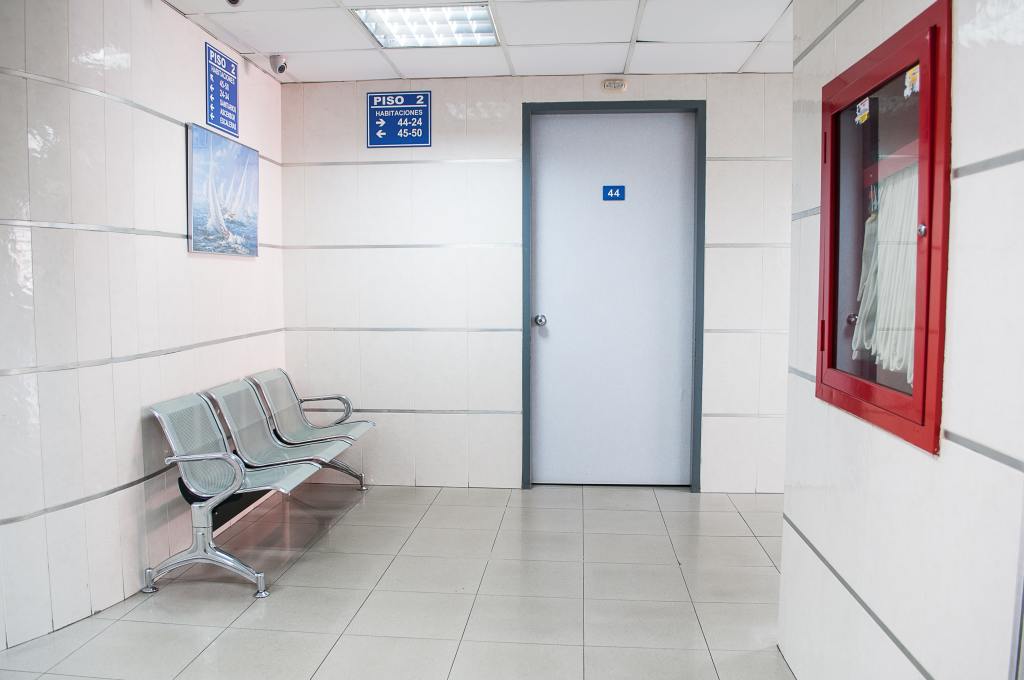
After following the kind nurse in the door and down an empty hallway, she deposited me in an exam room where I waited. After a brief wait, one of my favorite LPN’s checked me out and I waited alone in that room for the results of the strep test before going home to wait a few days for the results of the COVID-19 test. In the exam room, I waited about 20 minutes. Twenty minutes alone in a room in a wing of the clinic that was hauntingly empty with no phone therefore no Kindle book. It was me in a shroud of silence. Waiting. Waiting. Waiting.

Waiting is art, perhaps, in that it becomes what you make of it. It can be perturbing or relaxing. You are given time to stew or to notice. I chose to notice. I noticed what it was like to be utterly alone in a time when we were exceptionally careful of each other. So worried about ourselves and one another. I noticed the courage of the medical professionals doing their own waiting between tests. Each test moving them further into a global pandemic, something they had prepped but never experienced. We were all new to this waiting.

No, I did not have COVID-19. My cough stuck with me another couple of months, and nearly a year later, so has my experience waiting.

Much of the time we are waiting. Waiting for someone to come home. Waiting for water to boil. Waiting for kids to go to bed. Waiting for husbands to surprise us with coffee. Waiting for tulips to push out of the soil. Waiting for the bus. Waiting for the internet to speed up. The next time you find yourself waiting, you might embrace it as a time of noticing.

Lent is six weeks of waiting for Easter Sunday. We notice in the waiting how human and fragile we are and Jesus was. We are absolutely vulnerable to everything in these bodies God blew out of the dust and then climbed into in Bethlehem. We are vulnerable to broken bones and a broken heart. To insidious coughs and scary diagnoses. Notice in this last stretch of waiting during Lent that you are fragile and so is this life. Look around, notice and take inventory of what matters. Moments matter, relationships matter, Christ’s forgiveness matters, each season of your life matters, you matter.

Thank you, Jesus, for periods of waiting, and for showing up so we never wait alone.

A question for littles

Do you think Jesus ever has to wait for anything?

A question for former littles

What is the next big thing you are waiting for?

A spiritual practice

The next time you are waiting in line, resist the urge to go to your phone. Notice what is around you. Can you pray silently for someone you see? Or for the person who will later clean the floor you are standing on? What do you notice as you wait?


Lent Week 4: Your Kiddo Really Prefers Store-Bought Granola Bars, So You Can Stop Making Them

If there is one thing I now know in the thick of the marathon that is parenting, it’s that I really don’t know much. And the things I do know have been learned only when I unlearned other things.

For example, my child will eat homemade baby food, and then homemade granola bars and mac and cheese, and then homemade everything because this is what I learned in parenting magazines (back when impressionable parents gleaned information from paper pages instead of web pages.) I unlearned much of what I had learned when my kids realized the world is much larger and in it exists a magical kind of Kraft Mac and Cheese and granola bars found in wrappers, like candy bars.

I learned from experienced parents the dream of being the parent who hosts the teenage gatherings in order to know kids’ friends. These wise parents taught me the importance of creating a welcoming, junk-food friendly home to attract teenagers like vape shops with their variety of cereal-flavored options. I unlearned such learning when I began to understand teenagers don’t always gather in the same room. I cannot offer said junk food to a teenager through an Xbox, even though I consider virtual gatherings valuable.

Parenting exists in a steady stream of learning, unlearning, and learning. It never ends. Ever. Which means there needs to be a space for the unlearning. We humans need space for the unlearning to lead to new learning. We learn to overschedule kids and shape our lives around their busyness. We learn to consume too much via cookies or Amazon or alcohol. We learn to work too much, complain too much, and accept the world for what it is too much.

I invite you to make space for the unlearning. In the unlearning, we make space to question what we think we know and let the Holy Spirit stir our imagination into new learning. What do you need to unlearn about the way you spend your time or your money? What might you unlearn about the way you understand your body or your neighbor or your nation or your religion or the world? What parenting practices might you unlearn to avoid making the marathon any freaking harder than it already is?

I have come to imagine Lent as a time when the church makes room for the unlearning to learn again the unlikely ending of the Jesus story. Based on all logic and reasoning and everything we have ever learned, the Jesus story should end on the cross with his last breath. The book should close with the power of death we learn all through life but of course it doesn’t. Instead, we learn an unlikely Easter awakening keeps the book from closing.

Unlearning death’s power means we live an entire life knowing the story doesn’t end as it should. So when I make a wrong parenting move, or realize what I’ve been doing was a sub-par idea, I can turn around (repent is the churchy word) and learn something new. New is the first and last word God speaks. New creation, new life, new wondering, new learning (after the unlearning).

A question for littles

What is one thing you know that grown-ups forget? (Kids can be great teachers of what to unlearn.)

A question for former littles

What is something you thought was true when you were little that doesn’t seem to be true after all?

A spiritual practice

Think back to a time in your life when you felt at peace, and comfortable with your self? Is there something you need to unlearn to return to that sense of peace?

Lent Week 3: What Silence Might Say?

(Photo by Michael Held on Unsplash)

“Let’s play Graveyard!” shouted the day campers. And no, this was not Vampire Camp, it was Bible Camp.

Growing up, day campers like me loved the game Graveyard. We spread out and lay down in any position we chose. Whoever could be silent and the absolute stillest (dare I say corpse-like) the longest was the winner. Counselors walked around and removed from the game anyone not acting like they belonged in a graveyard.

Only when I became a counselor years later did I recognize the genius of this game. Graveyard interrupted the cacophony of camper noise and bought the staff several minutes of complete and utter silence. In fact, I think as a camper we played this game after lunch and I wonder now if when the counselors were “inspecting the graveyard” they were actually napping.

For most moms of littles, silence only comes in the beloved moments of naptime, if it comes at all. In later decades of life, the silence can be unbearable. Perhaps life is lived in seasons of longing for and dreading silence. Last year I spent four days on a silent retreat at Pacem in Terris hermitage in Northern Minnesota, where silence felt like a cold cup of water on a steamy hot day. I left so refreshed after listening to silence day after day. Of course, the silence was not completely without sound. There were rustling leaves, singing birds, tiptoeing deer and raindrops. And silence itself has its own words for you. When you find yourself with silence, it will have so much to say whether you are together four days or four minutes or even four seconds.

Yet we hardly ever find ourselves alone with silence because we cover the mouth of silence with music, podcasts, tv shows, and video games. If we really want to hear what silence has to say, we can brush our teeth with the bathroom door closed and possibly ignore the wiggling fingers at the door. We can keep the radio off in the car, walk without headphones, or make dinner without turning on a device. What might the silence say to you?

We are halfway through Lent, only a few weeks from the day we are awaiting. These weeks of reflection require some silence to be ready for the silence that awaits us in the empty tomb. On Easter Sunday, the silence has everything to say you. It will say, “And you thought death was final.” Or, “Look what God does when all hope is lost.” Or maybe, “Silence is the secret promise that everything will be okay in the end if you can just hold on a bit longer.”

A question for littles

When and where are we expected to be quiet? (at the library, sometimes at church, during the National Anthem, sometimes at school, when we listen to someone else pray) Why are we expected to be quiet then?

A question for former littles

How do you decide what notifications on your phone to turn on or off? Do you ever feel overwhelmed by them? Do the notifications make it difficult to relax?

A spiritual practice

Take a walk and don’t invite your phone. Listen to what is going on around you and what you hear in your own head.

Lent Week 2: The Math of Lent

(Photo by Crissy Jarvis on Unsplash)

During Lent, we often practice subtraction. We subtract (give up) chocolate, social media, or alcohol. One person told me she subtracts one meal each week to recognize how many people go hungry. At our church, we subtract busy programs and as many meetings as we can during Lent to focus on worship.
Subtracting what pushes into the margins is a healthy practice to delineate where life is to start and stop. Life has a way of spilling into the margins. We eat too much chocolate, consume too much social media, and drink our worries away. Wait, where is the margin? We expend too much time overparenting, pour more energy into work relationships than our marriage, and make rest a distant priority. Margin? What margin?

Perhaps it is time to wonder if Lent can be a time of addition. Can you add a screen time limit to your own phone? Add an automated gift to your favorite charity that feeds the hungry? Add to your calendar a date night with your spouse, or a self-care day for yourself? A couple of years ago, my family added hosting a weekly dinner with friends during Lent. Each Friday, we invited friends or family to our home for a nice meal, conversation, and games. We didn’t do it perfectly. There were a couple of weeks it didn’t work out, and isn’t that how it goes when you are trying to maintain margins? Each week, we simply start over.

When we add what matters, the margin seems to work itself out, no subtraction required.

A question for littles

What is something you love to do together you wish we would do more?

A question for former littles

Think of some of the most meaningful ways you spend your time. What do you do that gets in the way of spending time meaningfully? Do you want to spent more time alone/with friends/with family doing what is meaningful to you?

A spiritual practice

Try adding one meaningful thing to your life for the next four weeks of Lent. It could be a daily or weekly practice. Like most important things you don’t want to forget, add it to your calendar. Make that time sacred and nonnegotiable.

Heavy Words & Little Ears

Lent begins on Ash Wednesday in a language of heavy words. In the Evangelical Lutheran Worship hymnal, we confess in words that would have done me in at an elementary-aged spelling bee, and might still give me trouble were it not for spell-check: self-indulgence, hypocrisy, exploitation of people, and self-examination.

The last phrase is both heavy and light all at once. When you look deeply at your own self, what do you find? I find all the heavy words at work. Am I self-indulgent? Let me think about it after I drink a third cup of coffee with a splash of cream. Hypocritical? Indeed. Do I exploit people when I buy cheap stuff on Amazon. Yikes. Let’s be done now.

Coupled with the heaviness of Lent’s language, however, is an airy lightness. Sure, you are bound to embody those words by nature of your humanity. They run in your blood and move to your heart. And yet, the 40 day self-examination moves us in a single direction: to Easter. Lent is a hard look at our own selves and a grateful look at what God has already done about it. You carry around heavy words and Jesus lifts them off your back. You are overwhelmed by your relationship with the aforementioned heavy words and Jesus erases them to scribble the one word “forgiven” all over you.

Lent gives us language to teach ourselves and our kids that the heavy words do not define us or own us. Jesus’ one word, however, does.

A question for littles

Forgiveness means there is nothing we can do to undo God’s love for us. It sticks to us like the stickiest glue ever invented. What sticky things can they find in the house? (For example: stickers, tape, the maple syrup on the kitchen table from breakfast.) Talk about God’s love as stickier than even that!

A question for former littles

Wonder together about self-indulgence. Be honest about what tempts you to self-indulge. (Hello, chocolate chip cookies.) What does it feel like when you self-indulge? Why is hard to be honest about it? How does Jesus’ word “forgiven” written all over you change how you feel about yourself?

A spiritual practice

Self-examination is indeed a heavy phrase. Let it also be a freeing phrase.

Sit still and scan your body from your toes to the top of your head. Remember God made your body out of love and in the image of God. Imagine examining your heart. What do you find there? Let your heart tell you. Take one deep breath and then another, as you say this prayer: “I am forgiven. Let my heart love my neighbor and myself.”