An American Advent: The Story That Leaves Us Hanging

You are a gingersnap away from An American Advent turning into Christmas. We have now sledded through Habakkuk, Esther and Isaiah.

  • First, we reflected on a word in which I encourage deeper reflection before you sit among differing opinions at the Christmas dinner table: justice. Justice happens when people work toward the same equitable goal. Justice is a touchy topic in America today, often confused with political positions.
  • We spent time with Esther, who bravely believed she need not wait for someone more important to make things better. On the news, America’s messes are the fault of politicians, which lets the rest of us off the hook. We complain as we wait for the important people to make it better. But Esther would not wait.
  • Last week we named how hard it is to begin a new tradition when we prefer old, familiar patterns. For example, how are the patterns of your family of origin troublesome when you gather for the holidays? When God’s people were caught in an old pattern of rebellion, Isaiah proclaimed the coming of a new pattern – one of love that would begin in a manger.

Finally, the Narrative Lectionary reading for the last Sunday in Advent is reserved for Joseph. We know so little of Joseph, it seems a strange way to conclude Advent. Only a dozen or so verses are dedicated to him in all the Gospels. The Bible calls Joseph “righteous.” We gather that he both knew the rules of his religion and followed them, as was expected. If we imagine Joseph’s religion to be a path, Joseph knew the way because he knew the rules.

What happened in Joseph’s dream in Matthew 1:18-25 might seem a likely prelude to Jesus’ birth in Bethlehem. An angel appeared to Joseph to explain Mary’s pregnancy. (Either Joseph caught on quick, or the angel’s words here are abbreviated. Explaining a virgin conception in a single verse?!) In his dream, Joseph needed to understand why his fiancé was suddenly pregnant, however, this dream is not only about Mary expecting! This dream is the beginning of Jesus upsetting the righteous.

Throughout his life, Jesus upset righteous people like Joseph. He stepped onto people’s religious paths and begged them to see God as more than a religion for the righteous. God loved God’s people dearly, more than God loved rules. God loved the people more than God could put into words. So, God squeezed God’s tender love into one Word: his own Son, who would later be executed by the righteous for not following all the rules.

But this is an Advent devotion! Let’s not speed ahead to Good Friday.

This is An American Advent devotion. You are reading this in a time when many Americans have mixed up our politics with our religions, neither of which proclaim the birth of God’s embodied love. Both your political party and your own religion at times will disappoint because both are human inventions. The Word made flesh is our only hope.

  • The leaders of your political parties are not your saviors and they will not set you free. Only the Word made flesh sets you free.
  • People who follow the political party that opposes yours are the very people you need to work together for justice. If you draw a line in the sand between you and those with whom you disagree, the Word will annoyingly erase it.
  • Sitting back and blaming the leaders tricks you into believing you have nothing to offer to make this nation better. The Word proclaims hope through ordinary people like you.
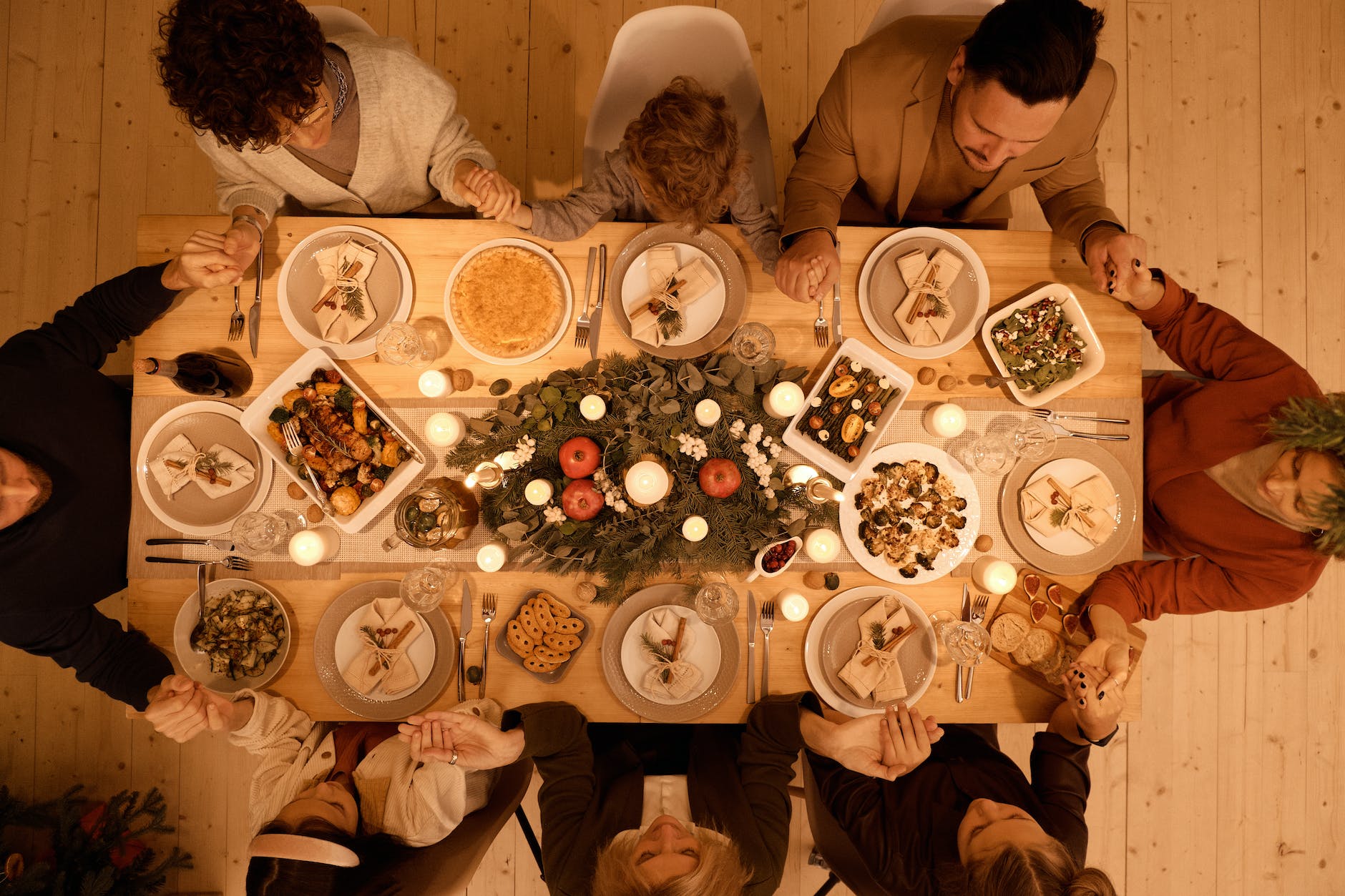
  • Old patterns, even deep divisions between people on the left and right, can change. For you, it might begin at the Christmas dinner table. The Word is present when we pass the peace along with the mashed potatoes and gravy.
  • Religion is more than rules. At its best, religion pushes the faithful to recognize God’s love for all people and all nations. This Word has no margins.

Your wait through Advent is but a few more days. Despite our political disagreements and the old relationship wounds acquired during the pandemic, a few songs will unite us in the week ahead. Together we will sing of the angels, the shepherds, and the little Lord Jesus, no crying he makes. Our own cries of blame and bitterness will quiet into a silent night while candles real and battery-operated outshine our divisions, if only for a moment.

Christmas is the story that leaves us hanging. The Word made flesh does not fix our America. The Word made flesh instead insists on hope: hope that justice calls us to work together; hope that ordinary people can heal extraordinary division; hope that peace can indeed be passed with the mashed potatoes and gravy.

Blessings on your Christmas, that the Word made flesh might make an appearance at your Christmas dinner table dressed like you. Amen.

Photo Credit: Nicole Michalou on Pexels.com
It Was There the Whole Time

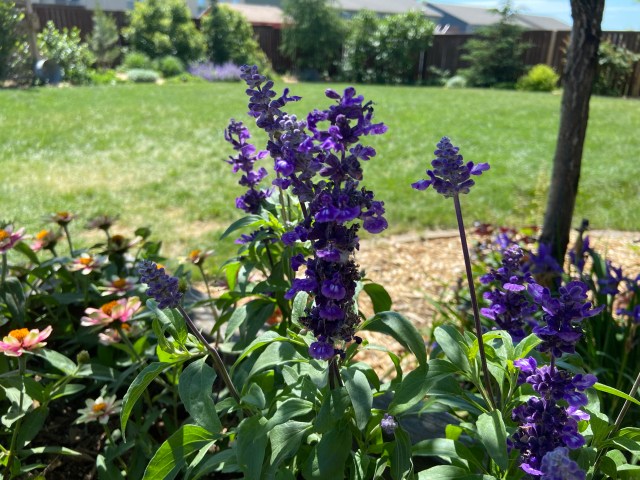
our backyard

There is a peaceful place you yearn to be when life feels hectic. When the pace picks up, where do you long to go, knowing that in your particular, peaceful place, the pace slows?

Humans require a peaceful place with a slower pace every now and then, as noted in the commandment to remember the Sabbath day and keep it holy. The command is not for God but for us. Good comes when we hit the pause button for an hour, a day, or longer, even when it means stranding a bottomless to-do list.

The peaceful place I often imagine is near water: a stream, river, lake. A watery site where birds hover and come to visit. Is this why my favorite color is blue, I just now realize? I know I’m not alone in finding peace by water. It’s where Jesus tended to hang out when he hit the pause button. It is why lake cabins are forever in demand. I love to watch the water in motion, quietly offering life to mysterious creatures below and to happy onlookers like me. Does it have something to do with our very first swim in the amniotic waters? Who knows.

I do know there is little natural water to be found where I live. We are all shocked when the grass is still green in July! Lakes are few and far between in southwest North Dakota. There is a lovely river not far from me, but not so easy to visit.

And all this time I long to be spectating waters, it occurs to me, peace may not be so far away after all. The disruption of peace is not limited to the particular places where the pace slows. In the wonky rhythm of summer, there is peace in a deep and renewing breath, in the shifting colors of a yard populated by perennials (thanks, Marcus), and in the broad view of badlands or a field of seeds quietly growing food in the darkness of the soil.

Peace is not only there, it is also here.

Dear Lord, keep me from overlooking peace because I expect it to look like something else. Amen.

Why Should I Have Coffee While They Flee?

(Photo by Engin Akyurt from Pexels)

While I was writing Spiritual Longing in a Woman’s World, the death of George Floyd set the spotlight on black voices begging to be heard. My eyes were opened by Austin Channing in particular. I began to wonder whether my book had a place at a time like that. Who am I, with my long history of supportive family and pastoral calls that came easily to me, to speak of longing? After more prayerful wondering, I understood there is never a perfect time for anything. If I waited to publish my book, there would certainly be another set of voices longing to be heard.

Today, ordinary women (like me) seek refuge in places far from home while their ordinary husbands (like mine) stay put to make possible their return. And here I am, a half-turn of the globe away, with my hot coffee and apple scone. Yesterday, our congregation prayed for peace from the safety of our building tucked into a quiet, ordinary neighborhood. How are we to live in the luxury of peace while there is no peace for so many ordinary humans?

I offer two responses to living in a world where one person is at peace at the same time another is a victim of war. One response is faithful and the other is not.

  • Be so thankful you are not them. I hear this from parents whose kids go on mission trips. “I just want them to learn how lucky they are.” Yes, that is what happens when we experience someone else’s struggle. We go home because we can, thankful we are not them. Today, we can tell our kids, “Eat your vegetables. At least you are not fleeing Ukraine with your mother.” This is a helpful way to deepen the divide between lucky us and unlucky them.
  • Recognize “them” are actually “us”. (Sorry, grammar people, that can’t be right. It’s the best I can do.) We are all people with families and homes who live in countries and are vulnerable to dangerous leaders. We = each and every one of us. There are no exceptions. The pain of the Ukrainian mother is my pain, too. I might feel thankful to enjoy peace, but more than that I feel deep sadness that someone else doesn’t get to enjoy it, too. Offering my kids this fuller picture points to Jesus in the gospels.

I am still drinking my hot coffee, however. And, I am fervently praying. Prayer shapes our hearts to see beyond ourselves. I am also giving money through Lutheran World Relief and the ELCA’s Lutheran Disaster Response. The latter nonprofit passes along 100% of your giving and retains zero dollars for administrative fees. I trust these two established organizations knowing they will not disappear when the crisis is over.

Teaching kids to recognize “them” are actually “us” takes turning the globe around and introducing them to our neighbors and wondering what “peace” looks like here and there. Most people in the world do not live with the luxury of food, shelter and clean water. We do, which means we have resources to share. Peace is not a luxury to be hoarded. It is what Jesus gave away, so that we might do the same.

Kelly Corrigan’s Lovely Oh Wells

(Photo by Helen Cheng on Unsplash)

You know those moments when the words find you. When you read a passage in a book that names exactly how you feel. Or a phrase from a song touches you. It happens to preachers, when someone listening thanks you for words they needed that you may or may not have said.

This 6-minute episode of a podcast found me at the right moment. I’m a fan of Kelly Corrigan, author, podcaster, and person who wonders out loud. She also wrote a lovely children’s book called “Hello World!”, calling young humans into the wonder of the world and its inhabitants.

Back to her podcast episode, where she gracefully names some of the disappointments we experience and concludes with the refrain: “Oh well.” These two words are like Teflon for the moments we simply must let go. They resemble the life-giving reminder to be gentle on yourself. And they sound like Jesus’ promise of peace, unlike anything the world gives (John 14).

There are some reminders that never completely sink in, or maybe they do, and they’ve sunk so deep we hardly notice them. As your life changes, however that may be, and the story isn’t the one you had in mind, “Oh well.” The earth spins and we start over. We can cling to regrets and grudges, or we can let them go. “Oh well.”

No circumstance changes who you already are, beloved human of God. “Oh well” keeps us from shooting for perfection. You are you with your flaws and your everything. “Oh well.” You are loved just as you are, and that is well enough.

Messy Make You Awesome

Oh, how I would love to open my kitchen cabinet doors to discover a gleaming oasis of organization. Instead of moving mixing bowls to get to a serving bowl, all bowls would be equally accessible. Some people’s dreams are inspired by dramatic home renovations on HGTV. I simply long for less crashing when I reach for a bowl.

Until the day arrives when only my husband and I open the kitchen cabinets, the crashing will persist. There is no possibility of an oasis for now. Like the lives we live, the cabinets will be messy, imperfect, oasis-less.

I have rounded the corner to the last third of my congregation’s gift of a sabbatical. The abundance of time I have to hang out with Jesus in prayer, to say yes to late night conversations with kiddos and my husband, and to Uber my kids here there and everywhere will shift in a month.

In my morning devotions, a question posed was whether I carry around heavy burdens from my past. Whether old sins linger and weigh on my shoulders. For me, it is the little things that snowball into a heavy burden. It is the everyday obnoxious, pestering questions:

Did I do enough for my family? For the church?

Whom did I disappoint?

Why did I say that?

Why didn’t I say that?

Could I have done that better?

Those are the pesky questions that keep me up at night and scratch at my soul, more than heavy burdens from my past.

And so, when I opened the kitchen cabinet and moved three things to get to a bowl this morning, I wondered if God was reminding me there is no oasis here. No organization or perfection to simplify life. As long as your heart is involved and your daily work (at home or anywhere) involves leading with your heart, you are in for messy cabinets, messy calendars, messy moments, messy sleep schedules. As long as you deeply care for people, do not expect perfection in your pantry.

This is why I wrote myself a note today. While the previous paragraph makes complete sense to me right now, in a couple of months when the messy cabinets are messier and I long for more time just to sit with Jesus, I will need a reminder. I will need a reminder that life with people involved is like needing the bowl that happens to be tucked into the corner, behind three other things. Always there is reaching and crashing. Remember, the note will nudge me, messy cabinets accompany life. The reaching, perhaps, could sound like Jesus’ reaching for me when I get stuck in the pestering questions. The crashing, perhaps, could sound like the slippery waters of baptism protecting me from the sticky burden of worrying whether I have done enough, or whether I am enough.

The moral of the story: If your cabinets are messy, you are awesome. Or more importantly, you are enough. And that is awesome.

A Mom on Sabbatical

Photo by Pixabay on Pexels.com

What have I learned in nearly two weeks of sabbatical time? I can sum it up in two words: slow down.

A year or two ago, I stopped at the post office to mail a package. It was a quick stop between Walmart and a haircut and I was hustling. Hustling is a drug that keeps you moving. It makes you feel amazing and unstoppable and completely unaware of how addicted you’ve become. I was pushing my pin number into the machine on the post office counter, but the machine kept rejecting my card.

“It worked when I was at Walmart a few minutes ago,” I assured the nice man at the counter, saying between the lines that there is actually money in my checking account! “You can slow down,” he gently prodded, seeing how flustered I had gotten. After a few more useless tries, I abandoned the debit card and handed over my credit card.

Later, I would realize I mistyped the four numbers of my pin. In my mindless hustle, I had thrown it off by a number enough times to lock up my card.

Now, nearly two weeks into this slower season of sabbatical, I am noticing more. I notice when I am tired and need more sleep, and then I go to bed earlier and sleep. I notice I tend to eat more when I’m in a hurry. I notice how easy it is for any one person in my family to default to a screen for distraction. I notice the majority of my breaths are shallow.

I notice how fun it is to prepare food when I don’t have to rush. I notice how much more meaningful conversations become when I’m not watching a clock to get back to work. I notice I take more time for contemplative prayer and daily devotions. I notice my families faces (even though not all teenagers appreciate such noticing).

“You can slow down”, came the wisdom behind, of all places, the post office counter! I’m listening. I’m slowing down.

What might that look like for you today? Notice when you are walking fast without needing to. Notice when you read, eat, or talk too fast. Notice your breaths and whether they are deep or always shallow.

In the noticing, often called mindfulness, Jesus’ presence becomes obvious. If there is one thing we do not attribute to Jesus, it is hustle! He was in no hurry moving from village to village, miracle to miracle, conversation to conversation, prayer to prayer.

How might the practice of slowing down help you notice the peace of Jesus’ presence today?

Home from Introvert Bible Camp

After five days of silence and a long, quiet drive on the unending pavement that is I94, I am home.

Last week began a three-month sabbatical from my work as senior pastor. At a hermitage in Northern Minnesota, my sabbatical commenced with a silent retreat that positioned me as unavailable to my family and congregation. It was a week of fast learning for all of us, me in particular, that I can step away (far away) and all is well. People continue to be cared for, kids are fed, and sometimes my husband can find a new shampoo bottle in the drawer in the bathroom when his runs out, although sometimes he cannot, like this week.

Who excitedly transforms into a hermit for five days in a tiny cabin tucked among a dozen or so other cabins occupied by fellow hermits to whom you cannot speak? Hermit, by the way, refers to someone who escapes everyday life in exchange for the quiet. It was like Bible Camp for Introverts. Nap, walk, read or write for hours. Food and water is left on your doorstep and time is spent listening to God, which means listening to the woods and its creatures, listening to your body and responding when it needs food or rest, and listening to the Spirit’s whispers in your prayers.

I learned (again) that we actually need very little, and the less there is (food, water, furniture), the more it is valued.

I turned off my phone Monday afternoon and did not touch it again until Friday. I missed it only twice, both times when I had an urge to Google an author whose work I was reading. Thank goodness that was not an option. You know what happens when you want to Google one thing. It’s “If You Give a Mouse a Cookie” every time! On your way to Googling, you stop to check your Instagram feed, which reminds you to send an email, at which point you decide to look at your bank account, and on and on. There is no such thing as a quick Google.

All genders can be seen ambling along the paths at the hermitage, but one day I noticed a half dozen or so women roughly my age. Later, I saw them congregate in the main building on my way to the shower. (Yes, hermits do shower, thank the Lord.) It appeared to be a women’s retreat. How brilliant! A gathering of women, perhaps moms, who took a couple of days to respond to no one’s needs but their own, answered no one’s questions, explained to no partner that your shampoo can easily be found by pulling open the drawer!

Moms often give in a way that makes it slip from our minds how we, too, are children of God. Children, all children, need to be known and loved and released from the mental load, if only for long enough to sneak into the woods for a few days of quiet.

To Know and Be Known

(Photo by Gabby K on Pexels.com)

This is not a schmaltzy Valentine’s Day post, lest the photograph mislead you. Tomorrow is not my favorite day of the year, although I have found it to be a good excuse to buy my kids a new book and chocolate. The point of Valentine’s Day is to express our human love for one another, but with that comes heaps of opportunities for missed expectations (disappointment) which can lead to not loving moments on such a lovely day of the year. At least there is chocolate!

Because our staff is reading The Road Back to You: An Enneagram Journey to Self-Discovery, I better understand my relationship with Valentine’s Day. Turns out, Valentine’s Day, it’s not you, it’s me! Have you heard of this tool to understand our personalities? The Enneagram, as Ian Morgan Cron, co-author of the book explains, is “a tool that awakens our compassion for people just as they are, not the people we wish they would become so our lives would become easier.”

Yikes. Have you ever wished someone would be different and therefore easier to love? Guilty. Have you crossed your fingers hoping someone you love might change as the years go by? Guilty. Learning my enneagram number taught me that although I am a unique human being created in the image of God like no other human being, I am also like many other human beings in the world. We are people who avoid Valentine’s Day because it can be accompanied by disappointment. When we encounter disappointment on Valentine’s Day, we distance from the very person who is trying to love us.

Like other people who identify as a 5 (The Observer), I prefer to think more than feel. I have to work hard to process my feelings. I like learning and listening as long as it isn’t small talk, and when someone says, “Tell me about yourself”, I wish I had an invisibility cloak. I will know a hundred things about a friend or conversation partner before they know 10 things about me. Anyone who identifies as a 5 would describe themselves similarly.

This new understanding of myself has been clarifying in a life-giving way, just in time for Valentine’s Day. I know myself more truly as a pastor, mom, wife and friend. Most importantly, I know to be more gentle on myself and others, especially on Feb. 14th. I am a 5, my husband is a 2, and that could lead to a whole series of blogposts.

For now, remember you are known by the Maker as your true, broken, messy self, which makes slightly more sense when you know your own true, broken, messy self.

#SpiritualLonging

A hunger for bread. A thirst only water can quench. A yearning for someone I love to hold my hand.

Our deepest needs are the least complicated.

Daily life, on the other hand, is mostly complicated. I am a wife, mom and pastor, making each day an exercise in meeting and missing expectations (my own, my family’s, my parish). We have expectations for ourselves and our work. Expectations are placed upon you by family members and your daily work, paid or unpaid. “To whom much is given, much will be required,” Jesus whispered in the ear of an overwhelmed woman. (Luke 12:48)

In the complicated seasons of life, what is required is overwhelming. At home, schedule the kids’ doctor appointments, sign up for baseball, buy her dance outfit in the size that fits (unlike last year), teach him how to drive, be available for conversation whenever a kid or partner is open to meaningful conversation, plan the meals, unclog the drain, surveil the screen time, fold the towels, check the homework, tell people to shower. And then there is your paid work if that’s your thing. And then there is joining your partner in caring for a marriage if that’s your thing. Maybe you care for aging parents or a sick kiddo, maybe you travel for work, maybe you are financially stressed, maybe, maybe, complicated, complicated.

I am convinced women today need to face the long list of what we expect of ourselves and what is expected of us and get real. Deep down, we do not long to administrate our families or “balance” time at home and work. Our true longing is much less complicated – as simple as bread, water, and the touch of a loved one’s hand.

These are spiritual longings, weaved into your very being. Spiritual longings are uncomplicated desires to set aside the unrealistic expectations you assume are required of you. Usually, the only person requiring unrealistic expectations of you is…you. Your family does not want you to work so damn hard. Your work does not need you to give up your well-being. You do not need to lose yourself in the dark woods of endless expectations.

When the message is to try harder to get through the woods, or to be your better self to find your way, I think that message is wrong and destructive. A better way might be to sit down wherever you are in the dark woods. Take a bite of bread and a sip of water and let Jesus hold your hand for a while. Take uncomplicated deep breaths. The drain will stay clogged and the towels will pile up. But you, beloved child of God, will hear Jesus whisper that you’ve gone too far into the woods. “To whom much freedom and life is given, trying harder is not required.”

That promise is my longing, filling my spirit with each deep, uncomplicated breath.

Advent Wondering: Peace in My Neighbor’s Neighborhood

In 2020, our world became both smaller and bigger.

The world was smaller in the sense that we scarcely moved around in it. I spent much of my time at home with the four people in my immediate family. In shared spaces, we all did our work. We cooked and ate and washed dishes together. I took lots of walks. We watched movies and played games and drove each other bonkers and then we got over it. There is a sense of peace in being connected with the people in your home.

The world also grew bigger. From my living room in June, I watched the burning streets of South Minneapolis on Facebook. Peace may have been something I was enjoying in my small world, but not in my bigger one. More than ever before, 2020 made me aware of the absence of peace for so many of my neighbors whose neighborhoods are not quiet like mine. Not all my neighbors trust the police like I do. Not all my neighbors feel safe going on long walks or stopping at a convenience store like I do.

Injustice against black and brown bodies was not new news to the big world, but it became more tangible news as our siblings in Christ persisted in speaking up about an absence of peace. Perhaps for the first time, I felt invited into the lament of a wide world with a narrow sense of what is normal (white food, song, experience) and what is not (black food, song, experience).

Peace is not reserved for our small world. Peace is not mine, it is God’s dream for the world. Peace requires peering out far enough for the world to become bigger, and neighborhoods to look more like one big world and less like separate worlds.

God arrived in a manger in only one world, after all, in another time when peace was only enjoyed in small worlds. This Advent, as I dream of peace in my small world, I’ll also dream of peace in the world that is unfolding more and more each day.