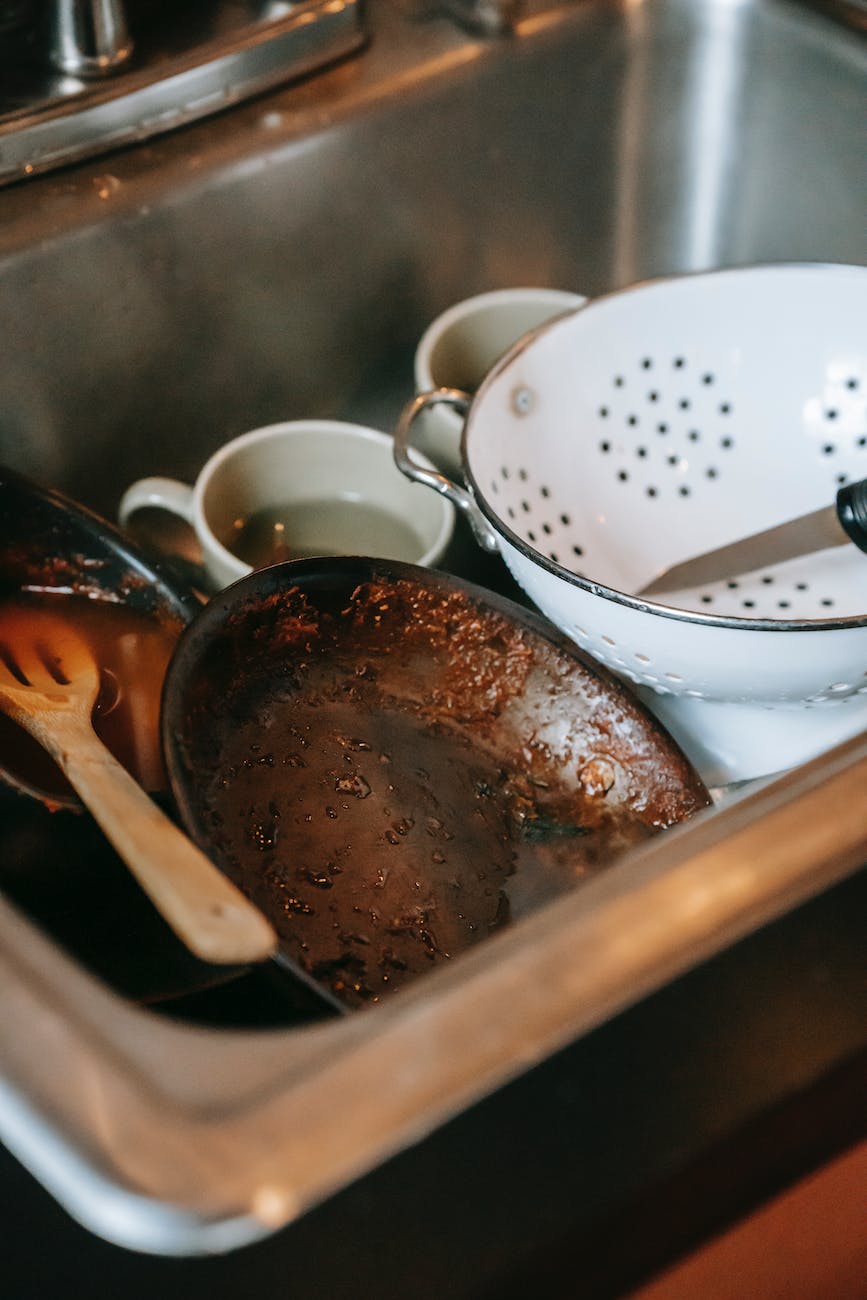
If my life were a movie, there would be a hundred scenes of a crabby me washing the dishes. It isn’t that I do not enjoy washing the dishes. It’s not the worst chore. What ticks me off is that washing the dishes is someone else’s chore. And that person seems to “forget” the assignment and get lost in a screen. Instead of maturely asking the person to wash the dishes, to quote any toddler you know: “I do it myself!” And the wrath of Lisa is felt at every corner of my home.
“Mom,” the person will later say, “I would have done the dishes…eventually.”
And it’s true! Eventually, had I been more patient and mature, that person would have washed the dishes without my transforming into such a crab. I could have ignored the dirty dishes and read a book, but instead, I jumped in and overfunctioned.
This is one of my biggest human struggles. And as you will notice in yourself, struggles within your family relationships often match your struggles in your work relationships. At home and at work, I tend to agree to do something before I think it through.
At home, when we overfunction for a spouse or child, typically that person learns to underfunction. We teach people how to treat us. To balance out a relationship, one person’s overfunctioning perpetuates the other person’s underfunctioning. In a marriage, we might adopt this relationship based on marriage as we saw it growing up. For instance, in the marriage we saw growing up, one partner did all the cooking while the other watched tv, so that seemed normal. Or maybe one partner constantly worked on the marriage while the other jokingly (but not jokingly) complained about it. In both of these examples, one partner is overfunctioning.
Roberta Gilbert described overfunctioners in this way:
“Advice-giving,
Doing things for others they could do for themselves,
Worrying about other people,
Feeling more responbility for others than is actually needed,
Knowing what is best for others,
Talking more than listening,
Having goals for others that they don’t have for themselves,
Experiencing periodic, sudden ‘burnout’ or severe illness in other forms,
Taking charge of others’ lives,
Doing well in life, but someone close to them is not.”
Underfunctioners, on the other hand:
“Ask for advice when what is needed is to think things out independently,
Get others to help when help is not needed,
Act irresponsibly,
Listen more than talk,
Float along without goals,
Set goals, but don’t follow through,
Become mentally or physically ill frequently,
May have substance addiction problems,
Put others in charge of their lives.”
The goal in a relationship is for each partner to be equally emotionally responsible. For the overfunctioner, Gilbert points out, this sounds preposterous! The overfunctioner assumes he or she is the most responsible, but in truth, overfunctioning simply perpetuates the problem. She points out the best way out of an over/underfunctioning relationship is for one person to ask, “What is my contribution to this relationship pattern?” That’s a bugger of a question. It means I cannot blame my kid for neglecting the dishes again!
In any relationship, each of us plays a part. If you step back and look at your life like you would watch a movie, you will notice the part you play. From there, you can thoughtfully work to change patterns that need changing.








 Lisa Lewton