The Magic of the 20-Second Hug

When I was a little girl, I had a persistent light cough that was attributed to dust. Among the many tactics we tried to eliminate allergens in our house to limit the coughing was a mostly strict ban on stuffed animals. Only my two plush puppies, Rover and Scrappy, survived the ban.

While no allergy is ideal, this one had its perks. No stuffed animals were allowed to move in. Meaning, my mom could say no to any and every such request.

Thirty-years later, my mom says yes to every such request from her granddaughter, which is how I ended up with a giant, red, heart pillow with the words “100% Huggable” from a garage sale last week. Where, I ask you, does one put a giant, red, heart pillow with the words “100% Huggable” in one’s home? Oy vey.

While the pillow is not my favorite, it is cool because my daughter picked it out for me, and because the words have a ring to them. I recently learned of the 20-second hug. Perhaps I read it somewhere or caught it in a podcast. Simply put, hugging your partner for at least 20 seconds (in one continuous hug) is magical. Consider. You cannot naturally hug someone you are annoyed by for 20 seconds. Eventually in those 20 seconds, you probably decide he/she is not so bad after all.

Please test the theory and if it doesn’t work for you, I have a pillow that could be your consolation prize.

Thanks for the Who

In the book, Burnout: The Secret to Unlocking the Stress Cycle, authors Amelia and Emily Nagoski suggest two lovely gratitude practices.

  1. WHO: Give thanks for someone(s) in your life.
  2. WHAT HAPPENED: Give thanks for something that happened that day.

These two practices are inspiring and avoid an icky result of most gratitude practices. Giving thanks for a who and a what happened prevents us from giving thanks for things. Giving thanks for things leads us to be thankful that we have things. Then we notice people in the world who don’t have things, which leads us to feel guilty that we do have things while others don’t. And gratitude becomes an exercise in guilt.

I am excited to practice giving thanks for some of those who are who in my kids’ lives. (You made it to the end of that weird sentence. Good for you.)

*Thank you, Lord, for Driver’s Ed instructors. What were they thinking? Keep them safe.

*Thank you, Lord, for coaches who set aside a ginormous amount of time for an often thankless job. Keep them sane.

*Thank you, Lord, for grandparents. May the trade-off of too-much sugar for so-much sweet grandparent love all work out in the end. Keep them smiling.

*Thank you, Lord, for gracious strangers who reveal comforting kindness at just the right moment, such as when a kid on a bike needs to cross a busy street. Keep them plentiful.

*Thank you, Lord, for the moms who are absolutely real when my kids come over to hang out. For the way they feed my kids with food, hospitality and an honest glimpse at the truth that all our homes are often hot messes. Keep them real.

*Thank you, Lord, for Faith Formation Directors (Christina Jorgensen) who mail my kid a cute card after an amazing week at Bible Camp, who promise that faith in Jesus is cool both at camp and everywhere else. Keep them in that particular job for a very long time. Please.

Thank you, Lord. Thank you.

The End.

Focus Beyond the Family (Part 2): Watch Your (Jesus) Language at the Table

(Photo by Dan Gold on Unsplash)

In my last post, your homework was to imagine yourself in your church home, or in your church homelessness. “Where are you from?” How did you arrive at the place where you are, rooted in or uprooted from church. I am suggesting that your faith walk, as you turn and look back on the path, influences how you raise your own kids or grandkids in the faith.

We know only what we know, and what we know shapes how we might talk about Jesus in our homes. Talking is teaching. You might talk to your kids about nutrition, money, and time management. Talking about Jesus is a way of inviting kids into a wider lens of the Christian faith.

Let me break up that babbling with a story. Maybe 20 years ago, I first laid eyes on the colorful, elastic WWJD bracelets. Soon, those bands were everywhere! Whenever you had a moral dilemma, the bracelet, like the proverbial angel on your shoulder, would remind you to ask: “What Would Jesus Do?”. With one easy question, you would know how to act like a Christian!

At around the same time, churches that teach easy answers began to grow. The bracelet and this-or-that kinds of churches offered an easier way to be Christian. “Be good,” the bracelet whispered to wearers all day long. Christians who appeared to follow the bracelet’s orders were called “good Christians”. If anything bad happened to them, bystanders were perplexed. “Why would something so bad happen to someone like her (him)? She (he) is so nice?”

Kate Bowler is an associate professor of the history of Christianity in North America at Duke University. At the virtual Festival of Homiletics last week (a geeky preacher gathering), she described WWJD Christianity this way: “Our lives are meant to be proof of God’s work and love, so our lives must be put together.”

Put-together lives prove that the bracelet works; that the Christian faith promises a better life. Lives that do not look put together are questionable. “Why don’t they just slip on the bracelet? It’s so easy!” WWJD Christians wonder, looking at empty wrists from their lenses obstructed by logs.

If faith were a series of moral questions and easy answers, how easy it would be, indeed. Listen to the bracelet. Follow the commandments (all 613 of them), and life will go your way. And teaching kids something easy is much, much easier than teaching them something hard.

All might be well until the perfect future unravels, one string at a time. The easy answers will not stand up to our own human brokenness. The bracelet cannot save the WWJD Christian from addiction, abuse, divorce, war, racial injustice, cyber-bullying, cancer, bankruptcy, and on and on. Life has a way of spinning a tornado, even through the put-together lives.

At the table with kids, watch your Jesus language. If Jesus rewards those who are good (how could something so bad happen to her), if faith promises a better life (we need to try harder to be good so God will give us a better future), how would we explain the truth about being human? Every kid needs to know the difference between a fairy godmother and Jesus Christ. Conversation points abound, so find one and wiggle into it.

~At the table, when the conversation turns to “the bad kid” in your kid’s classroom, Jesus language would wonder what is going on in that kid’s life? How could your child pray for her or his classmate instead of join in the easy work of vilifying?

~At the table, when the conversation turns to politics and “the abhorrent other side”, Jesus language points us past this-or-that language and recognizes the holes in our own argument.

~At the table, when a kid (or maybe a grown-up) expounds on the next new thing to buy, Jesus language might match that question with a story about a time your family was generous with money. Chip away at changing the narrative around money in your home.

In the next post, also the last in this series, we will focus farther beyond the family, as the Christian faith is meant to do. We will point kids to a lived faith in a broken world, recalling the origins of the Christian story. Our story began with sermons that preached a kind of mercy, Jesus language, that does not fit on a bracelet.

Focus Beyond the Family (Part 1): Erasing Easy Answers to Faith Questions

(Photo by Justyn Warner on Unsplash)

*Welcome to a three-part series called “Focus Beyond the Family”, meant to widen the lens on the wild work of raising kids in the Christian faith. In the next three posts, I hope to get you wondering: (1) what you expect from church, (2) how you might talk about Jesus at home, and (3) understanding faith as an arrow that points us beyond our own families.

If your faith orientation is Christianity, you might have hopes of raising your kiddo(s) or grandkiddo(s) in the Christian faith. This is not easy work. Perhaps your child was baptized, goes to (went to) some Sunday School or Confirmation classes, and you sit (sat) together at church. Either you chose that church or your (your spouse’s) extended family chose it for you.

If you are doing the hard work of raising kiddo(s) in the Christian faith, here is a quick tip regarding churches. There are two kinds of churches: one kind provides all the answers, and the other kind does not. One kind quotes a singular verse from the library of books that is the Bible, the other tells you the mysterious, broad-stroke story of God who loved the world so much that God slipped into skin to experience it close up. One kind preaches morality (“be good”), the other preaches that you can never be good enough, so welcome to grace. One kind talks in “this or that” language, the other relies on the two words: “and yet”.

One kind of church promises that faith will make your life better. The other kind of church will never, ever make such a promise. The former kind of church, through the voices of beautiful faces and blindingly white teeth, proclaims that having faith will make your marriage better, your kids more obedient, and will pave the way toward a better future. The latter kind of church promises that you, child of God, are both beloved and broken, and Jesus Christ will always put you back together, and yet life will not always be better. The Christian life is a series of broken roads with no easy-to-follow answer signs, and a never-ending promise of Jesus’ mercy.

What does all of this distinguishing between two kinds churches have to do with you? With your faith? With your life?

I’m enjoying the book, Share Your Stuff. I’ll Go First. It is written by Laura Tremaine, who invites you into thoughtful conversation and reflection. I’ve been journaling my answers as I reflect and I’m looking forward to raising her relationship-deepening questions with friends. One question Tremaine asks is: “Where are you from?” This is a standard, yet telling question.

While she asks the question more generally, I invite you to wonder from a church perspective.

~If you are (or are not) part of a church community, how did you arrive at that decision? From where have you come along your faith walk?

~How has your past experience with the Christian Church shaped what you might expect from the church?

~Do you expect easy answers or more obedient kids or a better life?

~Do you expect church to help fix your problems or to help you live with your problems?

Today, peel the layers of what you expect church to be or do for you and your family as you recollect your own church origin stories. In the next two posts, we will use what you learned to erase the easy faith answers. Then, with a blank canvas, we can create a more lasting portrait of a life of Christian faith.

Week 2 of 3: The World Needs You to Pray (prayer at home)

(Photo by Hanna Balan on Unsplash)

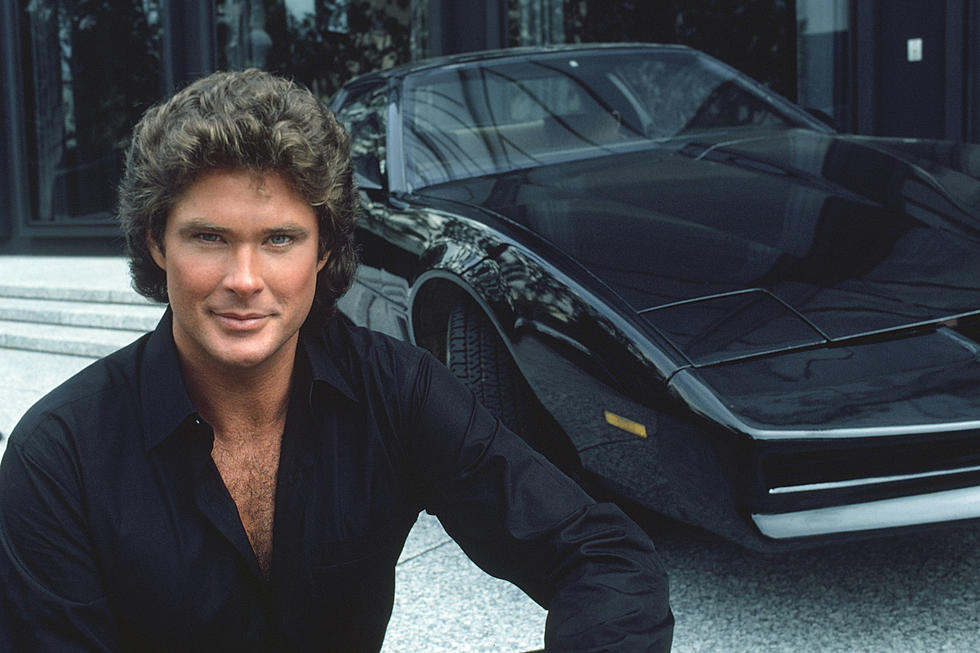
“KITT,” I would say with authority to the invisible watch on my wrist, “I need you to come pick me.” In real life KITT did not, but in my imagination, the talking car immediately responded, like I was totally David Hasselhoff in “Knight Rider”, and away we would go.

My eight-year old self (and yours) never imagined actual communication through a watch, but now it’s a thing! I splurged on an Apple Watch and spent too much of a Saturday talking to my watch, gazing at it, and being confused by it. I adjusted my fitness goals, set my alarm, read the news, called my dad (like Knight Rider to KITT) and checked the weather a ridiculous number of times. My watch knows me well because I taught it what matters to me, such as moving around during the day, waking up early, and determining how many layers to wear when I go outside.

Prayer is something like being obsessed with your Apple Watch. The more time you spend, the more you are known, both by God and your own self.

If you wonder what to pray about, do not look far. Look at your own body and then at the bodies who are closest to you (maybe not in terms of proximity). Start there. Pray for God to help you know yourself, to understand why you feel the way you do in regard to your own life. Pray for wisdom and imagination. Lighting a candle or three helps.

Then, pray for those who mean the most to you. Pray for your spouse, your parents, your kids, your siblings, your aunt and uncle, grandparents, and cousins. Pray for them one by one, even if it takes some time. You are not praying for something to happen to them. Remember, you are not God and God knows more than you. You are praying for wisdom and imagination for them. For their well-being, for the peace of Christ’s presence to enfold them.

“Prayer is the place where priorities are re-established,” wrote the late Eugene Peterson.

You discover when you pray for your own self and for those closest to you that your priorities shift. You find yourself closer to God. You feel closer to family members. Prayer is not complicated, but it does take time and it may reroute your plans for life. What you had been worrying about might fall away. What had never occurred to you before might appear in your brain. You might come to realize how hard you can be on yourself. God’s resounding grace reclaims its space in your soul when you pray. And you remember you are known already, without the hassle of the Apple Watch, or the Hasselhoff with KITT. You are known, you hear your heart sing whenever you pray.

A preview of next week: In the last week of this short series on prayer, we will wonder what difference your own prayers make in the wider world.

Holy Week: The unDead End

The human experience is often habitual. From our morning routine, to the route we take through the grocery store, to the way we choose to relax. If you were to zoom out on your life, you would notice other examples of habit. How you set goals (or don’t) and whether you expect to achieve them. How you respond to your self-criticism. How you dream (or don’t dream) about your future.

When we move comfortably in rhythm with our habits, we might wonder whether this is all there is. Is this the only way? Does your familiar habitual experience lead irreversibly in one direction? Do all roads close in on the one dead end at the very end?

I am wondering because some habits are not particularly life-giving. Whenever you feel stuck in a job or a relationship, it feels very much like moving toward a dead end; as if this truly is all there is and there is absolutely no other way.

If you want a ridiculous example, I can supply many from my own life. To offer you just one. I have been wearing disagreeable sunglasses for almost a year. They never quite fit properly and they have left a small scratch on the bridge of my nose that will not go away for the obvious reason that I keep wearing them. In the very center of one lens, there is a damning scratch that occurred when my kids were fighting like zoo animals in the car one day and I threw my glasses because…because…well, that was just a dumb thing I did.

For the past year, I have answered “yes” to the question, “Is this the only way I might protect my eyes from the sun? Is this scratched and scratching set of sunglasses my only option?”

Here is another example, this one from the Bible and not so petty. I give you, the story we call Palm Sunday.

When Jesus sat on a donkey and strode into Jerusalem, he was mimicking a Roman victory parade. If we were first century residents of Jerusalem, we would have known that after your country (always Rome in the first century) wins a war, a prominent military figure would sit on a fancy-pants horse and enter a city through a parade of worshippers. It was “the only way” to assure a city the victors would forever be the victors. There was no reason to doubt the men in charge because, can’t you see, military men like this one will forever rule the world and therefore be worthy of your praise.

But…Jesus was on a donkey, not a horse. His victory would be by death, not by inflicting death on others. Which means this “ruler” of ours would not promise to live, but be killed. Eek.

Jesus’ life-long sermon was, “Nope, this is not all there is.” Victors who rule by might alone? Not all there is. People who are weak, poor, lost, addicted, not religious, lonely, left in the gutters? Not all there is. Women whose proper place is wherever the men decide? Not all there is. Kids who are subjected to sexual abuse because their voices don’t matter? Not all there is. The rich buying their way through life? Nope.

On Palm Sunday, Jesus preached this sermon without words. His parade into the city was a colossal joke, a prank meant to light a fire under the church and city rulers. It worked.

On Easter Sunday (and every single day) God preaches that sermon again and again. “This is not all there is.” Christians are brazen enough to look for the living among the dead because all roads, no matter how deep the ruts of our habits, do not lead to a singular dead end. The tomb was a most profound hoax of a dead end, revealing itself three days later to be an un-dead end.

I did order new sunglasses yesterday. Just in time for Easter.

A question for littles

Sometime when you are driving home and everyone is in a delightful mood and you are not in a hurry, take a different route. You could ask you kiddo to tell you where and when to turn. Ask them what they notice? What’s it like to take a different route?

A question for former littles

Do you feel stuck in any particular habit? (First, the grown-up must share an answer from her or his own life.)

A spiritual practice

When you have 5 extra minutes (or maybe during your shower) think of words you use to describe yourself. Be honest and let the words come to you. Notice whether the words are positive or negative. Are some of the words untrue? Do they lead you to dead ends in your life? How might the un-dead end of the empty tomb renew your sense of yourself?

A Morning Prayer in the Cold

(Photo Credit: Photo by Dave Hoefler on Unsplash)

Yep, God, I know. You orchestrated another new day. The sky proclaims a new warm shade of pink and in North Dakota it is too crazy cold to see it without a window in between us.

It is a new, freeze-your-nose-hairs cold day and I am not excited to venture out the door. It is cozy to stay in the proximity of a warm bed. Even to glance at it once in a while tricks me into believing it is possible to avoid the exposure of the cold.

If I do that, I would miss taking my kids to school and seeing them flow into the steady stream of classmates and school staff, including superhero crossing guards who chose to leave their cozy homes to keep my kiddo safe. I would miss working in an office with people I appreciate, doing work I do believe matters in the world. I would miss listening to stories of people who need to remember Christ meets them in the dark places of life. I would miss wondering whether I am ever doing another, forgiving myself for my failures, and learning how to be still in the presence of You.

Okay God, I’ll bundle up and venture out the door again. I’ll risk frozen nose hairs and I’ll risk entering into the steady stream of the cold day where I will get some things right and other things wrong. Being human is a constant exercise in the exposure of who we really are and what we truly can and cannot do. These bodies in all their limitations do not always feel so cozy.

So please, God, bundle me up in your mercy. May the frosty air I breathe give new life of a new day so that I might bundle up my neighbor with mercy, too.

The Mom Drama of Kids and Video Games

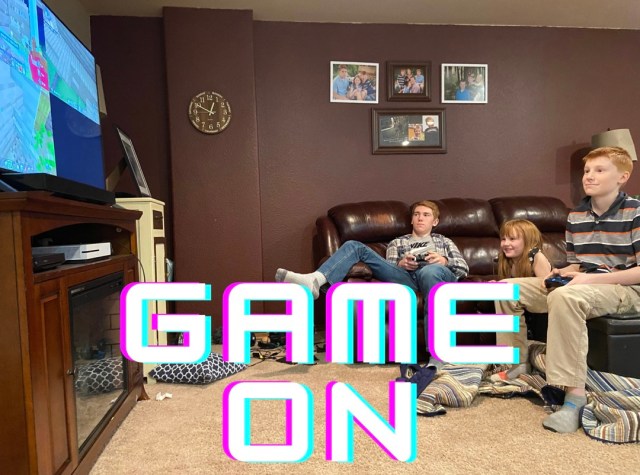
(A rare moment of all three Lewtons playing a game together.)

It might be best if we kept this under wraps, but one of my favorite Sega Genesis games (circa 1995) was Mortal Kombat. Girls are stereotypically often more dexterous than boys, which is the only logical reason I can come up with that I would “Finish Him!” more often than the boys who gamed much more than I ever did.

Sonic the Hedgehog was more enjoyable (and less gory), along with Ren and Stimpy (happy, happy, joy, joy). While I did not spend most of my time with any of these characters within the orange shag-carpeted walls of our basement growing up, I did spend some.

Video games have become a million times cooler with realistic sound and visual effects and the ability to play with friends from their own homes (a great perk during a pandemic). Even so, for years I didn’t want my kids to be gamers. Why was that? Is it a Midwestern mindset that sitting down and looking at a screen to play a game is somehow bad? Where did that come from? How many wonderful people play Candy Crush? I played Mortal Kombat and I didn’t want my kids to play Mario Carts? Being a parent is a constant exercise in self-reflection.

Ours was the house without a gaming console until I changed my mind. Sometimes my kids play video games. We have regular conversations to determine how much is appropriate and how to self-regulate. Both are important life skills. How do we understand moderation and practice it? Again, questions applicable throughout our entire lives.

Most importantly, the video game self-reflection and conversations have taught me never to identify my kid (or someone else’s) based on what they do or do not do. Kids are not “gamers”, they are kids who play video games. If we see a kid as a “gamer”, we see only a part of his or her whole self. Parents carry the power to shroud a kid in shame by narrowing their kid down to what they do or do not do. And, parents carry the responsibility to tell kids the story of who they truly are: beloved by God, made in God’s image, already forgiven, bearers of Christ’s light.

My kids are just like their mother: flawed, fully freed and forgiven by Jesus, and forever learning. (Unlike me, they are not triumphant Mortal Kombat players, but that’s only between you and me.)

Easier Not To Have Them, Better If You Do

(Credit: Photo by Brett Jordan on Unsplash)

I know only part of the truth about me. I need others to help me know the rest.

I know part of the truth about myself, so I need you to help me know more truth about myself. I know part of the truth about the congregation I serve and I need others to uncover other truths I do not know or see (or that I ignore). I know part of the truth about my relationships with my kids, spouse, and family. I need them to help me understand the whole truth.

We walk around knowing only part of what is true. Only conversation brings out the truth.

I challenge you to think more deeply about your conversations this week, including conversations you have with yourself and with others. I’ve been inspired by Susan Scott’s book “Fierce Conversation: Achieving Success in Work and in Life One Conversation at a Time”.

Scott shares her revelation that conversations do not shape a relationship, but conversations are in fact the relationship. One conversation at a time, we see beyond our own perception of what is true about ourselves and others. You can guess by her title she suggests bold, honest, curious conversation. It has made me wonder how many truth-provoking conversations I actually have with staff, congregation members and myself. It is so much easier to err on the side of nice. Not only is it easier, in the Midwest polite conversation is culturally expected.

Today, what conversation needs to happen to let the truth be free? What honest words would bring growth to your own self or a relationship? What is keeping you from speaking those honest words? If we fear the relationship will be damaged, Scott suggests chances are it is already slowly happening. Truth is oxygen to a relationship. Too much of it all at once is dangerous, but a steady stream is life-giving.

In honor of a famous truth-teller who honestly proclaimed his dream, today is an appropriate day to imagine a world full of truth, one conversation at a time.

How to Remember the World is Much Bigger Than You

(Photo by Pixabay on Pexels.com)

A famous biblical story features a made-up dude named Job (pronounced differently than it looks). Job had it rough and justifiably wept and wailed. We read in the story how not to help our grieving friends, but in the end it is no surprise that God has the last word.

God zooms out on Job’s view of the world. “The world is much bigger than you,” God relativizes to a miserable Job in a dozen ways. God points Job to creation, showcasing the larger-than life creation work goes on day in and day out without Job or anyone’s help.

Like a proud child, God points. “Look at the sea, I did that! See that cloud? That was me! The snow and hail? It isn’t always lovely, but it’s my work. And the ostrich’s wings? I gave those wings the power to flap, baby!”

Last week, I felt a slice of Job’s pain. And God pointed.

“Feel the warm sun on a November day? I made that heat!”

“Taste the fresh bread. Grain was my idea!”

“That gracious card someone sent you? Don’t you love it? I invented kindness!”

“You heard that song and faith welled up in your throat? You are welcome.”

Okay, God. I remember now. The world is much bigger than me.