Introducing…

Meet my newest book!

Unlike normal people, I have spent most of the year in Advent. My days off have been filled with Advent wonder and writing. I am grateful to finally share this with you!

Let me introduce you to the book.

Soon it will be Advent, a word that means arrive. Advent will lead to Christmas, when you may gather with familiar people for the holiday. I wrote this book of daily Advent reflections because family gatherings tend to be tricky. Some of you even dread holidays with family. This does not make you a terrible person, it simply makes you human.

Christmas is an advent of the familiar, that is, an arrival right back with the familiar people with whom you started. Christ will come soon, and your family might be coming to your house soon! Wait, don’t panic.

I hear a chorus of the same holiday angst. angst. You are not alone if thinking ahead to Christmas dinner and the familiar faces raises your heart rate.

A main idea in this book is the hard truth that you cannot change the familiar people with whom you gather. You can, however, wait. Before you react, perhaps you change your response to the dread, angst, or irritations you feel when you gather with them. This book is meant to equip you to be your own, honest self with your family, and to rely on the gentle love of Jesus, the one who is to come.

The book relies on a way to understand relationships called systems theory. In a nutshell, systems theory gives you a broader look at relationships and your own part in them. I hope this book makes you a factory of curiosity and wonder about your own self, which may lead to lighter, healthier relationships in your family. Each chapter ends with a reflection question and brief prayer.

The book is kind of available on Amazon. I say kind of because Amazon is stating the book’s status as “temporarily out of stock.” Amazon prints self-published books on demand, so that makes no sense. Maybe by the time you read this, Amazon will have changed the status. If not, you can go ahead and add the book to your cart, order it, and Amazon will email you when it is available again. Within the next week, you will find an e-book on Amazon.

If you subscribe to my blog, earlier this week you received a sneak peek of chapter two! Subscribers will also receive an email when the e-book is free for a day on Amazon.

Advent begins four weeks before Christmas. If you enjoy a daily devotion, you can begin reading on December 1st and continue through Christmas Eve. The book includes 24 daily reflections to slow you down as you wait for the one who is to come, who is mercy in a manger for you.

There is Crying in the Bible

There is no crying in baseball…although I would not mind if Yankee fans shed a few tears tonight. Otherwise, there is no crying in baseball, but there is indeed crying in the Bible.

Jesus cried in John 11 at the death of Lazarus. In the Greek, the word for weeping describes tears falling down Jesus’ face. He cried (a different Greek word) out to the Father to awaken Lazarus from the dead, and God the Father did. Other times, Jesus cried out to God for justice, or comfort. Some of his cries shed tears while other cries were heard and heeded by God the Father.

Jesus cried. It is what humans do. Overcome by joy or sorrow, our faces leak, as Bob Maloogalooga, one of my favorite movie characters observed. When the psalmist wrote that you are intricately made, perhaps he also had in mind the well of your emotions. Crying, Jesus taught us, is a human response to life.

Back in 1 Kings, there is crying. The prophet Elijah was sent to a widow. He asked her to help him and later he helped her. She had a young son who was ill to the point that “there was no breath left in him.” (1 Kings 17:17).

She blamed Elijah. “What have you against me, O man of God? You have come to bring my sin to remembrance, and to cause the death of my son!”

Elijah asked for the boy, laid him down and cried out to the Lord. “O Lord my God, have you brought calamity even upon the widow with whom I am staying, by killing her son?”

This reminds me of a prayer Will Willimon cried out to God. Just before entering a hospital room where a young boy was gravely ill, where despair held everyone captive, and hope was absent. He cried out to God, “Don’t you make me go in there and lie for you!”

Cries speak the depth of who we are. They pull from the corners of our most honest self, the corners we mostly leave untouched.

Cries connect you with the God who hears them, as both Elijah and Jesus show you. There is crying in the Bible. There is crying in life.

There is no cry that goes unheard by God, who became a human who cries, who tenderly gathers up your cries and holds them for you.

Even the potential cries of Yankee fans, God will hear them. At least I think so. Some things I do not know.

What prayer might you cry out to God?

Photo by Christian Gunn on Unsplash

Hey, Don’t You Live Up There?

One Wednesday night at St. John is an adventure story. Within three hours, there is an intensity to the volume of delightful, multi-generational conversation, mishaps, tears and giggles. I love how this gathering reflects life as it truly is: imperfect.

Luther described a theology of the cross as God meeting us not in the positive, perfect moments, but in the thick of life. Call a thing what it is, Luther instructed. And so, we call our lives what they are: hurried and haggard at times, each day our best effort and nothing more. Christ did not die for our sins because we have our lives together, but because we do not.

I love Wednesday nights because this is what we live out – a theology not based on rewards for how well we are living, but a theology that solidly trusts in God’s grace through Christ. This gift of grace is enough. You do not need to do more, try harder, or get better.

Where you live, with your weariness and wondering, is exactly where God meets you. In the adventure story of Wednesday nights, we live out our imperfect lives fully trusting in God’s perfect grace.

The number of stories manifested on a single Wednesday night could fill a book, that is, if you could be on all three floors and in every corner of the building at the same time. Since I cannot, I can only report this small chapter.

I sat behind a young, conversational kiddo at worship. I was doing my best to listen to Christina preach, but my worship neighbor has not yet perfected the art of whispering.

“Hey, what’s your name?” she wanted to know.

“Lisa,” I whispered quietly, dropping a hint.

She gave me a hard look and then threw a glance toward the front of the church where Christina was speaking.

“Hey, don’t you live up there?”

“What?” I whispered, trying to set an example and failing.

“Don’t you live? Up there? Why aren’t you up there?”

Oh, I realized! She thinks my home is the chancel. That I make my bed beside the altar and eat bread and wine for breakfast, lunch and dinner. That I had left my home up front to sit in the back of the church.

She accepted my whispered answer, that it wasn’t my turn to be “up there,” and the night went on. During Communion distribution, she had one more thing to say to me, as she paged through the heavy hymnal.

“I like this book,” she announced. “And this is my church.”

There she was in a community of people who astound me each week. Parents and grandparents who have decided that passing along the Christian faith is worth the work of getting a young family to church, which can be a great deal of work. Many of these parents wear their fatigue on their faces, their time at church a brief intermission from running between kids’ activities.

Because my worship neighbor’s family almost never misses worship, this little girl may not be proficient at whispering, but she is wise enough to know St. John is her church.

The adventure book would capture other moments: grandparents teaching grandkids how to hold their hands for Communion; single parents who visit with their kiddos over supper with no cell phone in sight; a cook who lets nothing get in the way of her dedication to the ministry of the Wednesday night meal; kids who woke up that morning and announced to their moms that they can’t wait to eat at church; ordinary people who extraordinarily teach, mentor, sing, wash tables, bring dessert…

We do none of this perfectly. Perfect is not the goal, not the requirement, indeed not even a helpful aspiration. Perfect is the love of God, who also does not live “up there,” but here, among us, now and always.

Photo by CHUTTERSNAP on Unsplash

Reflecting: You Are What You Value

Look in the rearview mirror to last week, a stretch of days that now count as history. What do you see?

How did you spend your resources: time, money and energy? Did the days rush by in a blur? Did you feel like a pinball being bounced around in a machine? Or was the pace of each day more like a slow walk through the park?

Take a moment here and look around your life. Look back and to the sides. What you see today may not be the same as what you saw last week or last year, like reading the same Scripture you read long ago (or not so long ago) and understanding it completely differently.

The good news of the Christian faith is the stubborn insistence in a new day despite all reason; amid the joys and sorrows, hopes and regrets. Somehow, a splash of light overcomes an ocean of darkness because we believe Christ has died and rose again.

With God’s promise that every day is made new and even you are made new, look at your life and notice how you are spending the resources God has given you. You are what you value, that is, how you spend time, money and energy is a way to describe you.

The days have a way of moving forward whether or not you are buckled in! If your life feels exhausting, try this:

  1. Set an alarm for 15 minutes.
  2. Sit down with a piece of paper and pen.
  3. Write a list of your values. Consider what matters most to you in this season of your life. Your list may be two or 12 items long. Why do these values matter enough to you to make your list?
  4. Look back at your week. Did you spend your resources in a way that reflects your values? Where did you nail it? What needs reconsidering? Notice both what went well and where you have room to grow.
  5. Carry around your list and revisit it whenever you have that “I’m-a-pinball” feeling.

You, beloved one, are no pinball. God did not create you to be bounced around.

“I pray that, according to the riches of his glory, he may grant that you may be strengthened in your inner being with power through his Spirit, and that Christ may dwell in your hearts through faith, as you are being rooted and grounded in love.”

Ephesians 3:16-17

Whether you look in the rearview mirror or to the days ahead, your life matters deeply to the Lord who dwells in your heart and starts over with you each day.

Photo by Kelly Sikkema on Unsplash

If Only the Disciples Were the Dwarves

It isn’t right to compare the 12 disciples with Snow White’s 7 dwarves, however, I do wish the disciples had been assigned descriptive names. Surely there was a Sleepy or a Clumsy among the 12. Was there a Grumpy or a Bashful? There had to be!

We only know there was a Peter, John, James, Andrew, Philip, Thomas, Bartholomew, Matthew, another James, Simon (not Peter), Judas, and “the” Judas. (Acts 1:13). “The” Judas was replaced by Matthias.

We know Peter is called The Rock, John and his brother James were Power-Hungry, and Thomas has been called Doubter. Beyond these descriptors, the Gospels tell us very little about these followers.

The Gospel text for World Communion Sunday this weekend is the feeding of the 5,000 in Luke 9:10-17, which has me wondering whether there was a disciple who could be called Curious.

Uniquely, this story is told by each of the four Gospel writers. In Luke, the disciples make the assumption that those who gathered to hear Jesus should be in charge of their own lunches. They tell Jesus, “Send the crowd away, so that they may go into the surrounding villages and countryside, to lodge and get provisions, for we are in a deserted place.” (Luke 10:12)

I find this instruction mystifying! By now in Luke’s Gospel, Jesus has healed the sick, cleansed the outcast and calmed a stormy sea. And they have the audacity to tell Jesus what to do? I would name them all Ridiculous.

“You give them something to eat,” Jesus replied, if only the Gospel writer would have clued us in on his tone.

The disciples go on to explain they have only 2 fish and 5 loaves of bread, pointing to the thousands of hungry people.

If I were to watch this scene unfold in real time, I would begin to look for Curious. Was there one disciple, just one, who was suspicious that Jesus was up to something? Was there a single disciple who had a hunch that whatever they had was more than enough for Jesus to satisfy the crowd? Did one of them raise his brows and wonder what more this teacher could do?

Jesus already knew he would have enough to feed the crowd. Eventually, the disciples knew it, too, along with the crowd. The Curious disciple, if there was one, had a head start. It had already occurred to him that anything is possible.

With God, beginnings are disguised as endings and hope masquerades as despair. Power and might turn out to be foolish and the greatest of these is not money or status, but love. With enough curiosity, we recognize abundance in 2 fish and 5 loaves of bread.

I hope to be the Curious disciple as I follow Jesus around in this life. Would I have raised my brows when Jesus broke the loaves, itching to know what he might do next? Or would I have furrowed my brows with the certainty that his meager offering would never be enough?

Will you open your eyes to the wonder of God’s mysterious abundance in your life? Will you set aside your certainty that there is not enough of whatever you worry might run out? Raise your brows, Curious disciple, and watch the bread that is broken satisfy the crowd.

Photo by Yulia Khlebnikova on Unsplash

A Birthday is Big

Birthdays shmirthdays, some might say. But not me! I love the gift of a birthday. Adding another year to a person’s age is nothing short of a miracle.

Walking with people in their faith, I witness both the joys and the trickiness of adding another year. It might mean one more year without that beloved person whom you miss. Or one more year moving through the deep waters of depression. It might mean one more year unemployed or less physically able.

I remember hearing a mom explain to her little kids that each year we get older we move one year closer to death which is one year closer to heaven. I think it was meant to be encouraging, but yikes!

A birthday, however, is a way to keep us honest. This life on earth will end. None of us gets out alive. Each day is precious just as you are precious in God’s sight.

Today my husband adds one more year to his age. Who better to remind him of his mortality than his wife/pastor!

A birthday is an invitation for each of us to wonder.

How might the fragility of this life shape your decisions? Are you doing the work you feel called to do? Are you using God’s precious gift of time to connect with your beloved people? Are you hanging out with Jesus each day?

The best part of birthdays, of course, is not the mortality wondering but the cake. Or the pie. Or whatever it is that marks the occasion. It is a sweet gift to add that extra year.

Photo by Christopher Martyn on Unsplash

Another Word for Dysfunction

When families gather, each person plays his or her part. There is the wild and crazy one, the organized and orderly one, and the peacemaker in between. Throw in the matriarch and patriarch, the family member who keeps his or her distance, and the perpetually embittered and you may have a complete cast of characters for any family.

If you think your family is uniquely dysfunctional, open the curtain to see an audience of all the other uniquely dysfunctional families, which is to say, all families. At least God was consistent in creating families the same!

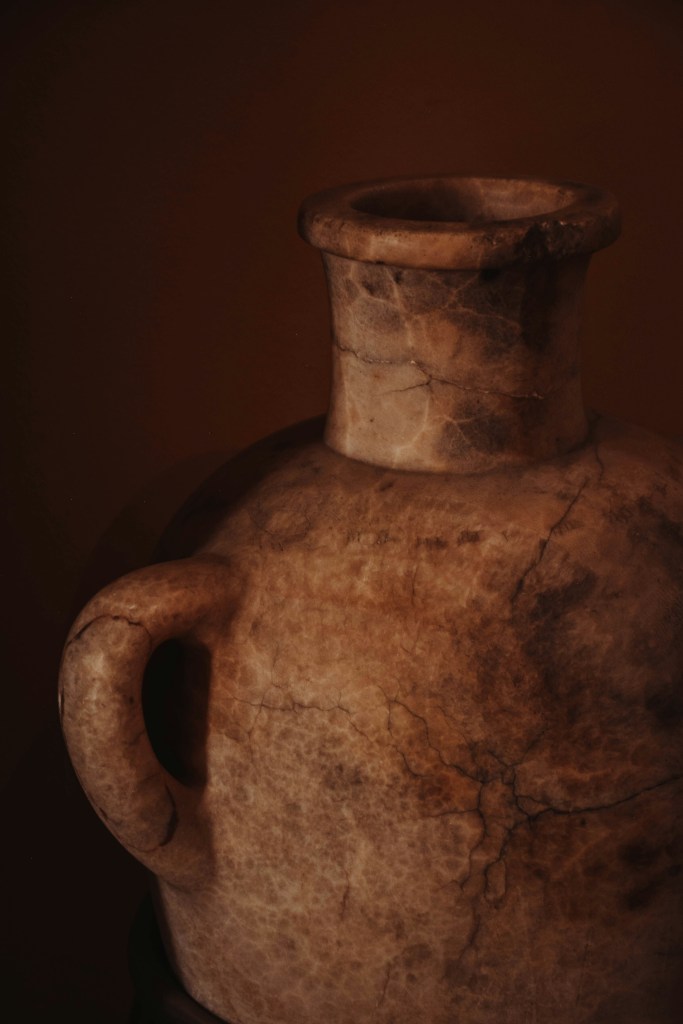
In the Christian faith, another word for dysfunction is brokenness. All families are broken because all humans are broken. We are, each of us, an assortment of broken pieces reset each day by the gluey grace of God. We are not perfect clay jars, but by God’s grace we are “afflicted in every way, but not crushed; perplexed, but not driven to despair.” (2 Corinthians 4:8) Humans and their families are broken and beloved clay jars through and through.

Being part of a family is unavoidable. A family member can move away but cannot move on. The relationship system in which we grew up, even if not for an entire childhood, even if we never again see those family members, will forever shape who we are.

Look around your family. Who is among the cast of characters? What part do you play? What are your starring and supporting roles?

If you have harsh words for the cast, or if there are scenes you play in your mind on repeat that portray you as victim, perhaps you do this: take yourself to a thrift store, find an old jar, take it home, wrap it in a towel, and break it into a few pieces with a rubber mallet. You can leave the jar in pieces, but if you put it back together, you witness the daily work of the potter. We are afflicted but not crushed. Each piece has its place, like a character with its own part to play. Each piece is valuable, but not on its own.

Your broken family, your broken self, is never beyond repair for the potter and the potter’s gluey grace.

Photo by Content Pixie on Unsplash

This is Not Your First Day (Part Two)

Did you do your homework? Did you?

The reflection questions in the previous post turn your early-days-of-the-school-year attention away from your kiddo and onto you. Yes, you! Parents and guardians tend to focus heavily on our kids when something exciting is about to happen. We ask them:

  • How are you feeling? Are you nervous?
  • You’re a senior! What are you going to do next year?

We might forget that focusing on an anxious kiddo only increases the anxiety and pressure in your relationship. I am guilty as a mom of trying to be helpful only to become obnoxious. This is not something I intend to do, I just happen to be good at it!

It tends to lighten up your relationship with your child if you give your child a break and pose these questions to yourself.

  • Am I feeling anxious? How might I manage my own anxiety?
  • Life is changing for my kid. What am I going to do next year?

I suspect we direct questions to our kids and grandkids with the intention of helping them. Our questions are, as far as we can tell, indicators of how much we care. When actually, question-overload is like keeping the heat on high under a boiling pot of macaroni. It works just as well, even better, to turn the heat down.

In the Bible when life heated up, when the pressure was high, when people may have felt like an overcooked macaroni noodle, the writers offered images as encouragement. With words, they drew pictures of God:

  • God holds back the waters so they do not overwhelm you. (Isaiah 43:2)
  • God dries your tears and wraps you in joy. (Psalm 30:11)
  • You cling to God, and God holds you with one hand. (Psalm 63:8)
  • God is your forever lookout to help you when you need it. (Psalm 121:1)

To you encourage you, beloved parent or guardian, here is an image for you:

Accompanist

A parent or guardian who softly plays the chords for the child to make his or her own solo music. present in the background, the accompanist is practiced. This isn’t her or his first day on the piano. an accompanist is positioned to bring out a child’s unique and best.

I’ve not been an actual accompanist, but I know some brilliant ones. They have a remarkable way of knowing the soloist well enough to draw out his or her best sound. Once in a while, they might discreetly play an intro twice when the soloist misses the entrance. An accompanist is not a director, not the boss of the soloist, but more like a guide through the music.

Accompanists know they are not the soloists. This is not their first day. Instead, they offer steady and supportive roles to grow the confidence of the soloist.

Here is a blessing for the accompanists to send you on your way:

Accompanying is a privilege, may you sit in the Spirit’s presence as you play.

Keep your hands on the keyboard, may Christ be the director of this song.

Let the music carry, may the soloist shine with the light of Christ.

Photo by Wan San Yip on Unsplash

Too Close to the Edge

Warning: Nostalgic Mom of High School Graduate Ahead

“Tom, stay away from the edge.”

“Tom, you’re closing in on danger over there.”

“Tom, you’re raising your mom’s heart rate to a dangerous level.”

He has always been the one to test the limits. One walk with him at Wind Canyon in the Theodore Roosevelt National Park was one walk too many! Even at 15 years old, I had to tell him to stop going up (not down) the hotel waterslide because he was creating a following with the impressionable littles in the pool.

It’s a week of double graduations for this dare devil. Tomorrow is his graduation from high school and five days later his graduation from basic training and AIT for the Army, continuing with his service for the National Guard.

Stepping out to the edge and raising his mom’s heart rate is not unfamiliar territory. I’ve had lots of practice watching and turning away – a mom can only take so much, after all!

Graduation is meant to be one careful and well-supported step over the edge, a release and catch situation. The God who walked with God’s people through the wilderness will be there this time, too, the soft landing of grace catching him as he finds and sometimes fumbles his way to the other side.

Photo by Aravind Kumar on Unsplash

The Best Things in Life Are Free Croutons

I have found the new love of my life and its name is Croutons.

Long ago, I met Fake-Croutons at the bar, the salad bar, of course! They were tiny blocks I’m told had once been bread. We were not meant to be. They were too crunchy and made it a job to enjoy a salad. Goodbye, Fake-Croutons.

Then Croutons came along. My husband (the actual love of my life) has become a sourdough bread baker. He has become quite good at this craft, but even so we cannot eat all the bread, which turns out to be the best thing ever. I made my first batch of Croutons earlier this week. What’s not to love when you roll stale bread around in oil and seasoning? Bread, oil, salt, pepper, a dash of Italian Seasoning and there you have it. Love.

“The best things in life are free,” wrote Buddy DeSylva and Lew Brown back in 1927. Right now, one of the best delights in my life are these silly croutons. They took zero money and no more effort than slicing up and baking bread I didn’t know what to do with anyway.

There is an abundance of complicated factors in your life today. Relationships, work, your health, your family member’s health…What might happen if you look around your kitchen, your living room, your backyard, or your nearest park to find something simple and free like the new love of my life?

This verse has been rolling around in my brain, like breadcrumbs in oil.

"The Lord will guide you continually, 
and satisfy your needs in parched places, 
and make your bones strong; 
and you shall be like a watered garden, 
like a spring of water, 
whose waters never fail." 
Isaiah 58:11


What you need, the Lord prescribes in this verse, is water. How simple. How free. All you need is water, a restoring powerhouse that for most of us is as easy as turning a faucet, which happens to be as easy as making your own croutons.

God desires meet you in the simplest of ways: water, bread, breath, the words in a very old book. Find your Crouton and smile. 

Photo by No Revisions on Unsplash