Another Word for Dysfunction

When families gather, each person plays his or her part. There is the wild and crazy one, the organized and orderly one, and the peacemaker in between. Throw in the matriarch and patriarch, the family member who keeps his or her distance, and the perpetually embittered and you may have a complete cast of characters for any family.

If you think your family is uniquely dysfunctional, open the curtain to see an audience of all the other uniquely dysfunctional families, which is to say, all families. At least God was consistent in creating families the same!

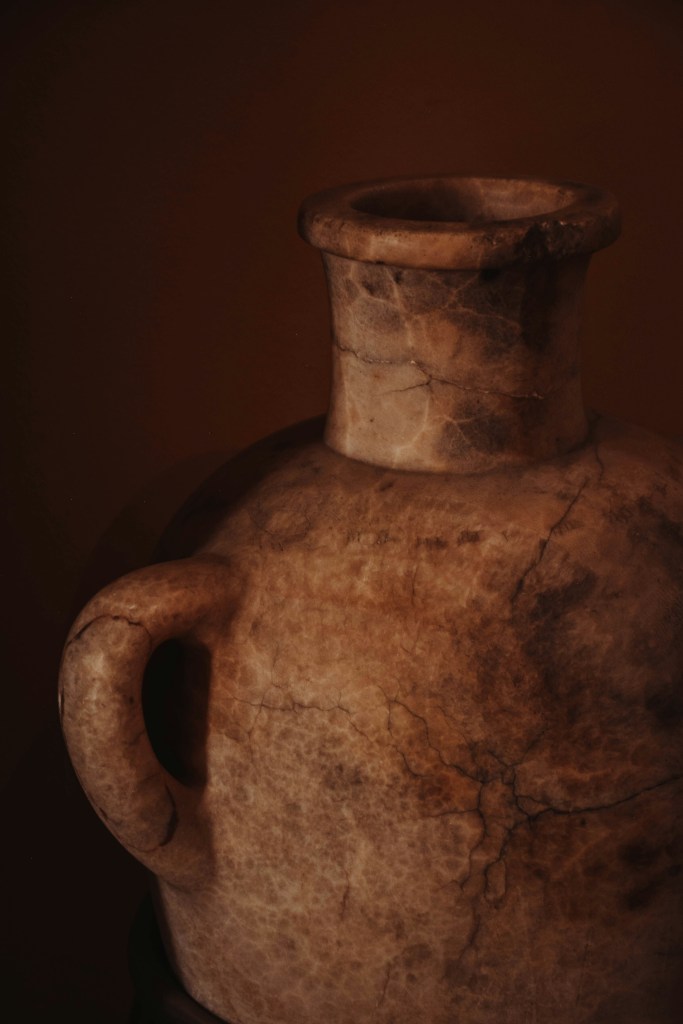
In the Christian faith, another word for dysfunction is brokenness. All families are broken because all humans are broken. We are, each of us, an assortment of broken pieces reset each day by the gluey grace of God. We are not perfect clay jars, but by God’s grace we are “afflicted in every way, but not crushed; perplexed, but not driven to despair.” (2 Corinthians 4:8) Humans and their families are broken and beloved clay jars through and through.

Being part of a family is unavoidable. A family member can move away but cannot move on. The relationship system in which we grew up, even if not for an entire childhood, even if we never again see those family members, will forever shape who we are.

Look around your family. Who is among the cast of characters? What part do you play? What are your starring and supporting roles?

If you have harsh words for the cast, or if there are scenes you play in your mind on repeat that portray you as victim, perhaps you do this: take yourself to a thrift store, find an old jar, take it home, wrap it in a towel, and break it into a few pieces with a rubber mallet. You can leave the jar in pieces, but if you put it back together, you witness the daily work of the potter. We are afflicted but not crushed. Each piece has its place, like a character with its own part to play. Each piece is valuable, but not on its own.

Your broken family, your broken self, is never beyond repair for the potter and the potter’s gluey grace.

Photo by Content Pixie on Unsplash

This is Not Your First Day (Part Two)

Did you do your homework? Did you?

The reflection questions in the previous post turn your early-days-of-the-school-year attention away from your kiddo and onto you. Yes, you! Parents and guardians tend to focus heavily on our kids when something exciting is about to happen. We ask them:

  • How are you feeling? Are you nervous?
  • You’re a senior! What are you going to do next year?

We might forget that focusing on an anxious kiddo only increases the anxiety and pressure in your relationship. I am guilty as a mom of trying to be helpful only to become obnoxious. This is not something I intend to do, I just happen to be good at it!

It tends to lighten up your relationship with your child if you give your child a break and pose these questions to yourself.

  • Am I feeling anxious? How might I manage my own anxiety?
  • Life is changing for my kid. What am I going to do next year?

I suspect we direct questions to our kids and grandkids with the intention of helping them. Our questions are, as far as we can tell, indicators of how much we care. When actually, question-overload is like keeping the heat on high under a boiling pot of macaroni. It works just as well, even better, to turn the heat down.

In the Bible when life heated up, when the pressure was high, when people may have felt like an overcooked macaroni noodle, the writers offered images as encouragement. With words, they drew pictures of God:

  • God holds back the waters so they do not overwhelm you. (Isaiah 43:2)
  • God dries your tears and wraps you in joy. (Psalm 30:11)
  • You cling to God, and God holds you with one hand. (Psalm 63:8)
  • God is your forever lookout to help you when you need it. (Psalm 121:1)

To you encourage you, beloved parent or guardian, here is an image for you:

Accompanist

A parent or guardian who softly plays the chords for the child to make his or her own solo music. present in the background, the accompanist is practiced. This isn’t her or his first day on the piano. an accompanist is positioned to bring out a child’s unique and best.

I’ve not been an actual accompanist, but I know some brilliant ones. They have a remarkable way of knowing the soloist well enough to draw out his or her best sound. Once in a while, they might discreetly play an intro twice when the soloist misses the entrance. An accompanist is not a director, not the boss of the soloist, but more like a guide through the music.

Accompanists know they are not the soloists. This is not their first day. Instead, they offer steady and supportive roles to grow the confidence of the soloist.

Here is a blessing for the accompanists to send you on your way:

Accompanying is a privilege, may you sit in the Spirit’s presence as you play.

Keep your hands on the keyboard, may Christ be the director of this song.

Let the music carry, may the soloist shine with the light of Christ.

Photo by Wan San Yip on Unsplash

Too Close to the Edge

Warning: Nostalgic Mom of High School Graduate Ahead

“Tom, stay away from the edge.”

“Tom, you’re closing in on danger over there.”

“Tom, you’re raising your mom’s heart rate to a dangerous level.”

He has always been the one to test the limits. One walk with him at Wind Canyon in the Theodore Roosevelt National Park was one walk too many! Even at 15 years old, I had to tell him to stop going up (not down) the hotel waterslide because he was creating a following with the impressionable littles in the pool.

It’s a week of double graduations for this dare devil. Tomorrow is his graduation from high school and five days later his graduation from basic training and AIT for the Army, continuing with his service for the National Guard.

Stepping out to the edge and raising his mom’s heart rate is not unfamiliar territory. I’ve had lots of practice watching and turning away – a mom can only take so much, after all!

Graduation is meant to be one careful and well-supported step over the edge, a release and catch situation. The God who walked with God’s people through the wilderness will be there this time, too, the soft landing of grace catching him as he finds and sometimes fumbles his way to the other side.

Photo by Aravind Kumar on Unsplash

The Best Things in Life Are Free Croutons

I have found the new love of my life and its name is Croutons.

Long ago, I met Fake-Croutons at the bar, the salad bar, of course! They were tiny blocks I’m told had once been bread. We were not meant to be. They were too crunchy and made it a job to enjoy a salad. Goodbye, Fake-Croutons.

Then Croutons came along. My husband (the actual love of my life) has become a sourdough bread baker. He has become quite good at this craft, but even so we cannot eat all the bread, which turns out to be the best thing ever. I made my first batch of Croutons earlier this week. What’s not to love when you roll stale bread around in oil and seasoning? Bread, oil, salt, pepper, a dash of Italian Seasoning and there you have it. Love.

“The best things in life are free,” wrote Buddy DeSylva and Lew Brown back in 1927. Right now, one of the best delights in my life are these silly croutons. They took zero money and no more effort than slicing up and baking bread I didn’t know what to do with anyway.

There is an abundance of complicated factors in your life today. Relationships, work, your health, your family member’s health…What might happen if you look around your kitchen, your living room, your backyard, or your nearest park to find something simple and free like the new love of my life?

This verse has been rolling around in my brain, like breadcrumbs in oil.

"The Lord will guide you continually, 
and satisfy your needs in parched places, 
and make your bones strong; 
and you shall be like a watered garden, 
like a spring of water, 
whose waters never fail." 
Isaiah 58:11


What you need, the Lord prescribes in this verse, is water. How simple. How free. All you need is water, a restoring powerhouse that for most of us is as easy as turning a faucet, which happens to be as easy as making your own croutons.

God desires meet you in the simplest of ways: water, bread, breath, the words in a very old book. Find your Crouton and smile. 

Photo by No Revisions on Unsplash

Hidden Baskets, Hidden God

At our house on Holy Saturday, Easter baskets are hidden. With enough activity on Sunday, we do the fun stuff on Easter Eve. This year, Sam’s basket is hiding safely in his clean laundry basket. When he finds it, both the basket and how often he puts away his clean clothes will be revealed.

Faithful to family tradition, I try to make finding the treasure of an Easter basket challenging. Who doesn’t, you might be thinking. But I am not referring to an ordinary level of challenging. I am speaking of a Grandma Florence level of challenging!

I have two distinct memories of desperate searches for my chocolate and real dyed-eggs-filled Easter basket at her tiny house, a house that magically expanded to fit all of the people during the holidays.

Once, my basket was expertly tucked into the large pouch of her walker. This meant my basket had moved around as I wildly hunted for it. Try to accuse grandma of cheating and I assure you it would not have gone well.

And the other one, well, although all childhood memories are suspect, I think this one is spot on. After a very long search, eight-year-old or so me begged my grandma for a single hint. “No hints,” she replied. More searching. Finally, she relented. I was allowed to pick up the landline phone and call my cousin at her house, who was a co-conspirator in the hiding. “One hint, please!” I begged. Eventually, I discovered the basket in her dishwasher, which was never ever used as a dishwasher. In the millions of visits to her house, I didn’t even realize the thing opened.

Who decided to hide Easter baskets? Luckily, we do not do the same at Christmas! It would be fitting if Easter basket hiding could be traced back to the hiding God on Holy Saturday.

God is hidden on this day sandwiched between Good Friday and Easter Sunday. Jesus Christ, who was fully God and fully human, lay in a grave fully dead on this Holy Saturday. Last night in our congregation, a man sang “it is finished” in “Go to Dark Gethsemane” as a door slammed and the finality of Jesus’ life hung in the air, along with the smells of frankincense and myrrh.

It is finished. God has gone into hiding.

Luther described God as a God who went into hiding. For those interested in a theological rabbit hole (you know who you are!) here it is: Luther on the Hidden God, by Steven D. Paulson.

God went into hiding in the Garden of Eden and ever since, God has played hide-and-seek by showing up exactly where we are not looking. Do you think God is found in success and all the good things that happen in our lives. Nope. God is found in the hardship of the cross, in the agony of death, in the sorrow of our lives. Sure, God enjoys the good times, too, but God is more likely to be found where we are not looking.

The women did not go looking for God on the morning we now call Easter Sunday, but God is exactly who they found at the grave. This God is found where we may not seek: in hospital rooms, beside those celebrating Easter alone and far from home, in prisons, in homeless shelters, in Haiti, Gaza, and Ukraine.

God is found where we generally do not seek…which might also be true in Sam’s search for his Easter basket. “No hints.”

Photo by Alan Rodriguez on Unsplash

What is Good?

Today we recall the crucifixion of Jesus and call it Good Friday. What is good in this gruesome story? What is good about a death?

The good is this: There is no simple explanation for the death of God on the cross, but Love.

Here is what I mean. There is no uncomplicating the tangled up, prickly yet tender love of God. The unavoidable fact of Good Friday is that God had a rebellion on God’s hands, a rebellion against grace. God died for the rebels, died so that grace would be the last one standing in the rebellion.

There are many goofy theories around Good Friday which can all be confirmed on the internet. I just re-read the novel “Gilead.” Set in the 1950’s, the pastor noted how 40 years of ministry with a congregation can quickly be undone by one television preacher. And then, there is the internet!

  1. Atonement – This is the notion that Jesus had to die to satisfy God’s anger over our sins. Humanity was so terrible, according to this theory, and God was so mad about it, that the only way to avoid God’s wrath was to put Jesus to death, as though there was a deal between the Father and the Son. This is a trinitarian disaster.
  2. Substitution – This theory suggests Jesus stood in for us on the cross; although we are the sinners, Jesus took the nails for us. This wrathful view of God does not line up with the Gospels for sure, or with the God we meet in most of the Hebrew Scriptures. The God we meet there kept rescuing God’s people.

I suspect television/internet preachers are attracted to these kinds of simple answers to Jesus’ death. It is good, they might suggest, to make sense of the cross.

If only love were so simple.

Bring to mind a person or place or something you deeply love. Or recall a moment when you felt an overwhelming sense of love.

Was it witnessing a gorgeous act of creation – an unforgettable sunset, the Northern Lights, a stunning view of the ocean. Or the birth of a child, the wedding of a granddaughter, the last goodbye to your loved one who was dying. How do you squeeze any of those moments into words? You cannot. The grandeur of love, deep and sweeping love, defies description.

What is good on this Good Friday? The good is the inexplicable love of God for you. The good is Christ, delivering you on the cross from death as the end, who had more mercy for sinners than the world (our world) could handle. The good is God, who met our resistance to grace by embodying it. The good is God, whose love is good and whose grace is good.

Photo by Alicia Quan on Unsplash

Follow Directions

Last week, Marcus taught Sam how to grill hamburgers. One step at a time, he guided Sam through the directions. It reminded me of the famous hamburger helper story in my family. I was the same age as Sam when one day I was asked to make dinner. It was the worst hamburger helper in the history of hamburger helper.

What could be hard about making hamburger helper, you wonder? Fair question. This dish involves only a few easy directions.

Nothing is hard about making hamburger helper, in fact.

What is hard is eating hamburger helper when the cook forgot one important direction: add water.

Directions matter.

The Palm Sunday reading for Sunday is from Mark 11:1-11. The story of Jesus’ procession into Jerusalem is told in each of the four gospels. Matthew’s gospel specifies both a colt and a donkey carrying Jesus. What? I don’t understand, either. Luke’s version leaves out the palms. John’s version is the shortest, barely mentioning the donkey’s colt. (Is that what Matthew meant? Who knows.)

And then there is Mark. Mark is the earliest of the gospels and typically the shortest. But this story is an exception. John’s gospel wins the most abbreviated storytelling award, while Mark slows everything down in Chapter 11.

In painstaking detail, the writer draws our attention to the directions. Jesus gives two of his disciples these (unusual to Mark) detailed instructions:

  1. Go to the village
  2. Find a colt that has never been ridden.
  3. Untie the colt.
  4. “Bring it.” This is hilarious to me. The other gospels finish the sentence, “Bring it to me.” But here in Mark’s gospel, Mark reverts to his hurried writing and doesn’t even finish Jesus’ sentence! I love it.
  5. Explain to anyone around that Jesus needs the colt and will bring it back.

The latter part of Step Five is the thread I’m pulling for the sermon on Sunday.

Aren’t these directions remarkable! For a gospel writer whose most worn-out word is “immediately,” these are thorough instructions.

Digging around in the Scriptures, you find a treasure trove of directions.

  • Eat, drink and be merry.
  • Welcome the stranger.
  • Remember the Sabbath.
  • Love the Lord your God.
  • Love your neighbor as yourself.

And on and on and on. But the directions for the two disciples – how to acquire the colt for Jesus: “bring it.”

Directions matter. The colt made the point that Jesus was a strange sort of royalty. He was a king born in a manger whose baby gifts were essentially burial anointments. This is no ordinary king, proven by the donkey colt who served as lowly transportation. Kings rode regal horses, not donkeys.

The two disciples nailed the directions. They could have been in charge of the hamburger helper and we would have all eaten better that night. Leading up to the procession, had they left out any one of the instructions, the story would be different. Had they not untied the colt, for example, or not explained themselves to bystanders. This may have been a different story.

What does it mean that Mark puts Chapter 11:1-11 into slow motion? What might God stir up in you if you take your time through these verses? (Those are your directions. Oh, and remember your baptism – add water.)

Are You Peculiar Enough?

In his book, “Think Again: The Power of Knowing What You Don’t Know,” Adam Grant encourages readers to “be peculiar.” This idea sticks with me. Peculiar is a way of being completely and entirely your own self. If indeed you are peculiar, you are unlike anyone you have ever met.

Raising an almost teenage daughter, I know peculiar is a hard sell. Peculiar stands out when there are so many more comfortable ways to try to fit in. (How many Stanley water cups exist in a middle or high school? You won’t believe it.)

Peculiar is a synonym for weird, but it is also a synonym for unique. Peculiar is a word insists the Creator has enough creativity to mold each individual person differently, even peculiarly.

Grant’s encouragement is on my mind as we make our way toward Palm Sunday and Holy Week. Jesus models peculiar in the way he parades into Jerusalem, in the way he cares for people who otherwise go unnoticed, in the way he serves his students, in the way God’s gentle love is pronounced in gruesome fashion. It is a peculiar story of peculiar mercy.

Squint your eyes a bit and you might see your own life differently. Are you following this peculiar God’s peculiar ways?

  • Are you living to fit in? Or are you willing to be peculiar with this unique life God created in you?
  • Are you buying what is trending? Or are you using money more peculiarly by buying only what you need?
  • Are you peculiarly aware that this life is a precious gift, that death is not the end, that money does not solve problems, that forgiveness changes people, that God loves a world even as messy as this one?

Please. Be peculiar in word and deed, in what you love and who you follow.

A Parent’s Practice of Holding On & Letting Go: Part Three

In one of my favorite books, “An Altar in the World,” Barbara Brown Taylor points out how difficult it is to get lost. As long as there is a phone within reach, and there usually is, you know exactly where you are.

This is both comforting and…a bummer! Getting lost is a practice that can be traced back to Abraham and Sarah. Taylor suggests God’s only reason for choosing these two not-young people to create a nation was their willingness to enter a wilderness and get lost.

Getting lost can be a spiritual practice. When we cannot rely on Google Maps to guide us, we might be awakened to our need to rely on God to guide us.

This is the last post in this series. You are accompanying me through a season of getting lost. In this season of parenting, I am finding my way through a new wilderness. Earlier this week, we dropped off our oldest to begin basic training for the Army National Guard.

This particular wilderness looks like it does for anyone who has dropped off a kid college, except we have no contact with him until the Army says so. This is the intentional process – an abrupt entrance into the wilderness for him and for his parents.

While I shuffle my own way through the wilderness, so does my son. He is in a new place among new people all because he was willing to get lost. Getting lost is a formative process, and as Taylor describes it, leaving our established paths, we might discover neighbors we never knew we had.

He may come out of this wilderness with friendships and experiences that enrich the rest of his life. The wilderness gives us up to the care of our neighbor. Time in the wilderness better positions us to notice the kindness of strangers, writes Taylor.

In our home, we are short one Lewton, yet we are, all of us, in a wilderness, which I guess is nice. Every variety of transition is a one-way ticket through the wilderness, where the strangers we encounter may be God in disguise.

Have the paths in your life become too established? Or are you, like my family, moving through a wilderness time? If so, notice the strangers. And let God be your guide, as you let go of the map for now.

Photo by ALEXANDRE DINAUT on Unsplash

“Is It Still There?”

Pastors and Deacons everywhere now find ourselves on the other side of Ash Wednesday. Whew! Communities gathered, ashy crosses were marked and now the Lenten season unfolds…

But not before I share two highlights from worship last night. Wiped clean of its ashes, these anecdotes might bring a smile to your face. Both happened during the imposition of the ashes.

First, an older woman who is not new to Ash Wednesday. Drawing the cross on her forehead, I repeated words she has heard dozens of times over the years: “From dust you have come and to dust you shall return.” “I remember,” she replied. “I remember.”

And one more from a little boy. He has not received as many ashy crosses as the woman who will remember. When I traced the cross on his forehead, he turned around and looked at his mom hopefully, “Is it still there?” It was.

Today, it isn’t. If he didn’t wash off the cross with a washcloth, his pillowcase did the trick. The ashes are wiped away yet the cross remains. That’s the gift of Ash Wednesday. We simply trace over a cross drawn at baptism. The cross is still there, now and always. You are indelibly marked as God’s forever. May you remember. May you remember.

Photo by Grant Whitty on Unsplash