Mom, wife and pastor relying on the gentle love of Jesus. Writing about being in relationships, not losing yourself in them, and Bowen theory. Author of Spiritual Longing in a Woman’s World and Wait: An Advent of the Familiar.
In the spirit of returning to the simple, I spent a week at home.
The usual fall weekend family getaway to Minneapolis or Rapid City or Sherwood was set aside for a staycation. I cleaned a few closets, baked bread, read books, remembered how to exercise, and took extra walks. I made an impressive Bloody Mary bar for my husband and discovered “The Good Place” on Netflix.
It was a very good time.
I also took my oldest kiddo to the DMV where they let him loose with a license.
It was mostly a good time.
When none of that was going on, I rested. Have you stopped to notice you require copious amounts of rest these days? Sit still for a moment and notice the compounding worries and questions that are now part of your daily life in Covid-19 times. Never before did those worries occupy your mind. Now, they do. Judging by the number of cases in our country, those loitering worries are not going away soon.
And yet, those worries do not define you nor do they get to take over your life. You are beloved child of God, free from the greatest worries about your forgiveness and salvation, and free to receive Christ’s love and utterly free to give it to your neighbor.
Channel your inner Marie Kondo and part ways with a worry. Name one worry and dare yourself to let it go. Bid that worry farewell and let God worry about it instead of you. God is remarkably good, always good, at shouldering your worries. Then do a profoundly simple thing you need so much of right now: Rest.
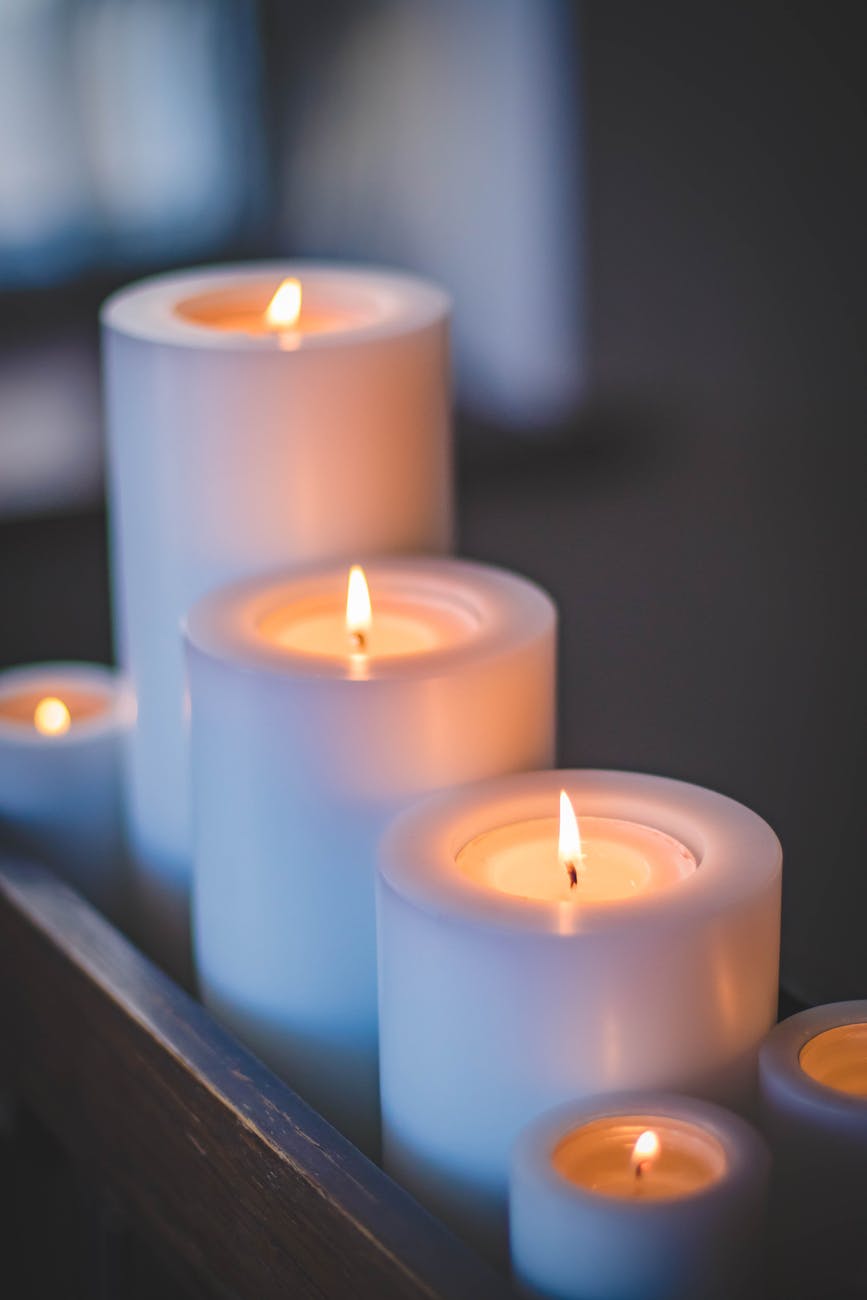
We are a mere three Sundays from the first Sunday in Advent. Advent is a season, or time in the year when we turn down the volume. We dim the lights and slow the pace. Counter to our culture, we recklessly insist on hope and pray exclusively for peace. Week after week as the nights stretch out, we light more candles to push against the dark.
Advent and Lent are both seasons that lead to the two biggest celebrations of the church year, and both seasons call for quiet. They demand a thoughtful kind of waiting. For four weeks of Advent (literally “to arrive”) we are waiting for the arrival of the embodiment of God’s love in a way God had never shown up before.
Last year, our congregation journeyed through Advent with Amy-Jill Levine and her “Light of the World” book. She opens up the old stories with her even older Hebrew stories. And…she is delightful. This year, I may wait through Advent with “Present over Perfect”, by Shauna Niequist or “Waiting, Accepting, Journeying, Birthing”, by Sarah Bessey. I can’t decide. Both wise women push against the kind of dark that calls women to do more, be more, and have more.
Perhaps there has never been a more intense Advent for so many women in America. I heard Kristen Howerton tell Kate Bowler in a recent podcast the gift of feminism is that women can do anything. We just don’t have to do it all at once. And yet, women are keeping up with the majority of household work, bending our schedules to align with the hybrid schedule, usually leading the way in our marriages, scheduling kids’ appointments and activities, and working extra hard in our paid work. Oh, and the groceries! And now it is the eve of Christmas Eve and we do the shopping, send the cards, bake the goods, wrap the presents, and hide the freaking elf.
All this time before we even reach Advent, we are waiting. Waiting for “normal”, for less intensity, for a vaccine, for the busy lives we knew before and didn’t really like to come back. Every day we wait for the intense fog of our daily lives to lift. And it will, but not yet.
Not yet. Those are Advent words.
Life is not as it should be, not yet. Every day is Advent, not yet as it should be yet demanding reckless hope from you and prayers exclusively for peace for you. All this pandemic time, we have been waiting. So dim the lights and turn down the volume. Light a candle and insist the love of God that took shape in Jesus Christ is worth the wait.
While you wait, do not do more. Stop that. It’s ridiculous. There is no award for cutest tree, most precisely-wrapped gift, or most exhausted mama. There is only the love of God for which you need not wait.
There are a baker’s dozen reasons to hurry things along in the kitchen.
You don’t have much time, you don’t even like to cook, no one ever taught you how, you’ve misplaced all your pots and pans, or you simply prefer take-out. Some shortcuts only make sense: frozen tater tots, canned beans, Annie’s Mac and Cheese, corndogs, your favorite take-out place.
I do wonder, however, if too much efficiency in the kitchen means cutting short the connection to the cooks who came before you and those who will come after you. Like the communion of saints at the Lord’s Table where we are connected with all the saints of every time and place, there is a sacred generational connection that happens among cookbooks and cutting boards.
Perhaps nothing we do in the kitchen is new. Long ago, a cook figured out how to bake bread and cook meat. Sifting and kneading and braising and broiling are human inventions. Not so long ago, my mom taught me some things that her mom taught her. There may come a day when my kids say the same. Cooking leaves a mark in the world.
Tamar Adler put it this way: “Cooking is both simpler and more necessary than we imagine.” The sacred space of a kitchen is occupied by so many generations all at once. And so I offer you three simple and necessary recipes in a moment when the world is occupied by so much anxiety. May your kitchen be a place of peace.
You need only 10 minutes to mix them together and 15 minute to bake and 2 minutes to watch them disappear. The only problem is that I tend to consume equal amounts of biscuit dough and baked biscuits.
I’m a fan of Tollhouse’s version of chocolate chip cookies because my kitchen growing up was never without them. A friend once told me our house always smelled like them. But again, the problem with the dough…
To the saint before me who invented sweetened condensed milk. Thank you and damn you. If I had to choose only one drink for the rest of my life, it would be sweetened condensed milk. After that, I would choose a good cardiologist. For now, this makes your coffee extra special, which you deserve in the sacred space of your own kitchen shared by so many generations at once.
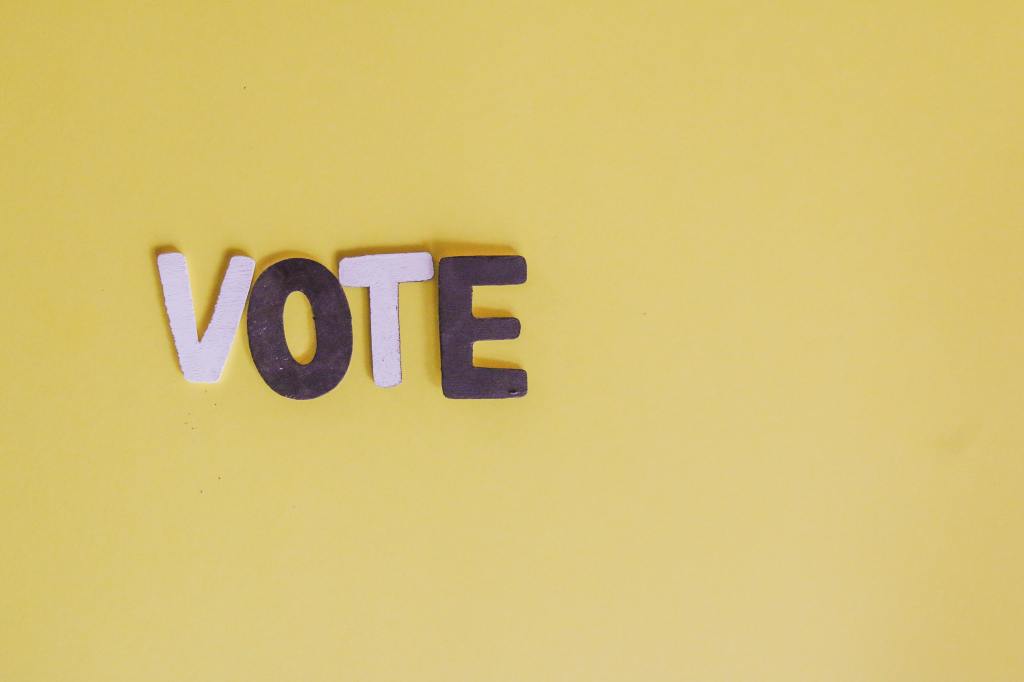
A thousand times I have told parents at visits prior to baptism, at confirmation orientation, and in conversations here and there that kids learn the Christian faith not from cool pastors, but primarily from parents and guardians. Kids make sense of what matters by watching what the humans whom they trust do (not say) each day. And so, kids learn how to handle an election by watching what the grown-ups do. Dear God, what have they learned in 2020?!
It was helpful to listen to today’s episode of NPR’s Life Kit podcast: “How To Talk To Your Kids About Civics” on this election-eve. A big take-away for me is the importance of exposing kids to more than one viewpoint. Kids who learn a narrow way to look at the world are less equipped for difficult conversation. The podcast highlighted parents who call the principal when yoga is introduced, or the plight of Native Americans is told with honesty. Parenting to protect from exposure can keep kids stuck in a narrow worldview.
And here we are in 2020. There is a strain to protect a worldview on the left and a worldview on the right, with a deep resistance to difficult conversation. And kids are watching.
Do you know why you believe what you believe? Is there a story in the big book of your life that shaped what you believe? Or maybe your pages hold opposing stories and you haven’t quite worked it all out yet. You are open to the conversation.
Listening to stories is the teaching tool of the gods. Instead of telling my kids who to vote for, I’ll tell them the stories that shape what I believe. I want them to know my view of the world, and also that it is limited by my understanding and experience. It is not meant to be their view of the world, but I do hope it helps them make sense of their own view of the world.
I have heard parents say and we have all read parents’ post ugly words against other humans because their view of the world was threatened or challenged. This is not how I want my kids to learn what I believe.
Start with the stories and let the conversation unfold in the questions. And perhaps 2024 will be an entirely different story.
Depending on where you live, it’s been roughly seven months. More than half a year since we went to church with all the people, sang our hearts out (or sang modestly if you are Lutheran), and shared the peace with hugs and handshakes. No matter how you look at seven months, it is a long time.
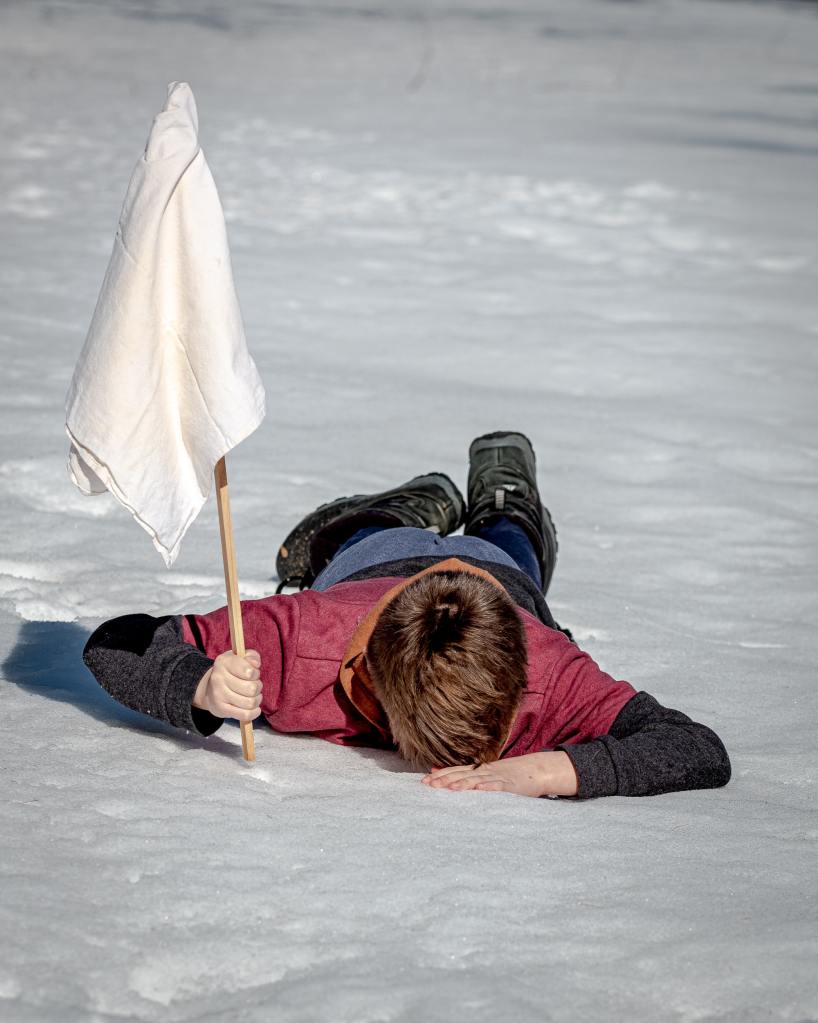
Visiting today with someone at church (distanced and in masks because, you know, we are still experiencing the long time), the question arose: “Can’t this just be over?”
Can’t masks and distancing, cancellations and limits just be over?
Can’t quarantining and the absence of 409 just be over?
Can’t restrictions on playdates and sleepovers just be over?
Can’t this “incredible gift” of the unending abundance of family time just be…well, on hold for a few days?
Yep. I get it. Seven months is a very long time.
And yet, these seven months and this very day are what we have been given. Even these days are part of the twisty-turny adventure of life with other humans, and what might we miss if we wish for something else?
Can you find a headline from these past seven months of your life that gives you a bit of peace? A moment that makes you smile when you remember? Something that makes you proud, or hopeful, or grateful, or aware that God is with you in the twist and turns?
I might tell you the story of finally driving through dramatic badlands of the North Unit of the Theodore Roosevelt National Park, or discovering (possibly not for the better) that I can make bread and I will make bread and yes, Little Red Hen, I will eat it, too. But most likely I would share the most flabbergasting headline that goes something like this: “An Introvert Discovers Socializing Can Be Great!” Yes, friendships have been so fortifying.
In seven more months of twisting and turning, you will have another story to tell. You will discover a catching chapter title to tuck into the great big book of your life. Don’t miss that moment and that story before it’s all over.
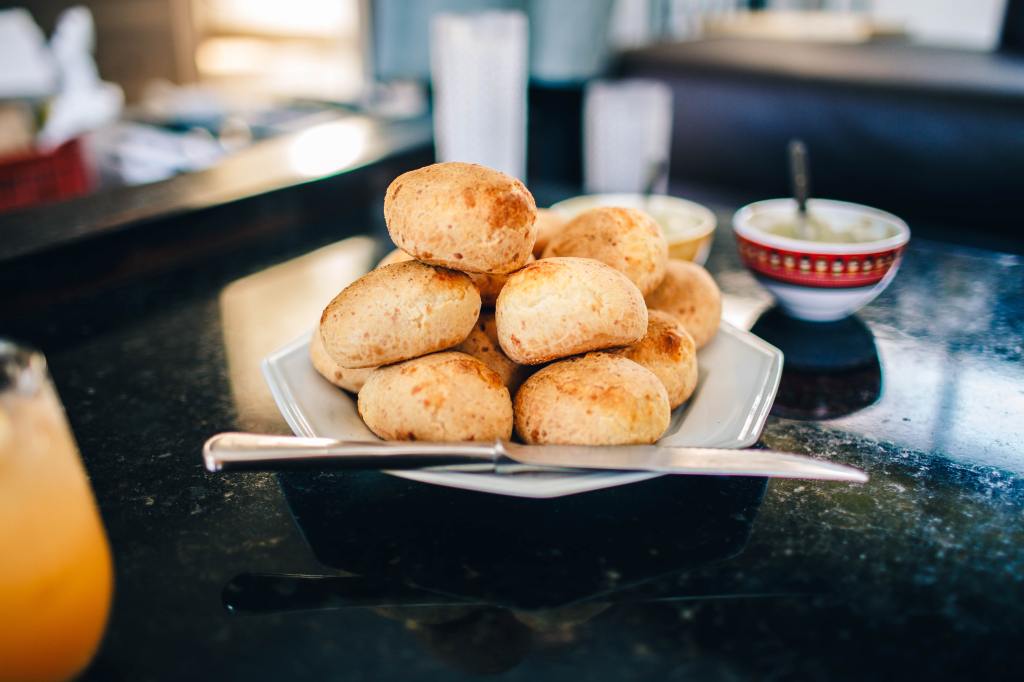
It is often in these long, drawn-out times that we can look around and realize God has not been so far off. God has been in the frustrations and the exhaustion, as well as the laughter and the bread.
This season of the year, I’m often excited about a weekend getaway with my husband. School is underway, kids are between fall sports, and we have lovely parents who make getaways possible.
Actually, even one night of getting away counts as a weekend getaway. We like to stay downtown for one sleep in the big city (Bismarck) and do our own restaurant/pub crawl, snacking here and there and sampling what the taps have to offer.
Like you, I’ve placed “what I usually do” up against “what really needs to happen during COVID-19” a million times now. My husband and I know we can live without this tradition and pick it up again another year.
However.
Even though we arrived at that decision together, I still find myself pondering other ways to get away as a family. Could we stay in a cabin at a state park? One night at a hotel with masks and bleach wipes in hand? VRBO?
But alas, those venues might be lovely, but would it be worth the money when there are few things we would be comfortable going out and doing? And three Lewtons in a VRBO or hotel room for a couple of days would not equal relaxing, I assure you.
Argh.
It seems likely these are the terms under which my family will live in Western N.D., where case numbers remain stubbornly high. I simply need to suck it up and come to terms with these terms.
As I do that, I hope someone writes the following books while I’m not pub crawling or staying somewhere someone else makes the bed:
“A Survivor’s Guide to a Super Fun Home for Teenagers Stuck There When ‘All My Friends are Eating at Applebees'”
“A Tale of the Elastic Pants and the Family Whose Fun is the Coffee Shop Drive-Thru”
“The Alluring Trinity of Netflix, Prime and Disney+”
“Life Without 409”
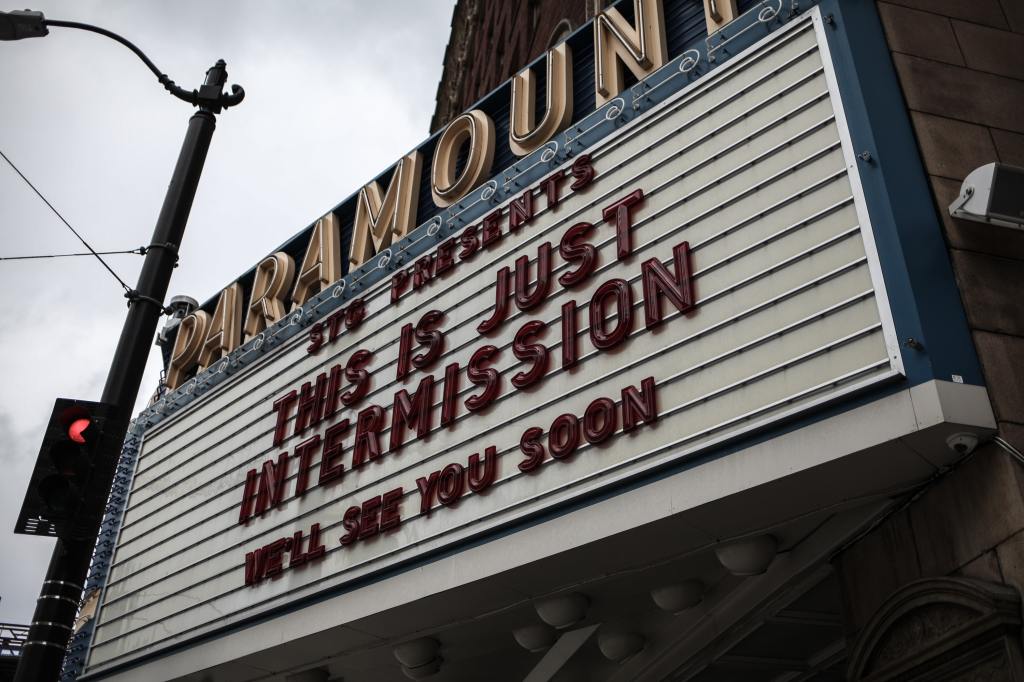
Until the books are written, I’ll live the story. And we will wait together for this “intermission” to lead to the next chapters.
If you were to skim through job descriptions and happen upon the one that demands every ounce of your energy, the full capacity of your heart and then some, and a skillset that ranges from first aid to nutrition to anger management to activity director, you would be reading about the work of a parent.
Of course, there is no job description in the same way there is no manual. And so, one way through the humbling privilege of parenting is prayer.
This morning, I caught myself praying the wrong way. (I usually say there is no wrong way to pray, but just as there are actually stupid questions, there is actually a wrong way to pray.)
I prayed my kiddo would be a certain way and do certain things that would make my life a whole lot easier.
Oops, I realized. That’s not exactly how a parent’s prayer works. At some point in a parent’s life, we are forced to admit we actually have little control over the outcome of our child’s life. The sooner we come to this revelation, the better we are for it. We can shower a human with unconditional love and challenge them to be better, but only the emerging adult in your midst directs the path. It sucks, I know, you pour your heart out only to let it be broken again and again.
A parent’s prayer, then, is best centered on the parent. God, I pray, what do I need in order to parent this child of God so he or she can be his or own person? Do I need more patience? Or more hobbies so I stop worrying so much?
My spiritual director lately broke the news that when we worry about someone else too much, we tend to keep that person stuck where they are. Worrying too much is not a good solution for either the worrier or the target of those worries.
I’m not saying to give up, or not to care deeply about the people whom God as entrusted to you. But instead of praying for our kids to be a certain way, we can pray for God to shape and change us, the parents who most of the time can only hope we are doing the right thing. And in that prayer, ask for forgiveness. Parenting is like living in a laboratory and we sometimes mix the wrong stuff together. God can help with that.
Dear God, you thought I could be a parent? What were you thinking? Okay, then you’d better go to work on me. Give me wisdom to know when to step in and when to step back. Give me a deep, deep breath when I get judgey or when I do that thing with my eyes that tips toward shaming. Thanks, God, for hanging in with these kids now and in all their days to come, and for not expecting to me to be the perfect parent. I like that a lot. Amen.
The Scripture text I’ll preach on this weekend is about a golden calf (not a fancy plate of veal). In a nutshell, the people who followed God were getting tired of waiting for God to do what they wanted (get them to the Promised Land). In their impatience, they constructed their own god and asked that god to do what they wanted.
To make this fancy-pants god, everyone took off their gold rings and earrings and the man in charge melted them. Somehow it came out of the fire shaped like a calf. (All of this is reminiscent of previous ways God’s people tried to do it all themselves without God’s help.)
The idea of worshipping a calf-shaped hunk of gold is preposterous. Why would they expect a shiny and ridiculous version of God to accomplish what only God can do?
Well…that’s where I begin to wonder. Does this strike a chord with you, the idea of getting impatient and then just doing it yourself? That’s where God’s people began to fumble. It was their impatience that bested them.
I am bubbling over with impatience these days. Impatient for worries about the coronavirus to fall away. Impatient for my kids to go hang out with people and not be stuck in our house so dang much. Impatient for my husband’s and my work to stop filling the margins of our lives quite so much. Impatience.
And in my impatience, I am aware now I just might be looking to the wrong, ridiculous things to get through this season. I’m doing too much and forgetting to be gentle on myself. (I bet you are, too). I’m taking shallow breaths and moving too fast from one thing to the next. (I bet you are, too). I feel guilty about not getting to all the people who need spiritual care instead of relying on the Holy Spirit to be there first. (Spiritual leaders, I bet you are, too.)
That shiny golden calf looks like the copious ways I’m trying to do this myself, instead of patiently waiting for God to show me what to do. Show me, God, perhaps I can wait for a moment.
For six months, I have done everything within my meager human power to avoid spreading or contracting COVID-19.
I stayed home when I wanted to travel.
I have worn a mask in all public places, even among people not wearing a mask who look at me with disdain.
I have told my own kids “no” to so many things they would like to do: sleepovers, gatherings with friends, eating out at restaurants, staying in hotels, visits with grandparents when numbers are high, looking disdainfully at people not wearing masks.
Our congregation has courageously said “no” to large in-person gatherings, “yes” to wearing masks, and “no” to putting staff at risk as much as possible even as our county has encouraged large in-person gatherings and watched the numbers soar.
Apparently, according to (not the scientists) my country’s own president, contracting COVID-19 is as good as a regular exercise regime. It will make you feel 20 years younger.
As he encourages people to contract what has killed more than 200,000 just in the territory he is responsible for, the very disease that has overcrowded nearly every hospital in my state (including my city); as he refuses to listen to science and gives more “ammunition” to those who have looked at me disdainfully for six months, who also get most of their facts from Facebook memes, I will say “no”.
No, President Trump, I will not hope for COVID-19, nor will I put others at risk (not a stranger nor a family member). No, President Trump, I will not hope to continue to overcrowd the ER and send people from our county to a hospital out of state because there is no nearer bed.
No, I will not listen to a billionaire, but I will listen to my own doctor. I will listen to the deeply concerned medical professionals I know, and to scientists who are not posting nonsense on Facebook.
There are other avenues to take to look 20 years younger. (Exercise, for example.)
But more importantly, the call to Christian faith sets aside such superfluous values. We wonder how the “no’s” and “yes’s” of today impact the marginalized now and in the next 20, 200, and 2000 years. We wonder about the impoverished neighborhoods that have buried the most dead these long six months. About the impact this pandemic will have on the cost of healthcare and whether that will widen the socioeconomic gap between people who are white and people who are not.
In the end, our Christian work may not align with the work of some of our highest political leaders. In some of the toughest of times in the history of the world, the Christian work had to contradict aspirations of the highest political leaders. And it wasn’t until long after that the veil was lifted and that became clear.
Many of the “no’s” and “yes’s” of these days are tough. They bravest “no” and “yes” we might say in these times will be for the common good. Not individuals’ good, not my own comfort, not my own self-righteousness, not my own pride.
COVID-19 is not the new exercise regime. No. No. No.
Today begins a new month after the longest September on record. September, the first full month of the brand new school year, usually bursts into our lives with the comfort of a familiar routine and a healthy break between siblings.
September, you were not yourself this year and who could blame you. Go recover, next year is sure to be much different.
I am so happy to see you, October. You paint the leaves earthy colors and every year the return of their beauty takes our breath away. You blow them off their sturdy trees and the crunchy leaves feed the soil to unfold in soft radiance in the spring.
There is no spring without fall. No new leaves without the falling of old leaves. No green grass without the natural composting of winter. No return of the birds if they don’t first fly away. No Easter without Good Friday.
October, you set our hope on endings. Not to end all things, but later, in due time to begin the things that promise life. We have wandered far from your promise of life. We argue about politics and barely know the neighbor who lives beside us. We shop online and accumulate things and overcrowd secondhand stores. We stay committed to our political party even though we know how corrupt it is. We let down the kids who live among domestic violence. We accept that a woman must choose caring for family in place of pursuing a career she loves. We refuse to wear masks and create a crisis for long-term care centers in our own communities.
Oh my, October, there is so much possibility for you this year. So many endings, leaves that might blow off their trees, composting that will renew life if not for us, then for another generation in another spring much later.






 Lisa Lewton