Mom, wife and pastor relying on the gentle love of Jesus. Writing about being in relationships, not losing yourself in them, and Bowen theory. Author of Spiritual Longing in a Woman’s World and Wait: An Advent of the Familiar.
Firsts are obvious as we lead and accompany kids through this one wild and precious life, as Mary Oliver described it. We pay attention to the first bath, first solid food, first friend, first day of school. My son bought his first vehicle a couple of weeks ago. It was both wild and precious.
Lasts are a different animal. We only notice them in hindsight if we notice them at all. The last time he needed me to tie his shoes. Last time she needed my help to give her a bath. Last book I read to him. Last time I cut her steak for her. Last time I picked them all up from school.
This week, I wonder whether this will be the last New Year’s Eve we spend together as a five-person crew. I planned a menu and a few goofy games in an attempt to stay awake until midnight, and I keep pondering whether this last day of the year is one of those hidden lasts. Kids are built to move on to bigger things that do not involve a mom making mocktails, but we never know when we have entered new territory until suddenly we have arrived. Suddenly there will be four of us, then three, then…
I do not dread the descending order, but I don’t want to completely miss the lasts, either.
You could say every last leads to a first. The last New Year’s Eve together will lead to his first New Year’s Eve with friends, without mom’s goofy games, without fighting with siblings, without the old comfortable routine. In the newness of the firsts and in the shedding of the lasts, life reveals its wild and precious self. Ready or not.
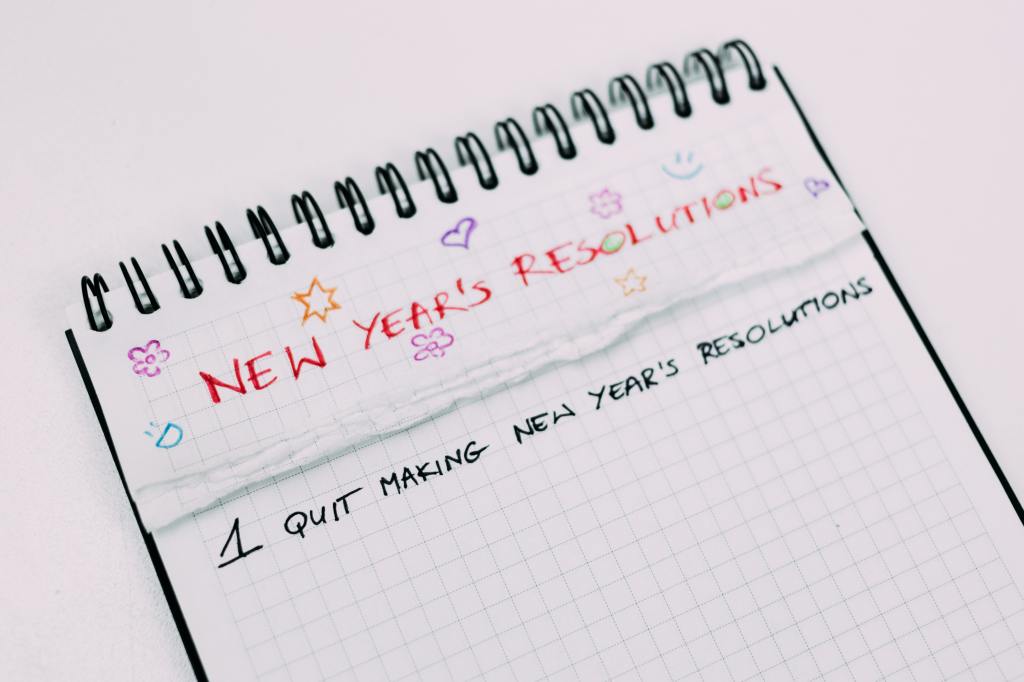
New year, new you, even 2020 ridiculously promised. Remember?
Even I, lover of lists, and the promise of a new day, and goals, and dreams don’t buy the notion that a new year makes a new you. Eventually we fall into the habit of writing the date correctly as we fall into other not-so-new-you habits.
I was scrolling through Pinterest for written workouts when it dawned on me that Pinterest is trying to convince me no matter what my body might look like, it isn’t suppose to look like this. Pin after pin showed sculpted bodies and women who looked very hungry. I was only looking for a few HIT workout ideas and caught myself judging my own body for not looking like those bodies. I don’t want my body to look like those bodies! I like a donut once in a while and good dark beer and bread. And cookies.
This week leading to a new year, I’m going to fall into the common trap of believing a new year can make a better me. But in 2021, I’ll be the same me who sometimes chooses to get up in the morning and exercise and sometimes sleeps in because that’s more important. Sometimes I will choose vegetables and other times I’ll skip them. I’ll get some things right and others wrong, which is nothing new at all.
And through it all, the God who made me won’t give up on me. More likely, God will say, “Yep, that’s Lisa. That’s the real her,” because I’m not so interested in a “new and improved me”. I prefer a forgiven and beloved me instead. The effort is more God’s than mine.
Although donuts may not be calorie free here, they can be guilt free. And that is enough.
Advent candles flickering toward hope, peace, joy and finally love have been lit. We are two millennia past and two days away from love’s story.
Now, a story about stories.
It used to be we were limited to understanding the world and its people by where we lived and who we knew. B.I. (before internet) we were limited in knowledge to the dictionaries and encyclopedias we could access. We knew only the stories told on famous radio programs, a handful of television shows, and a limited number of books depending upon the ingenuity of the local librarian.
Long ago, Abraham Lincoln made time each morning to hear people’s stories. Franklin Delano Roosevelt did not read headlines of the newspapers he collected from across the country each day. He read editorials in order to understand people’s stories.
Now, you and I live in a land of innumerable stories. They fall into your lap each day. We are not limited to understanding the world and its people by a limited number of sources. But this is what we do when we depend on the news or your Facebook feed to tell stories. Stories need to be told by the bearers of the stories.
I’ve learned about the world and its people through stories, not the news. Ta Nehisi-Coates and Ibram X. Kendi taught me my micro-contributions to racism. Glennon Doyle helped me understand bulimia and addiction. Kristin Howerton gave me language for adoption and families with kids of different colors. Joel Stein visited folks in Roberts County, Texas and folks at elite conferences at ski resorts to teach me how America reached the unlikely conclusion to elect Donald Trump in 2016. Malcolm Gladwell, a storytelling wizard, blew my mind with his collection of stories that make sense of why violence befalls our black and brown siblings in Christ in shameful proportion to whites. Ada Calhoun listened to the stories of so many women in my generation and then broke the news to us that feminism did not free us to do everything all at once.
Stories are how we understand each other. They open a door to mingle in each others truths so that we might become a bit truer ourselves. Stories, when told so bravely, crack open love for one another.
Two millennia ago and two days from now, love became a story. It’s the story we tell about a starry night and a desperate couple. We tell the story freely and often, but we miss the love unleashed in it. Perhaps this year you might hear it differently. The story is not a love story, but love’s story, calling us to see love in all our stories.
Remember the elementary school playground, if that is part of your story? The playground I grew up on was the most amazing place. It was far too massive for playground protocol today.
The playground at Sherwood School (where K-12 fit snuggly in a single building), showcased slightly ancient yet timeless equipment such as the wood and metal merry-go-round, where I overindulged in spinning on the first day of third grade and went home after losing my stuff in the doorway into the bathroom. (Blessed be the janitors.) Metal slides towered into the clouds like skyscrapers, and the swings were for swinging but mostly for girls to chatter about boys.
Behind the equipment was a mowed area nearly the size of a football field where baseball, soccer and football took place, long before we understood the long-lasting effects of concussions. You are welcome, next generations, for all the inadvertent experimenting we did with head injuries in order for you to know, today, that getting hit in the head is not a good thing.
To the east of the land of head injuries was, you might not believe me, a forest. A Sherwood Forest, yes, clever you. The forest became off limits late in my elementary days for obvious reasons, but before that, we built forts and did business. We coldly ripped bark from trees and made it our currency to purchase pretend food and pretend supplies. We told secrets in those woods and I’m sure drove the teachers on recess duty into utter exhaustion. We ran from bullies, made weapons with sticks, and how did none of us die in there during recess?
Today marks the last day in the week of Advent set aside for joy. We await the joy Christ will usher in when he comes again to gather us as one. In the meantime, would you share a story today about your first playground?
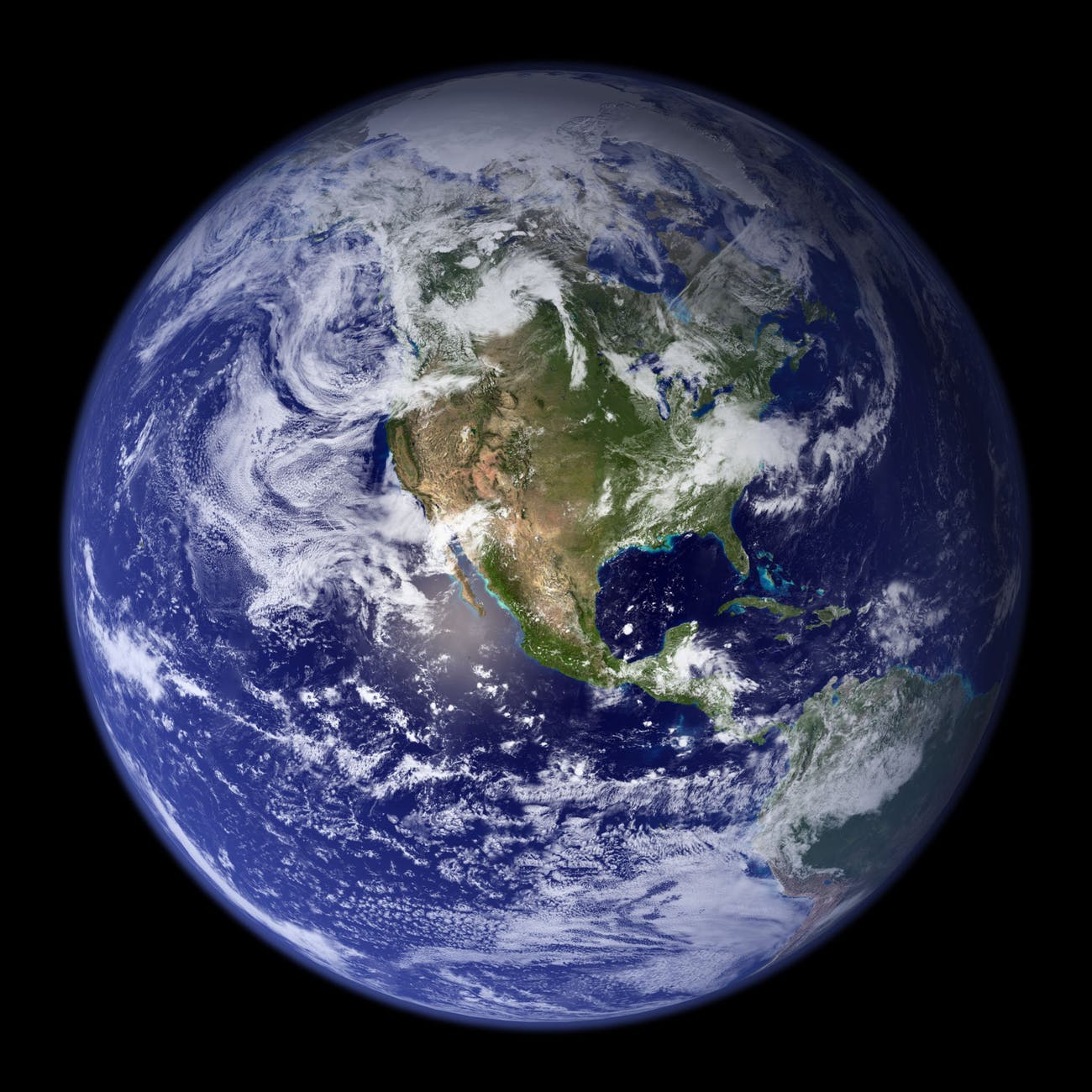
In 2020, our world became both smaller and bigger.
The world was smaller in the sense that we scarcely moved around in it. I spent much of my time at home with the four people in my immediate family. In shared spaces, we all did our work. We cooked and ate and washed dishes together. I took lots of walks. We watched movies and played games and drove each other bonkers and then we got over it. There is a sense of peace in being connected with the people in your home.
The world also grew bigger. From my living room in June, I watched the burning streets of South Minneapolis on Facebook. Peace may have been something I was enjoying in my small world, but not in my bigger one. More than ever before, 2020 made me aware of the absence of peace for so many of my neighbors whose neighborhoods are not quiet like mine. Not all my neighbors trust the police like I do. Not all my neighbors feel safe going on long walks or stopping at a convenience store like I do.
Injustice against black and brown bodies was not new news to the big world, but it became more tangible news as our siblings in Christ persisted in speaking up about an absence of peace. Perhaps for the first time, I felt invited into the lament of a wide world with a narrow sense of what is normal (white food, song, experience) and what is not (black food, song, experience).
Peace is not reserved for our small world. Peace is not mine, it is God’s dream for the world. Peace requires peering out far enough for the world to become bigger, and neighborhoods to look more like one big world and less like separate worlds.
God arrived in a manger in only one world, after all, in another time when peace was only enjoyed in small worlds. This Advent, as I dream of peace in my small world, I’ll also dream of peace in the world that is unfolding more and more each day.
A grace-filled thing happened last week. While I was at church one evening, my husband and kids transformed our living room into Christmas. There was nothing more than an empty tree stand when I left. Upon my return the stand was occupied by a full and beautiful tree 8-foot tree (the size I had requested), the walls were decorated with archived kids’ art work, and my grandmother’s wooden painted Santa Claus was nuzzled nicely into our burlap wreath.
(Women, sometimes we need to be physically away for Christmas miracles like this. If you want help from your family, you sometimes need to ask them, find an excuse to leave the house for a couple of hours, and return home with words of thanks and no criticism. None.)
The next day, we hung lights and ornaments on the great big tree that has made its presence known. As its branches stretch out, it is quite difficult to walk around it without knocking off an ornament. Watering is an act of spelunking, except instead of a flashlight you have an awkward watering can.
A major problem, I realized too late, is that our Walmart tree stand underestimates the size of this gorgeous addition to our family. So, when I was sitting in the living room yesterday, after preaching a sermon encouraging people to keep their Christmas expectations from getting out of hand, and the tree attacked (a.k.a. fell on) me, I was surprised, then sort of ticked off at this giant tree, then thankful my two kids who were there came to my rescue. We found ourselves in an intense operation: stabilizing the tree, maneuvering around a broken bulb, soaking up the water in the carpet, retrieving soggy presents.
Finally the madness subsided. Perhaps it was akin to getting a crabby cat into a kennel, although I’m mostly afraid of cats, so I don’t know that for sure. Christmas is the giver of so much emotion, so many expectations, so many disappointments, and so much, hopefully, recognizing the people who are there for you when you need them, for example, when they bring home a tree without any help from you, and then that very tree tries to kill you.
If I set aside the downsides of every one of my Amazon purchases (extra packaging materials, more fuel burned by trucks, working conditions for underpaid and harried Amazon employees) what’s not to love about Amazon?!?
For the love of this busy culture, in two days my item arrives at my door! Socks for a kiddo, lotion for me, that cute pillow case for a living room throw pillow. Or, in two days an item arrives at the door of any address I enter into the shipping information. Need to send a gift? Amazon will do it! Need a toothbrush every six months to arrive without actually ordering it? Amazon can do that, too.
Amazon is like Tabitha from “Bewitched”, Santa Claus, the world’s best mom, and a little bit of Jesus all wrapped in one.
Which makes me wonder…when buying becomes so easy and automatic (“I’ll just order it on Amazon.com!”), what am I forgetting? The more automatic it is to order on Amazon, the less I actually consider what I’m buying. If what I “need” is but a click away, that’s just too fast for me to make a mindful purchase. I’m not looking at something at the store and comparing it with the items around it, which takes long enough for me to also wonder if I truly need to purchase it. A “click away” takes the think away. (I’m sorry.)
My Amazon Prime membership is up at the end of December and I wonder if Amazon and I need to take a short break. Will I miss out if I don’t click for 365 days? Will my kids go without socks and my couch look dreary? Both are entirely possible. I’ll also need to buy toothbrushes all on my own in six months.
Will I also be a little slower in my clicks? Will I end up with fewer things at the end of 2021?
The weeks of Advent lead me to wonder such things. How can I slow life down? How can I be intentional with choices that impact my neighbor and this earth? How much do I really need and have I noticed how many drop-offs I make at the thrift store? Am I being mindful with money or just clicking away?
Life tends to accelerate without our even noticing. Even in a global pandemic it moves quickly.
You have only four weeks to get ready for the arrival (advent) of love in a manger.
Not four weeks to choose the most amazing presents and bake the most delectable cookies. Not four weeks to wear yourself down to design the perfect Christmas.
Christmas is most perfect when we don’t fuss with it too much. God did a fine job being born in a manger, filling a human body with the loving presence of the Almighty.
It won’t get better if you do too much. If you beat yourself up for eating too many cookies or get crabby with your family because they don’t appreciate all your hard work.
Work less hard toward the perfect Christmas. Light a candle and reflect manger love in conversation, stillness and gentleness with the friends and family whom God entrusted to you.
And grace lightens the darkness through you for four whole weeks.
A famous biblical story features a made-up dude named Job (pronounced differently than it looks). Job had it rough and justifiably wept and wailed. We read in the story how not to help our grieving friends, but in the end it is no surprise that God has the last word.
God zooms out on Job’s view of the world. “The world is much bigger than you,” God relativizes to a miserable Job in a dozen ways. God points Job to creation, showcasing the larger-than life creation work goes on day in and day out without Job or anyone’s help.
Like a proud child, God points. “Look at the sea, I did that! See that cloud? That was me! The snow and hail? It isn’t always lovely, but it’s my work. And the ostrich’s wings? I gave those wings the power to flap, baby!”
Last week, I felt a slice of Job’s pain. And God pointed.
“Feel the warm sun on a November day? I made that heat!”
“Taste the fresh bread. Grain was my idea!”
“That gracious card someone sent you? Don’t you love it? I invented kindness!”
“You heard that song and faith welled up in your throat? You are welcome.”
Okay, God. I remember now. The world is much bigger than me.
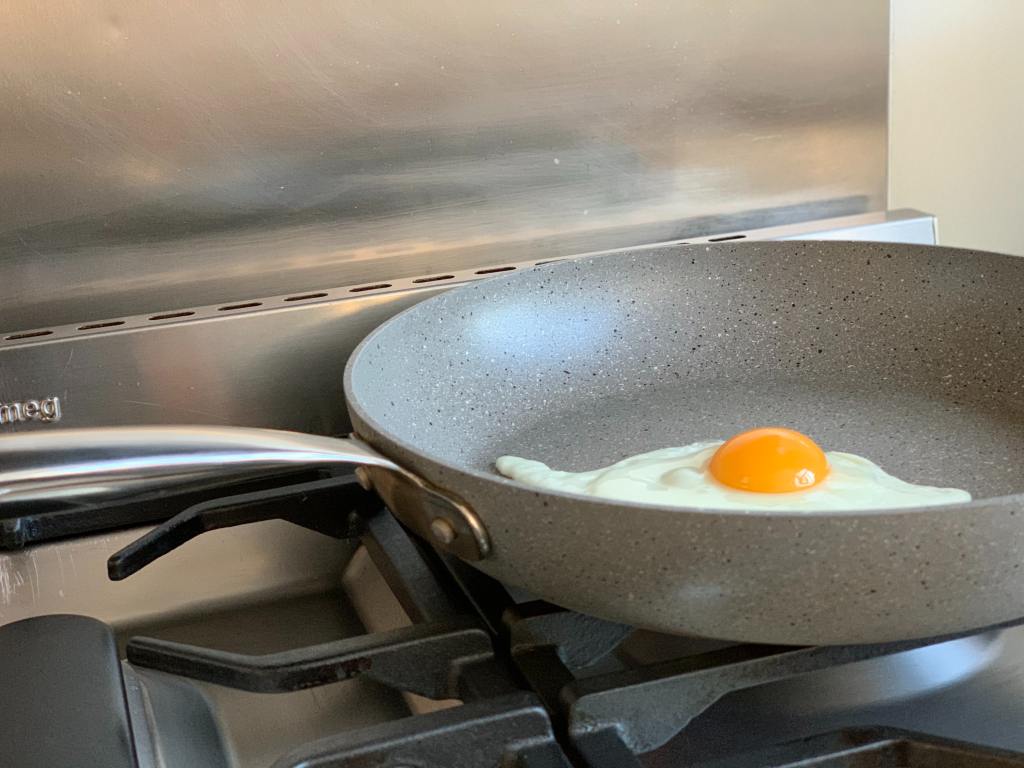
If you are as old as I am, you may remember the powerful commercial by the Ad Council to illustrate drug use. Above a sizzling frying pan, you saw an egg and heard the monotone words: “This is your brain.” The egg was cracked and dropped onto the pan, followed by these matter-of-fact words: “This is your brain on drugs.”
Drugs fry your brain, we understood without question, yet questioning how much we wanted eggs for breakfast anymore.
What the Ad Council did not mention is drug use that becomes drug addiction can divide families…can alter one’s perception of one’s self and one’s neighbor…can steal hope and shape the future.
That old ad keeps coming back to me because something is happening in Christian communities, or at least in the one I serve as a pastor. The same thing is happening among some groups of friends and certainly among families.
I’ll stick with what I know as a pastor. The one body of Christ I’ve been called to lead has been disrupted not only by a pandemic, but also by a strange strain of sizzling hot hate. It is deep hate against “the other side” and I see it most clearly on Facebook.
Clearly I don’t see many people, so once in a while I will check a person’s Facebook page if they pop into my prayers. Sometimes I can learn something about the person’s life that might need specific prayers.
What I might find is deep anger, mistrust, and sizzling hot hate in shared posts and capital letters. Hating quarantine. Hating a political party. Hating wearing masks. Hating. Hating.
I see it on the pages of people whom I know to be sincerely generous and kind. I have walked with them through tragedy and confirmed their kids and baptized their grandkids. I know them past their Facebook pages and the hate that sizzles on their pages.
And I worry so much about their souls. Not in the “will they go to heaven” sort of way. Jesus already took care of that worry. But I wonder in the “how are you surviving” sort of way. What is such hate doing to the way you are loving Jesus and seeing the world and being in relationship with your neighbor?
I think you can remove the word “drugs” in the egg ad and replace it with the word “hate”. Hate can divide families…can alter one’s perception of one’s self and one’s neighbor…can steal hope and shape the future.
I suspect if you are reading these words, you may not be the hater. But if your Facebook page does reflect sizzling hot hate, take a quick inventory of whether it’s really you in there. Is that really you on your Facebook page, or have you let hate shape who you are on social media because it is what’s trending?
An Instragram post on @henrinouwensociety yesterday reads: “Prayer converts the enemy into a friend.” If that is true, then prayer may be able to take the sizzle out of hate. It may be able to mend broken relationships. Certainly, the death of Christ did something even greater – set forgiveness where there was none, set life where there was death.
Who knew a pandemic that in theory would bring people closer together to fight harder against it, (think The Great Depression and WWII and 9/11) would be the thing that lets loose the hate?




 Lisa Lewton