COVID-19 the New Exercise Regime

(Photo by David Todd McCarty on Unsplash)

Perhaps I’ve been doing it all wrong.

For six months, I have done everything within my meager human power to avoid spreading or contracting COVID-19.

I stayed home when I wanted to travel.

I have worn a mask in all public places, even among people not wearing a mask who look at me with disdain.

I have told my own kids “no” to so many things they would like to do: sleepovers, gatherings with friends, eating out at restaurants, staying in hotels, visits with grandparents when numbers are high, looking disdainfully at people not wearing masks.

Our congregation has courageously said “no” to large in-person gatherings, “yes” to wearing masks, and “no” to putting staff at risk as much as possible even as our county has encouraged large in-person gatherings and watched the numbers soar.

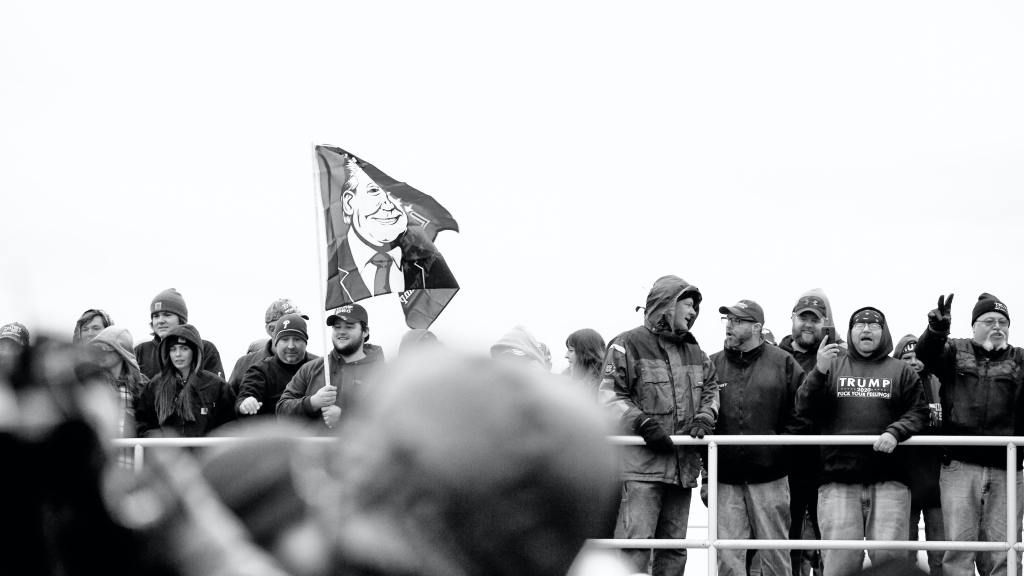
Apparently, according to (not the scientists) my country’s own president, contracting COVID-19 is as good as a regular exercise regime. It will make you feel 20 years younger.

As he encourages people to contract what has killed more than 200,000 just in the territory he is responsible for, the very disease that has overcrowded nearly every hospital in my state (including my city); as he refuses to listen to science and gives more “ammunition” to those who have looked at me disdainfully for six months, who also get most of their facts from Facebook memes, I will say “no”.

No, President Trump, I will not hope for COVID-19, nor will I put others at risk (not a stranger nor a family member). No, President Trump, I will not hope to continue to overcrowd the ER and send people from our county to a hospital out of state because there is no nearer bed.

No, I will not listen to a billionaire, but I will listen to my own doctor. I will listen to the deeply concerned medical professionals I know, and to scientists who are not posting nonsense on Facebook.

There are other avenues to take to look 20 years younger. (Exercise, for example.)

But more importantly, the call to Christian faith sets aside such superfluous values. We wonder how the “no’s” and “yes’s” of today impact the marginalized now and in the next 20, 200, and 2000 years. We wonder about the impoverished neighborhoods that have buried the most dead these long six months. About the impact this pandemic will have on the cost of healthcare and whether that will widen the socioeconomic gap between people who are white and people who are not.

In the end, our Christian work may not align with the work of some of our highest political leaders. In some of the toughest of times in the history of the world, the Christian work had to contradict aspirations of the highest political leaders. And it wasn’t until long after that the veil was lifted and that became clear.

Many of the “no’s” and “yes’s” of these days are tough. They bravest “no” and “yes” we might say in these times will be for the common good. Not individuals’ good, not my own comfort, not my own self-righteousness, not my own pride.

COVID-19 is not the new exercise regime. No. No. No.
What Do You Expect?

(Photo by Jon Tyson on Unsplash)

Expectations are in the air. Whether you know it or not, expectations you carry around for yourself, your family, your friends, and your community and its leaders give shape to your life.

I’ve been giving this a lot of thought as I regularly hear conspiracies related to COVID-19. In North Dakota, apparently conspiracy theories are our thing. I’ve bent my pastoral ear to theories about hospitals receiving more revenue for COVID-19 patients , or death certificates recklessly adding COVID-19 as a cause of death, or that this whole thing will go away after the election.

I suspect there might be an expectation that the system is out to get people. That the Democrats or the Republicans or the refugees or the women or the people who are gay are out to get you. There is an expectation that a person’s freedoms are at risk, that the world is getting worse, that all leaders are suspect.

It leads me to wonder about my role as a spiritual leader. What do people expect of me right now? Do they expect me to challenge their conspiracies? Expect me to remind them the very person they are naming as suspect may have been the doctor they have trusted for decades, or the refugee who dreams of work and well-being as much as they do.

Expectations. In my marriage and in my life as a pastor, I have found that unpacking expectations deescalates an angry moment. It adds clarity to the muck of assumptions and suspicions.

Perhaps my pastoral question needs to center on expectations.

“What are you expecting God to do in the midst of this?”

“How are you expecting communal healing in 2020?”

“How do you expect God needs you and I to speak truth into these matters?”

“What to do you expect our own church and our own local community to look like in a year if we have spoken so many untruths?”

There was no expectation life would emerge from that empty tomb on Easter morning. So I refuse to accept that this world has gotten worse and all leaders are suspect. I’ll expect an alternative. And perhaps I need to expect myself to ask more faithful questions out loud.

Out of Place

(Photo by Matan Levanon on Unsplash)

I feel out of place. I’m not where I should be.

Each year for the past 14 years I have gathered in Medora with all the pastors, deacons, and synodically-authorized ministers (known as rostered leaders) from the Western North Dakota Synod for a three-day retreat.

Because pastors are creatures of habit and this retreat has been around a long time, I can tell you precisely where I would be at this early hour in Medora: the Little Missouri Saloon. Before you assume we begin the day in the bar, hear me out. Each Monday morning, a couple dozen people meet at the saloon not to wait for the doors to open, but for the fun 5K to begin! There is a chill in the air as people bounce around to stay warm, or drag their feet wondering why they abandoned their cozy beds. (There are a few who may have left that very saloon not too many hours before.)

We meet annually in Medora to worship, learn something new, complain when the Roughrider Hotel can’t keep up with our unreasonable demands for coffee, and most importantly to sit at circle tables together.

And so we have arrived at my out-of-place feeling. I’m not going to sit at a circle table today. If I run out of coffee it’s my own dang fault. And I won’t sit in a pub with some of my favorite people later this evening.

This year, some rostered leaders are in Medora and some of us will Zoom in. From my home, I will join colleagues from my desk and not a table where the shape tells the story of what we’re doing. We are part of this never-ending work to tell an old, old story of God gathering ordinary people. The work goes on and on from generation to generation with no end in sight. None of us will complete the work of proclaiming hope, but we will continue it. We will push through political divisions under the leadership of a narcissistic and vainglorious president. We will cry for justice when people are dehumanized simply for being black and Native American. We will not stop believing God gathers us to do something about the unjust lives of the poor.

Bishop Craig Schweitzer preached last night about our time before Covid, during Covid, and at some point after Covid. It was an encouraging proclamation that we are not stuck for ever in the during part of Covid. There was a time before and of course the circle of time will continue and we will find ourselves on the other side, persisting in the same work.

Although I won’t be at a circle table with them, I give thanks for my colleagues today. I wish we were all in Medora (and so does the Little Missouri Saloon), but more importantly, I know we will gather there again because circles have no end.

COVID-19 on Mars and Venus (but actually on Earth)

(Photo by Anna Shvets on Pexels.com)

Men are from Mars and women are from Venus, John Gray proposed many years ago. Or to paraphrase a woman I volunteered with a couple of weeks ago at baseball concessions, “Women have many things on their minds, men have just one.”

Hehehe.

Yesterday I was on a Zoom call with pastors from around the country. It was our first gathering in a cohort through Luther Seminary We discussed chapters from our first book, Strengthening the Soul of Your Leadership, a book that happens to align well with the times, although I suspect it was chosen before March.

In a break-out group of about 7 people, 4 of us were women. We shared openly what has been tough on our souls these past 4 1/2 months. Consistent with what I am hearing from other women, the pandemic is leaving women wondering how much we can actually work our paid jobs and at the same time live our vocations as moms and partners.

For me that means, can I be emotionally present with my kids as they process the changes and grieve the losses through the year ahead, and at the same time lead a large congregation through the same soul work? Can I be fully me, fully present, fully awake to the joys and sorrows both at home and in my call? Do I have the capacity to be mom, partner and pastor all at once in this season of uncertainty?

For now, yes. And it was affirming to hear yesterday from my colleagues who are female that they, too, are overwhelmed by the same pressure. I was in good company.

For me on Venus, I will be very gentle on myself regarding what I can actually do. I’m going to cook good food at home, take walks, mine for conversation with my kids and spouse, and be available and prayerful in my work. I expect to do more listening than anything else. I expect to get frustrated, cry, and enjoy a brown ale to ease the pain. I also expect to lean on my partner, my friends, and my family in a way I maybe never have before, knowing it takes more than a village to be well through a pandemic. Not one of us has done this before. It is a wilderness. And wilderness is full of the presence and light of God, on any and every planet.

Faith Over Fear

(Photo by Bára Buri on Unsplash)

“Why wear a mask when I want to live out of faith, not fear?” asked someone else. (Actually, a lot of someone elses.)

The congregation I serve has been both in-person and online for two months after 11 weeks of online only. Leadership has set an expectation now, as COVID-19 case numbers rise in our county and state, to wear masks when we gather in the church building.

My colleague and I wear masks before and during worship except when we are preaching. It is hot as blazes and extremely hard to enunciate through the cloth over my face, but we do it because this is how we are loving our neighbors and inviting our community of faith to do the same.

“But why would I wear a mask if I want to live out of faith and not fear?”

There is conflicting information in the United States about COVID-19. Is it a thing or is it a hoax? Who is making money off of this and why is the government telling me what to do? Why can I stand in line at Walmart but not gather in a crowd at a funeral? Why will my school be social distancing but my high school football team play face-to-face?

“And why is my church telling me to wear a mask when I want to live out of faith and not fear?” asked several someone elses.

It is a lovely question if, and only if, the question is intended to engender conversation and not inflict a political opinion upon someone else. Asking questions is the way we learn; stating uncompromising political opinions is the way we continue to divide.

“Why would I wear a mask when I want to live out of faith and not fear?”

Why? Yes, why? Could that begin a conversation instead of end it? Be shaped as a question and not a closing statement? Could we really wonder why wearing a mask is in fact the way we live out our faith, unafraid of the mean looks and despicable memes?

That is a question that might lead to faithful, not fearful conversation.

Consideration

(Photo by Greg Jeanneau on Unsplash)

At the start of the season of Epiphany in January, our congregation distributed words on small wooden stars. (Epiphany begins with the story of Magi who followed a star that revealed the Messiah.) The “star words” spiritual practice invites individuals to engage with a word. Prayerfully holding onto this word month after month, something new might be revealed to you about life with the Messiah.

My word was “consideration”. And I did not like it one bit.

Many months before Epiphany, a handful of colleagues began encouraging me to consider the call to serve as bishop of our synod. Such a call had not entered my mind before their nudging, so I went to work considering, also known as discerning. My inner sense of call arrived at the same place each time I considered. This is not a season of my life to live such a call. With the travel and on-call demands, I would miss my boys’ high school years and my daughter’s formative preteen and early teenage years. And I would miss my husband. I would miss the work of writing a book and serving as a pastor at a congregation I love with a colleague for whom I am grateful.

But consideration is not a one and done deal. Not long after I finished considering, someone else would nudge and I would go back to considering, again arriving at the same place. Yesterday when the assembly cast its first ballot and I was second on the list, all hell broke loose in my heart. I looked to God with utter confusion. Hadn’t we looked at the map of my life enough by now? After a whole year wasn’t that enough consideration? “What the heck, God,” I gawked, feeling perhaps betrayed after all the time God and I had spent in consideration. And then I cried. And then my husband and my dear, dear friends texted and called and my colleague prayed with me and in the 30 minutes I had to withdraw my name from that list, I arrived at the same place, once again. And God and I are friends again.

Consideration. It is hefty word that requires setting aside all preconceived notions, all prior decisions, all assumptions, in order to consider that God may indeed have something to say. The Magi had to consider following a star in the sky to reveal to them the new Messiah, and the Messiah was not who they thought it would be. Any preconceived notions they may have had did not apply to the tiny king.

Like the number of stars that occupy the night sky, life is overwhelmed with an abundance of decisions. A few of them are gut-wrenching hard and demand you to define who and what is most important in your life in that moment. I suspect the kind of consideration that involves career choices tends to be more intense for women, as we weigh the expectations and needs of our marriage, kids, parents, and who will buy the groceries and take kids to school whenever we are considering our future work.

If we distribute “star words” again in Epiphany, I am going to be very careful in considering my selection. And like the Magi, I will be surprised by whatever God reveals.

Ordinary Times

Photo Credit: Jess Bailey on Pexels

As the days of summer come and go, I am still confused by what day it is. Even all these weeks after the daily and weekly confusion of the spring quarantine, each day I have to stop and think. “Is it Monday? Yep, I believe it is Monday. Unless it happens to Wednesday.”

Yesterday I sat down and planned the summer of 2020 for the second time, now halfway into the first month of summer. Originally, I was on sabbatical this summer. I was watching one of my sons play tons of baseball. I was listening to the legendary Danny Gladden tell me each play of my favorite team, the Minnesota Twins. My boys and I were taking a trip to Boston to watch the Red Sox beat the pants off the Yankees. My husband and I were excited to take a kid-less mini-vacation and I would not attend a single meeting.

But these are not “ordinary times,” as my colleague preached yesterday. In the church, we call these months of the season of Pentecost “Ordinary Times”, but these days feel far from “ordinary”.

Wondering whether to wear a mask, whether to eat in a restaurant, with whom and where my kids can play, whether we have enough hand sanitizer, and how easy it would be to let this not-so-ordinary summer slip away while I’m wondering through those questions.

Don’t you wonder how kids will look back and remember this not-so-ordinary time? What will they remember? What words will describe these days? What stories will stick with them? Will they read any of the books people will write about these extraordinary days? Or will they be determined never to remember them because of how restricted they were for so long?

As I planned the summer of 2020 for the second time, there are now ordinary plans penciled in, although they all feel tentative, maybe precarious. Bible Camp. Not as many baseball games, but still baseball games. Doctor appointments. Camping.

Whether these plans actually happen, or whether I sit down and plan the summer of 2020 for a third time, whether the days actually do feel ordinary or not-so-ordinary, maybe I will at least remember what day it is. And that is enough.