Thank You, Saints

Fran shared a treasured recipe for Oatmeal Carmelita Bars. Morris taught me how not to drive a motorized wheelchair down a hallway. Jan upholstered a rocking chair before my first child was born. Dorothy gently suggested I needed a different sweater to go with my clergy shirt. Glen invited me to decorate wooden Christmas ornaments with him at a nursing home. Marilyn gave me voice lessons. And Jackie taught me never to guess a woman’s age based on her hair color.

After my seminary coursework was completed and I moved through internship and my first call, the lessons I learned were taught by the saints. Saints, as we remember them yearly in the church the first week of November, are not perfect people but human people. Saints are the broken and lovely sinners whom Christ redeems. And saints can be excellent teachers. If you close your eyes sometime and recall the saints who have shaped your life for the better, the reel might surprise you. One by one, you will recall moments when God provided comfort, levity, wisdom, or strength through someone who showed up in your life. The Spirit stirred up a conversation or set you in a particular place at a particular time, and there you were: the recipient of a holy moment.

Thank you, saints, for the holy moments.

I could not have been prepared for the level of trust people granted me in my mid- to late-20’s as I practiced being their pastor, but I can only assume such relationships are built when trust is mutual. I needed them as much as they may have needed me. I needed them to teach me the church is broken and lovely saints, and perhaps I could be one of them, too. I was made better by their food and wisdom, their forgiveness and invitations. In return, I offered the assurance that all we need has already been given to us in the unbreakable promise of Christ’s mercy.

It is helpful for me to reminisce back to these early saints and holy moments. In the 17 short years I’ve been a pastor, the church has dramatically changed. Even if these early saints are still around (a couple of them may be) they, too, would be part of a Christian church disrupted by a pandemic, in which mutual trust between leaders and parishioners has been tested. We (churches) have not made it this far into a pandemic unscathed, I think. We are still a wobbly bunch, forming our opinions and trying to discern what lines are being drawn.

We are still broken and lovely sinners, we who are church. We draw lines Christ has already erased. We confuse political opinions with religious ones. We share memes instead of recipes for Oatmeal Carmelita Bars. We too easily ignore how deeply we might influence one another’s lives for the better. Alas, one cannot be a saint without also being a sinner. And so, we wobble together, steadied only by that unbreakable and eternal promise of Christ’s mercy.

So…What Does a Pastor Do?

My desk

A pastor writes words and words and words. Words for preaching, words for worship, words for prayers, words for thank you notes and words articulating something for the church newsletter. When we aren’t writing, we are listening to others and walking with them through terrible times and also joyful times. It is likely we are consuming coffee at the same time . When we aren’t writing or listening, or leading a worship service or a class or a meeting, or reading someone else’s words, we are probably planning worship.

Roughly 50% of my time is dedicated to worship planning. Lucky for me, this requires creative writing. I am a grateful girl to incorporate what I love to do with what I need to do for my work. Not all pastors love writing, so not all pastors worship plan the same. I deeply enjoy reading the texts for the month ahead to see where the Narrative Lectionary is taking us, which is what you see in the messy desk photo above. There is a tall glass of water, a bulletin in progress, and Exodus burning with possibilities (you’ll appreciate my pun if you hear next week’s story). Last spring, my colleague and I looked through the 2021-2022 (Year 4) texts to identify themes. So, I already know October texts pose the questions “What is God up to?” and “Where do I go looking for God?” Having named these questions made it easier to prayerfully write a relevant call to worship and various prayers.

Do you get to incorporate things you love to do into the paid work you do? This was a sabbatical learning for me. Why don’t I lean farther into what I love to do and find ways to do more of it in my daily work? Can’t this be an asset for an organization, whether it is a church or a business or even a family? Once you discover what you think you are good at, is it possible to focus more of your time doing that very thing?

If you are retired, how might that thing you love to do benefit someone else? If you aren’t sure what you are good at, ask someone who knows you well. In the blink of an eye that is life, how might you infuse a bit more joy into the day-to-day?

Why You May Never Want to Be Lutheran

(Photo by Trae Gould on Unsplash)

If the term “Lutheran” is unfamiliar, it is a way to practice the Christian faith. There is a wide variety of denominations (branches of the Christian church) within the Lutheran faith that range from more conservative to more liberal, based on how that denomination reads the Bible. I serve as a pastor in the Evangelical Lutheran Church in America (ELCA). As I refer to the Lutheran faith in this post, I am speaking of the ELCA because it is the Lutheran practice most familiar to me.

I am a Christian who is Lutheran, which is something you may never want to be. Yesterday I complained to my colleague how challenging it has become to choose hymns for worship, when the tune that is more familiar might be the one with the term “scepter”. Prior to “Game of Thrones”, that word, for some people, might have called to mind Christ the king, but now, it is less likely.

We love our old hymns and our old ways in this relatively old faith tradition. In the 500+ years the Lutheran faith has existed, the world has experienced droughts and wars and fascist leaders and economic disasters. Hurricanes have devastated countries and native people in parts of the world have been mistaken for objects.

Each time tragedy strikes, the Lutheran faith has had something to say, albeit sometimes too late. You may never want to be Lutheran because we have a deep-seeded belief that this world’s tragedies do not become our story. We need not be consumed by the state of the world, no matter how messy that state may be, because we proclaim a faith not shaped by hand-drawn boundaries. To be Lutheran is to be less caught up in “faith over fear” and much more caught up in “faith for the sake of our neighbor”. A Lutheran’s focus does not land on personal freedoms and rights, but on our neighbor’s well-being.

But that’s just a Lutheran thing. Again, it might not be your thing.

This old world has a way of returning to times of unrest, based on how much we don’t like “the other”. We simply change how we identify “the other”. “The other” has been the Jews, the slaves, the Yankees, the AIDS victims, the women, the immigrants, the homosexuals, the blacks, the Native Americans, the liberals, the conservatives. When Ecclesiastes wrote almost 3,000 years ago that there is nothing new under the sun, he may as well have written that yesterday!

A couple of weeks ago I deleted Facebook from my phone. To post devotional material for Devotions from the Badlands and my writing page, I have to go the long way and log on from my laptop. That simple omission from my iPhone has brought a great wave of relief. I no longer lazily click the blue logo that lures me into the maelstrom of memes and misinformation. I feel so much better! And to tell the truth, I’ve been sleeping better, too.

Even I, who know a few things about the Lutheran faith, can get turned around amid the intensity of this pandemic. Even I can forget that God alone is our refuge and our strength, which Lutherans interpret to mean we wonder how to provide refuge for the neighbor who lacks strength. For example: the immunocompromised, people too young for vaccinations, families who have experienced so many quarantines because they have followed the CDC’s guidelines, long-term care residents, and people who live in impoverished American neighborhoods where the average life expectancy now falls even further behind where you likely live.

The Lutheran faith is not for everyone. It’s much easier to keep the anger streak going on Facebook than it is to face the needs of our neighbor. Logos like “faith over fear” are much more compelling than “faith for the sake of our neighbor”. That would make a terrible meme. It’s not catchy at all. Not even the word “scepter” could redeem it.

I suspect there is a well of good questions that might create conversation with kids to notice how our actions impact the vulnerable. What our faith has to say when we share memes that demean another human being. Who “the other” is right now and when you were growing up. How the needs of our neighbor matter more than our being right and more than our individual rights.

The Lutheran faith is old, but not as old the Savior (with the scepter) whose love was first and foremost for “the other”.

Walking With My Favorite Devotional App

( Photo by Miguel u00c1. Padriu00f1u00e1n on Pexels.com )

Saturdays are my favorite devotion day. On Saturdays, the app I use, Pray As You Go, walks me through Examen as I walk my dog through the neighborhood. What is Examen, you ask? It is wonderful and has nothing to do with exams! Examen is a spiritual prayer practice taught by the Jesuits. In this practice, you look back at your day and pay attention for God’s activity. You notice how you spent your time and you remember (because you probably forgot) that God spent all of that time with you. What do you notice as you look back? When did you experience tension? When did you feel most alive?

That was one question in today’s Examen. Reviewing the headlines of the past week, I recognized I felt most alive writing liturgy for September worship services, connecting with my love of writing. I felt most alive when I visited with St. John folks over the phone and in person, connecting with the church I’ve been called to serve. I felt most alive sitting at a table or leaning over the kitchen counter listening to my kids recall their first two days of school.

When did you feel most alive in the past week?

It is amazing what you notice when you look back! We often have a better angle on our lives when we look back. The view isn’t always pretty, just to be honest. I had to see again that I snapped at my spouse. I worried more than I needed to regarding the state of the world. I could have stewarded my time more carefully. And so we look back with a lens of self-compassion. Every day, we start over. Looking back, I could see that yes, I did apologize to my spouse and I did tell God what I’m worried about. I did pay better attention to the precious resource of time. Looking back at a week encourages you to let go.

What spiritual practice helps you to let go? Do you journal, spend time in silence, or walk? This app has been my faithful walking companion (along with Pippen, who doesn’t actually care about my devotional practices), for the past six months after my colleague mentioned it. I simply added it to what I was already doing.

Please wonder today what practice might be a worth a try. What might fit well into your life, even if it takes a bit of discipline? What might encourage you to be more gentle on yourself? You don’t need to commit for life, just for now.

Sabbatical Last Corner

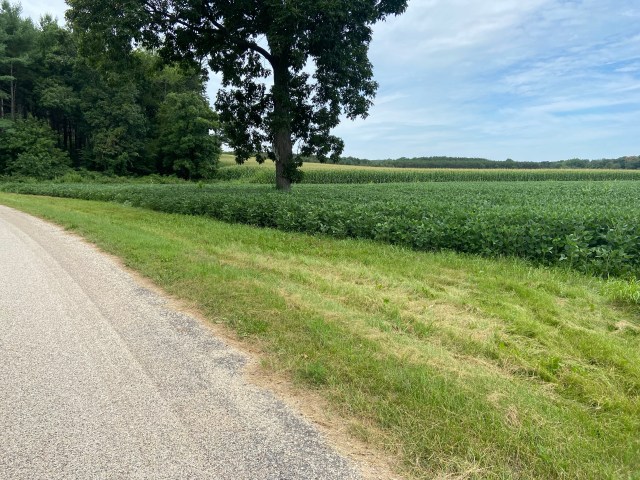
(Rounding a curve on a walk near Wisconsin Dells,
where my family vacationed last week.)

Here it is! The final day of sabbatical before re-entering congregational life. These past three months have been, as I have told you so many times, a gracious gift to my family and to me. What I haven’t made clear is how a sabbatical is a gracious gift to a congregation as well.

The last corner of a sabbatical begins tomorrow when I open the door to my cozy office for the first time in 12 weeks, set the books I read on their shelves, find a home for a new little sign I found in a thrift store, and finally, encounter people’s faces.

I have missed the staff at St. John and I have missed my worshipping community. In our time apart, so much has happened! The staff did their work week after week without me. What inside jokes did I miss? What went right/wrong that now makes for a great story? Who bought them coffee while I was away? (I sure hope someone did that!)

And what was worship like Sunday after Sunday? How did Jesus show up in the lives of the people in the pews and on Facebook and on the other side of the radio broadcast? They heard a faithful and creative line-up of preachers. And I missed the funerals of beloved members of our community. What else did I miss? And what did the congregation miss from me as I took a deep sabbatical breath and wasted so much time with Jesus? They will hear those stories from the pulpit. Hearing their stories is the trickier business.

Story-swapping is the last curve on the sabbatical trail. In the stories, we will hear what Jesus has been up to in our lives and in our community of faith. Those stories will shape the next leg of our journey together. Will my realization that I don’t take enough time to pray and reflect impact our community? What difference might my ponderings around worship, after worshipping in many communities in-person and mostly online, make in the one hour people are most likely to gather as members of the body of Christ at St. John?

The answers, I hope, will be found in our story-swapping conversations. So be ready, folks at St. John, to tell me what I missed, what you noticed, what you now ponder, too. And Jesus will meet us there.

Focus Beyond the Family (Part 1): Erasing Easy Answers to Faith Questions

(Photo by Justyn Warner on Unsplash)

*Welcome to a three-part series called “Focus Beyond the Family”, meant to widen the lens on the wild work of raising kids in the Christian faith. In the next three posts, I hope to get you wondering: (1) what you expect from church, (2) how you might talk about Jesus at home, and (3) understanding faith as an arrow that points us beyond our own families.

If your faith orientation is Christianity, you might have hopes of raising your kiddo(s) or grandkiddo(s) in the Christian faith. This is not easy work. Perhaps your child was baptized, goes to (went to) some Sunday School or Confirmation classes, and you sit (sat) together at church. Either you chose that church or your (your spouse’s) extended family chose it for you.

If you are doing the hard work of raising kiddo(s) in the Christian faith, here is a quick tip regarding churches. There are two kinds of churches: one kind provides all the answers, and the other kind does not. One kind quotes a singular verse from the library of books that is the Bible, the other tells you the mysterious, broad-stroke story of God who loved the world so much that God slipped into skin to experience it close up. One kind preaches morality (“be good”), the other preaches that you can never be good enough, so welcome to grace. One kind talks in “this or that” language, the other relies on the two words: “and yet”.

One kind of church promises that faith will make your life better. The other kind of church will never, ever make such a promise. The former kind of church, through the voices of beautiful faces and blindingly white teeth, proclaims that having faith will make your marriage better, your kids more obedient, and will pave the way toward a better future. The latter kind of church promises that you, child of God, are both beloved and broken, and Jesus Christ will always put you back together, and yet life will not always be better. The Christian life is a series of broken roads with no easy-to-follow answer signs, and a never-ending promise of Jesus’ mercy.

What does all of this distinguishing between two kinds churches have to do with you? With your faith? With your life?

I’m enjoying the book, Share Your Stuff. I’ll Go First. It is written by Laura Tremaine, who invites you into thoughtful conversation and reflection. I’ve been journaling my answers as I reflect and I’m looking forward to raising her relationship-deepening questions with friends. One question Tremaine asks is: “Where are you from?” This is a standard, yet telling question.

While she asks the question more generally, I invite you to wonder from a church perspective.

~If you are (or are not) part of a church community, how did you arrive at that decision? From where have you come along your faith walk?

~How has your past experience with the Christian Church shaped what you might expect from the church?

~Do you expect easy answers or more obedient kids or a better life?

~Do you expect church to help fix your problems or to help you live with your problems?

Today, peel the layers of what you expect church to be or do for you and your family as you recollect your own church origin stories. In the next two posts, we will use what you learned to erase the easy faith answers. Then, with a blank canvas, we can create a more lasting portrait of a life of Christian faith.

The Great 3 Days: Hope is Freaking Hard

(Photo by Julia Volk on Pexels.com)

It is Easter Eve and all through the world pastors are hoping.

Pastors are hoping to wake up tomorrow feeling healthy and joyful and refreshed and ready for a long stretch of a morning. (Woe to pastors’ kids or spouses who keep them up too late tonight.)

Pastors are hoping to be overwhelmed today by imaginative ideas to preach a familiar story. (Or, if they are a J on the Myers Briggs like me, their sermons are finished and printed and quietly waiting on their desks for a final round of editing tomorrow morning.)

Pastors are hoping for safe gatherings in church buildings, or where such gatherings are not possible, they hope the disappointment felt in the congregation can somehow be lifted by this familiar story.

Pastors carry an abundance of hopes today in the middle of The Great Three days. Yesterday we remembered Jesus’ death on the cross. Tomorrow we remember the stone was rolled away. But today, if we live into this story there is nothing to see here but a regular cave tomb that a wealthy person let the Jesus followers borrow. There was so much worry among the powers of the day that a Jesus follower would steal his body and claim he had been resurrected, that they somehow set an unfathomably large rock in front of the entrance to the tomb.

I searched for a photo for this post of a tomb sealed by a rock, but I could only find pictures of a tomb where the rock had been rolled away. We move so quickly to Easter Sunday that we cannot even picture the tomb with the rock still in place. It is not hard to hope in what we know will happen at the tomb. It is freaking hard to hope in the everyday.

Do we dare hope to find the perfect marriage partner? Or hope the marriage partner we chose will be the one we can stick with? Do we dare hope our kids will not get into mounds of trouble? Can we hope the career we chose will work out? Or to retire while we are healthy enough to travel? Or that we will have enough money to retire? Do we dare hope the world isn’t falling apart? (This is a question asked every day there has ever been a world.)

What is a hope you have that you find freaking hard to hope?

A pastor’s job is to be preposterously hopeful. We have this great big hope that in the end, after marriages break or don’t, after kids disappoint and don’t, after jobs disappoint or don’t, after retirement or not, after the world actually doesn’t fall apart, it will all work out. The story that matters has been written. The enclosed tomb we look at today rolls open tomorrow. Allelu…. oops. Too soon.

Everyday hope is indeed hard. That I do know. I also know tomorrow morning we will proclaim with hope together in Christian churches around the earth and who knows where else the one hope we know. The stone moved. There is new life for you now and in the end, as long as you don’t try to move the stone all on your own. Then you can only hope for a backache.

The Church is Not Perfect, But…

The Christian Church is many things. Perfect is not one of them. Going to church may or may not be your thing. I respect you where you are. When I talk about church, that I do not speak of it idealistically. I am aware of its flaws and messiness.

And yet, I love the Christian Church. Going to worship for me is like being a student in what Anne Lamott has called “forgiveness school.” Church gives me practice at forgiveness school. The best way to practice forgiveness is to be around people. People like me need a lot of forgiveness. I am as far from perfect as ice cream is from being diet food.

Which is why I gather weekly with others who are far from perfect. Our imperfection is heard in our communal music. You know what I mean if worship is your thing. Some people are meant to sing. They should sing aloud throughout the day, beginning with their grocery lists. Other singers are embarrassed, some refuse. We are altogether a messy choir, reflecting the way we move about our lives and come back again and again to forgiveness school.

At forgiveness school that looks like worship, we say much the same thing from week to week. It is not unusual to sing 200 year old hymns, which is nothing compared to the 2,000 year old Lord’s Prayer. From decade to decade, many of our words are the same, not because we ran out of creative juices but because there is comfort in speaking the same words my great-grandmother spoke at forgiveness school.

When I lead the 2,000 year old prayer, I step back from the microphone and listen. I let my words get tangled up in the words of the other imperfect people in the room, worshipping over the radio, or with me on Facebook live. The beauty is in the cloud of familiar words stretching from that moment to so many moments before.

All the words lead to the one word, forgiveness, a song in itself.

Heavy Words & Little Ears

Lent begins on Ash Wednesday in a language of heavy words. In the Evangelical Lutheran Worship hymnal, we confess in words that would have done me in at an elementary-aged spelling bee, and might still give me trouble were it not for spell-check: self-indulgence, hypocrisy, exploitation of people, and self-examination.

The last phrase is both heavy and light all at once. When you look deeply at your own self, what do you find? I find all the heavy words at work. Am I self-indulgent? Let me think about it after I drink a third cup of coffee with a splash of cream. Hypocritical? Indeed. Do I exploit people when I buy cheap stuff on Amazon. Yikes. Let’s be done now.

Coupled with the heaviness of Lent’s language, however, is an airy lightness. Sure, you are bound to embody those words by nature of your humanity. They run in your blood and move to your heart. And yet, the 40 day self-examination moves us in a single direction: to Easter. Lent is a hard look at our own selves and a grateful look at what God has already done about it. You carry around heavy words and Jesus lifts them off your back. You are overwhelmed by your relationship with the aforementioned heavy words and Jesus erases them to scribble the one word “forgiven” all over you.

Lent gives us language to teach ourselves and our kids that the heavy words do not define us or own us. Jesus’ one word, however, does.

A question for littles

Forgiveness means there is nothing we can do to undo God’s love for us. It sticks to us like the stickiest glue ever invented. What sticky things can they find in the house? (For example: stickers, tape, the maple syrup on the kitchen table from breakfast.) Talk about God’s love as stickier than even that!

A question for former littles

Wonder together about self-indulgence. Be honest about what tempts you to self-indulge. (Hello, chocolate chip cookies.) What does it feel like when you self-indulge? Why is hard to be honest about it? How does Jesus’ word “forgiven” written all over you change how you feel about yourself?

A spiritual practice

Self-examination is indeed a heavy phrase. Let it also be a freeing phrase.

Sit still and scan your body from your toes to the top of your head. Remember God made your body out of love and in the image of God. Imagine examining your heart. What do you find there? Let your heart tell you. Take one deep breath and then another, as you say this prayer: “I am forgiven. Let my heart love my neighbor and myself.”

The Jesus I Follow and Hashtags to Avoid

(Photo by Jon Tyson on Unsplash)

When writing Instagram posts, I have learned to be skeptical of hashtags with Jesus’ name. This is how it goes.

My Instagram post is about Jesus’ mercy. But #JesusMercy is overwhelmed by creepy Jesus images.

#Jesus isn’t so bad…as long as you are convinced men have the most authority in the pulpit. (Example: a bazillion pictures of a man preaching. #Jesus)

#JesusLovesYou is a library of Christian platitudes. (“God has a plan.” #JesusLovesYou)

#JesusAndCoffee is the perfect blend if you are looking for posts from Jesus’ cheer team. (“It’s Friday, don’t forget to be fabulous!” #JesusAndCoffee)

This is not the Jesus I follow. He cares not that I am fabulous nor that I know the most platitudes. (Someone please initiate #JesusPlatitudes.) I chose the hashtag #SpiritualLonging for at least two reasons to tell you about the Jesus I follow:

  1. Jesus hashtags often present a shallow Jesus. Any hashtag that inspires you to be your best, fabulous self is leaving out your primary call to serve your neighbor. We do not serve our neighbor out of our best selves, but out of our broken selves. Only because Jesus became broken, and I am as broken and my life is as messy as yours can we together follow the Savior who makes us whole. He does not tell us to get fabulous and take away the mess of our lives. He entered the mess, died for you, and lived to tell about it.
  2. An important distinction in any proclamation of Jesus is this: Don’t tell me what Jesus does, instead let me see it, feel it, taste it, yearn for it. The only difference between a good sermon and a bad sermon is whether those words tell you about Jesus, or give you Jesus. Do the words point to Jesus, or do the words put Jesus in your heart, your mouth, and your bones? That is the Jesus for whom I long and the Jesus whom I follow. You cannot receive that proclamation via Instagram posts. You need a preacher, so a church community becomes helpful. (“How, then, can they call on the one they have not believed in? And how can they believe in the one of whom they have not heard? And how can they hear without someone preaching to them?” Romans 10:14.

There is no room in #SpiritualLonging for only one gender and sexual orientation of preachers, or Christian platitudes, or a fabulous you. Instead, we are filled with longing in a world that is not yet as it should be for our neighbor. And in our brokenness, we are washed in the promise that we are all on the way, and you are beloved, just as you are. #BeYourBestForJesus