Who Are Your People?

Prior to becoming a parent, I pictured our home as a welcoming space for our kids and their friends. I hoped ours would be the home where tweens and teens would hang out, eat snacks, and watch movies. I imagined I would stock the pantry with their favorite foods and every friend could grab their favorite soda and chips and feel at home in our home. The bottomless cookie jar would be a way for me to connect with my kids’ people – the peers who would surely influence my kids in many ways. 

Across the generations, every person needs people. Ideally, your people are a support while at the same time they challenge you to grow. Your people have a deeper understanding of you than others. They know you are a normal human being who falls apart, yet they do not judge you for it. Your people encourage you to think beyond yourself and they forgive you when you fail. 

I imagined encouraging my kids to gather with their people in our home because I know the importance of hanging out with your people. Your people shape who you become. 

One of my favorite definitions of church comes from a guy my age. He felt most at home one Sunday at worship when he looked around at the guys in his Bible Study group, also at worship with their families. These are my people, and this is my church, he explained. 

You, fragile human being, need people to call your own. People to reflect Christ’s mercy and remind you not to hustle through life or push through alone. Having people to call your own takes time. 

You, busy human being, need people to bring out your best. People with whom you can be comfortable in your own skin – the most honest and hopeful version of yourself. 

With a new season of fall and an academic year around the corner, how would you like to hang out with your people? How about… 

  • Create a standing, weekly appointment for morning or evening drinks. 
  • Take turns hosting in your homes each month. The host provides the space and the guests provide all the food. 
  • Go to church together and then donuts. No planning needed. 

It turns out, my kids do not gather often with their people at our house. I hope not, but there is a slim possibility that kids might be scared off by the superintendent and pastor in residence! Which is ironic. Our particular jobs can be lonely at times and my husband and I understand the importance of gathering with our people. We are most grateful for the people whom we call our people.  

I hope that we are modeling for my three favorite kids the importance of hanging out with trusted friends. Your people shape your life and you must be choosey and encourage your kids to do the same. Although my kids’ people are not often at our house, the cookie jar is almost always full, just in case. 

Photo by Gaelle Marcel on Unsplash 

Is it an Office or a Study?

Rooms have names to indicate their purpose. There is a bath in the bathroom, a bed in the bedroom, and a space for guests in the guestroom. The laundry room is for laundry, the living room is for everyday living, the playroom is for playfully making a mess.

At the church I serve, there is an office in which I work. An office is a space designated, of course, for working. In Latin, “office” literally means “work-doing.”

In the little church I grew up in, there was no office. The space designated for the pastor was called a study. I knew it as “the pastor’s study,” not “the pastor’s office.” On the occasions when I tagged along with my mom, who printed and folded bulletins in that space, I remember piles of books and that old-book-scent filling the room.

Deacons and pastors, what difference does it make if you call your work-space an office or a study? I wonder if it makes a profound difference. An office is designated for productivity and efficiency, a study is for learning. An office is for doing, a study is not only for doing but also for being. An office is for knowing, a study is for wondering. The installation rite for a pastor new to a congregation requires a response to this promise: “Will you be diligent in your study of the holy scriptures…”

I have tried to call the space in which I work a study, but the word “office” is so entrenched that I haven’t gotten very far. It feels awkward and maybe not productive enough. Deacons and pastors tend to have “office hours” not “study hours”.

While it may seem a small thing to name a space, the name teaches people the purpose. The worship space in a church is for worship, the fellowship space is for fellowship. And the deacon or pastor’s office is for all the books to live where the deacon or pastor studies.

Because really, it is a study disguised as an office.

Photo by Aaron Burden on Unsplash

The Word They Didn’t Really Mean

Sunday begins the holiest week of the year for Christians. It begins with Jesus’ arrival into Jerusalem and ends with his departure on the cross. What unfolds in the middle is our response to a God who offers to change our lives for good.

Because really, we would rather not be changed. To be changed requires so much of us, maybe even sitting in a different row in church! No thank you, ma’am!

But first, Palm Sunday. Jesus paraded into Jerusalem, parting the crowds of jubilant people crowded together for the Jewish Passover. Jesus’ reputation as one who had challenged the authorities, healed the sick and even raised the dead had preceded him. This was “the guy” they had been waiting for to finally stick it to the Emperor. Jesus’ parade into Jerusalem blatantly mocked the power of the Roman army. He was getting himself into trouble here.

And the crowds were eating it up.

“Hosanna!” the crowds shouted, literally begging Jesus to “save us.”(Remember, salvation not only pertains to the afterlife but to the way we live our lives on earth.) “Save us!” But they didn’t really mean it. They were caught up in the shouts of the crowd. When they realized that for Jesus to save them, they would all need to change, they changed their minds instead, which is why the week ends with Good Friday.

“Save us!” they shouted to Jesus. But what they meant was, “Save us…only if we can continue to live the way we want to live. Save us as long as we can fit in with the crowd. Save us as long as we can protect our own money and resources. Save us as long as we don’t have to entrust our whole lives to you. Save us as long as we don’t need to change.”

This is not the salvation Jesus offers. Salvation according to Jesus is a drastic change. Your life is not your own, if Jesus has anything to say about it. Your life never follows a crowd. Your life is not a continuous climb up a corporate ladder, nor is it busy streak. Your life is meant to be so tangled up with your neighbor’s that you sometimes forget what belongs to whom. That is the salvation Jesus offers.

And this is the salvation the crowd declined. “Yeah…no.” They said, turning around when they realized to be saved is also to be changed. How often do I do the same, turning away from Jesus’ daily offering of salvation, abundant life and mercy because I am so set in my routine and rhythm? So set in saving my money, curating my time, taking care of my own family, sticking to my own goals. Do I really want Jesus to change me? Is my “Hosanna” genuine?

“Hosanna!” Yes, please. “Hosanna.”

Photo by Nicholas Green on Unsplash

When Does Worship Actually Start?

There is an abundance of confusion in the Christian church concerning worship. The root of the confusion has to do with how we live the rest of our lives. We live much of our lives as consumers. Passively, we consume media, products, services, and entertainment. When we passively receive something, little is expected of us. We simply receive what is offered.

Particular Christian churches thrive by selling entertainment in the form of worship music. It is not uncommon for Christians to gravitate toward congregations with entertaining musicians and impressive lighting. It allows worshippers to sit back and be entertained, just as we have come to expect in most areas of our lives. This kind of worship teaches people to passively receive, or consume what the church has to offer. Little is expected of the consumer.

Eugene Peterson spent many paragraphs pointing out the dangers of creating consumers in worship. There is a danger in passively depending on the product a worship leader can offer for spiritual renewal. The worship music might be excellent, but choosing a church based on what it offers, on what you might consume, will inevitably disappoint.

Instead, worship is a co-creative act. Passive worship is not worship.

At St. John where I serve, by the time worship begins, worship in many ways began months before. Could we wonder whether worship actually begins when the planning and discerning begins? In that case, by the time the worship service starts, the Worship and Music Director has studied at least a couple of resources, carefully chosen music to encourage people into a deeper focus on the Scriptures, and coordinated with a number of members helping lead the service. The preacher has spent hours pouring over the text. For me, sermon prep averages between 8-12 hours.

If we say worship begins when discerning the service begins, then I wonder if the worship service is still being created when people gather and the bell rings, marking the start of the service. It is at this point when those who are gathering shape the service: engaging in music and prayers, welcoming newcomers, noticing who is missing, and expressing some connection to the sermon with your face. (People, preaching to stoic faces is incredibly hard! Please smile or nod to indicate that you are indeed alive.)

This kind of participation in worship demands something of those who gather. Worship, then, is not a one-person or one-band “experience”. Worship is a communal expression of our faith in Jesus Christ and our yearning for deeper faith. It is not something we rate, like an Amazon purchase, nor is worship something we complain about when it doesn’t “meet our needs.”

Worship is not meant to meet your needs. That is Christ’s job. In worship, the Holy Spirit invites you not to sit back, but to dig in. To open your heart and let the Spirit do its work in you. There is too much at stake to sit back even for a single worship service.

If you become a worship consumer, what does that mean for your neighbor who is hungry, addicted, tired, imprisoned, or depressed? Your neighbor needs the Spirit to deepen your faith as you worship in order to share the deep love of Christ with your life.

Photo by Eliecer Gallegos on Unsplash

It’s Too Cold for Ash Wednesday

In much of the upper Midwest, we may as well crawl into our deep freezers. This is ridiculous. It is so cold, ashes tossed into the crisp, fresh air will turn into icicles. It is too cold for Ash Wednesday.

There are other things to do than go to a church building to be smeared with ashes. It is too busy a time for Ash Wednesday.

It is an unpopular idea to remember our mortality, to name the false promises of our lives, and to admit we need help. It is too hard to face Ash Wednesday.

Yes, it is too cold, too busy, and too hard to face Ash Wednesday. However, there is something on your face that already has. The invisible reminder on your forehead is made visible in the smearing of ashes. Only on this day each year when you do the work of cleaning off the ashes can you see that Christ has already broken into our cold hearts, our busy schedules, and our hard and complicated lives.

Christ has left his mark of mercy on you.

Photo by Adrien Olichon on Unsplash

What Can and Cannot Be Replaced

At the turn of the century, Marcus and I chose dishes for our wedding registry. Fact Check: I chose dishes for our wedding registry! I had spent roughly 9 months working in the home department at Herberger’s in Moorhead a couple of years before when I was a junior at Moorhead State University. The same year I began learning Greek, I learned Pfaltzgraff patterns. Both were magical in their own way.

Pfaltzgraff patterns are mesmerizing – maybe even hypnotic! You focus on the pattern and begin to picture your life with these dishes. You imagine who will sit at a table with you and these dishes. You picture the beautiful food you will eat and imagine the rich stories you might share. In your hypnotic state, you dream of how much love be passed around the table among the perfect family you have just made up in your head.

The Rio pattern caught my attention back in 1998. It is pottery dinnerware, which seemed casual and also grown-up. Two shades of blue and cream color these heavier dishes. I didn’t realize they are heavier dishes.

The truth is Rio was not the best choice. The dinner dishes have not fit well in some of our dishwashers and a heavy plate is not ideal for little kids. They have been sturdy, however, which is ideal for little kids. Even so, Rio is being replaced.

With a gift St. John gave me for my 15-year anniversary, I bought new dishes. Again, I chose the dishes! Marcus will place delicious food on them. Our roles have become clearer in 21 years! But the hypnosis wore off long ago. The Rio dishes were not set before a perfect family. I can only guess that never once have we enjoyed a perfect meal without any spilling of milk or careless words. The family I dreamed up has never once shown up for dinner!

Instead, the table is where we gather as human beings who have often had a long day, a tough conversation or two, friendships that were strained, and problems that were hard.

As the Rio pattern is replaced, I now have a better, non-hypnotic picture of the family that will use the new dishes. It is not the same family I had imagined! The same is true for you. The people who show up in our lives are not the ones we imagined. We can pick (and replace) the dinnerware pattern but not the people. We can set the table but not the cast of characters.

Which means you, unlike your dishes, are simply not replaceable.

Photo by Brooke Lark on Unsplash

The Week Before the Ashes

‘Tis the week before Ash Wednesday, and all through the churches, pastors and deacons are scurrying about!

They locate the burnt, pulverized palm branches and remind each other not to mix ashes with water. On Ash Wednesday, we smear ashes where they can be seen and say out loud what is meant to be left unsaid: “From dust you have come, and to dust you shall return.”

In one week, the word will be out. You cannot buy your way out of death, or schmooze your way, or overpower your way. No matter what you have or who you are, no matter the power you have accumulated or the reputation you have earned, your composition matches everyone else’s. You are dust.

This is bad news for those who have multiple homes and multiple savings accounts. Bad news for those who have worked their way to the top. Bad news for those who can buy a younger face or a great, big boat. Bad news for those whose dreams are made of plastic or steel or engineered wood siding. Dust dirties our dreams.

And yet, this is good news for everyone else. For those who have no home, who have no work, who have a leathery face and no boat. For those who have wrecked their reputation, lost their way, and tasted the dust of despair. These beloved know quite well that life is dust and therefore we are dust.

From the dusty and despairing, the rest of us might learn to let go. You are dust, and therefore your life is not your own. You are dust, beloved dust, with a dusty future that entails none of what you own, none of what you did, none of what you wrecked. Dust is a pile of forgiveness smeared on your forehead.

‘Tis the week before Ash Wednesday. Already you are dust. Good news abounds.

Photo by Zach Lucero on Unsplash

The Warm Embrace of 2 Words

On Sunday evening I began to open thank you cards. Each day, a few at time until my eyes become too teary to read the blurred words. Today I managed a bigger stack, although I have no desire to rush through them. Like my savoring of Louise Penny’s Inspector Gamache series, there is far more reason to slow down than hurry up!

In January, I picked up a weekly habit I’d set aside for a year, writing 4-5 thank you notes on Tuesday mornings. Calling/texting or emailing each member of St. John on their birthdays replaced this practice in 2022. This year, it’s back to the routine I learned from Chick Lane. Tuesday thank you’s recognize how members of St. John live out our mission of Living in Service to Christ. The child who smiles at someone new at worship, the person who shares an offering of music or advocates for justice in a public way set the mission in motion. Deacons and pastors often witness faith-filled moments and I find it so fun to point them out.

Thank you are words that offer a warm embrace, a friendly bear hug. Perhaps the Spirit draws us closer together when we recognize human generosity. Amid the busy landscape of people’s lives, these two words given or received slow us down enough to notice how much we all need each other.

I’m not sure how other industries recognize 15 years of service. But these cards are by far the greatest gift of all! Thank you.

Photo by Helena Lopes: https://www.pexels.com/photo/four-person-standing-on-cliff-in-front-of-sun-697243/

An Anniversary and Bosc Pears

What is an anniversary but a way to keep the days and years from running together? Like a landmark along the unremarkable stretch of I94, an anniversary catches our attention, disrupts the routine, and makes the journey more interesting.

Last Sunday, the congregation I serve completely surprised me by recognizing the 15th anniversary of my installation! I am still in awe of their sneakiness! And grateful for their love in Christ. Together, we pulled off the interstate and noticed the landmark.

Today marks a different kind of anniversary, another sacred landmark on the journey. One year ago, my dear friend Terry who had been my boss at the Luther Seminary Bookstore long ago, died of lung cancer. I am telling you this story because he was my cheerleader, the very first person to subscribe to this blog. I am telling you this story because people who shape your life become landmarks on the road.

I could tell you all about my friend who was the perfect image of health. My friend, who introduced me to bosc pears, one of his favorite snacks. He emailed me every single week to encourage his pastor friend and ended each email with a benediction he’d heard at worship that week at his beloved congregation.

Terry grew up and lived in Eau Claire until he took the bus to Connecticut and then walked to Yale University caring a single suitcase. He would never let you in on the secret that he was brilliant. During his internship as he studied to become an ordained pastor, he heard a new calling. He was called not to be a minister of Word and Sacrament, but to be a minister of the Word. He sold books, but that’s not quite right. He put words into the hands of people hungry for the Word.

I could tell you all about my friend, but instead I will tell you that anniversaries are an invitation to give thanks for the people who enrich the journey. Today, I am so grateful for my friend, as I live now in the presence of his absence. And I am awakened again to the fragility and wonder of this life, and the surprises along the way.

To mark this anniversary, I will snack on a bosc pear while you are encouraged to download a free e-book edition of my book, Spiritual Longing in a Woman’s World. If you already downloaded it, you may not be able to download it again, so tell a friend! It is free all day long today only. If you have read it, please share an honest review on Amazon or Goodreads.

Photo by Fernanda Martinez on Unsplash

When Your Friend Hands You a Tissue

When your friend hands you a tissue, you may want to wonder why.

When you take the tissue, even though your nose is not running, you follow your friend to meet the surprise that is your parents who have flown from sunny Arizona to frigid North Dakota.

When you hug your parents and take your tissue and your seat, you are even more surprised when your community has conspired to recognize a 15-year milestone as their pastor.

When you have been people’s pastor for 15 years, you have not stopped to look all the way back at the privilege of these relationships.

When you do look back, you are thankful your friend gave you a tissue.

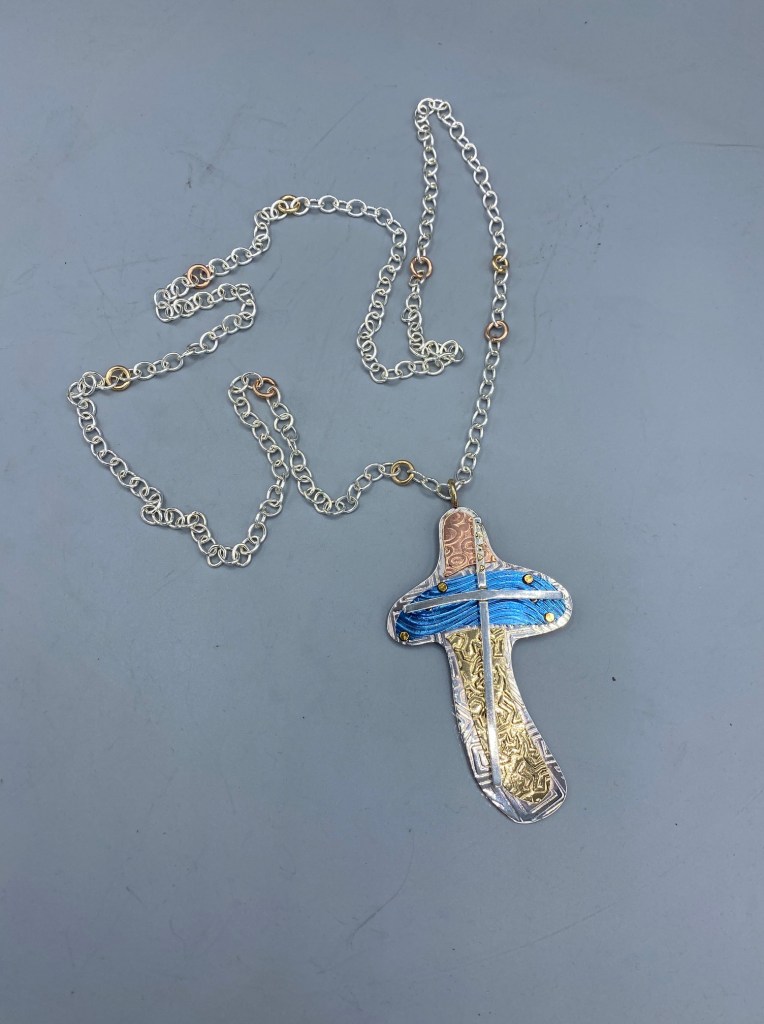
  • Thank you, Audrey, for contacting my parents, for working with an artist to design a stunning pectoral cross, and for the tissue.
  • Thank you, Council Member and especially Jean.
  • Thank you, sneaky staff members for creating an underground card receptacle. I had no idea you were so sneaky! I am very afraid.
  • Thank you, parents, for trading your lighter jackets for your winter jackets for a few days.
  • Thank you, St. John community. I am so humbled as I read your gracious cards. I open only a few at a time, until my eyes are too blurry to read the words.