And You Thought THAT Felt Scary?

(Photo by Ivan Shemereko on Unsplash)

So many years ago for the very first time, I witnessed the pink lines on the stick. That was scary. What was happening in my body at that moment felt scary. The feeling intensified when a “helpful” co-worker told me, “Just you wait. A few weeks ago before my first child was born, I sat weeping on the steps in my house, wondering how something the size of a watermelon was going to come out of me.” “Thanks for the encouragement,” I did not say.

Outside the entrance of Mercy Hospital nine months later, Marcus and I loaded up our first born, trying to make sense of the car seat situation. We were now responsible for a human being’s survival! That felt scary.

In the next several years, we would leave our kiddo and then kids with a babysitter, then a day care provider, then a teacher. Each time, that felt scary.

We would leave them behind at a new school, a camp, a sleepover at a friend’s. Today, one of my sons walked alone into a room to take his permit test. He didn’t say it, but I knew it felt scary. Big questions, big stakes. He passed.

He left behind the part of his life in which he could not drive, only bike or walk or sit in a passenger seat. He left behind some of his dependence upon me and in doing so, he now shares some of the scary feelings with me. Moving into a new season of life is never without them. The scary feelings accompany independence.

In an audiobook I’m currently reading called Learning to Pray, James Martin, SJ, suggested talking to God about feelings such as these, and asking God what these feelings might mean. What does it mean, God, that I am scared when my kiddos gain independence. Along with that question, he offered another. Who is Jesus for me?

What do these feelings mean? Who is Jesus?

I feel scared when my kids gain independence perhaps because I worry whether Marcus and I have equipped them enough for that particular new independence. Of course, I feel scared for what might happen, scared for so many reasons. The scary feelings are simply too much for me to carry on my own.

Kids absorb some of the scary feelings when they gain independence. While I am still responsible for a human being’s survival, my kids are big enough to carry much of that responsibility, too.

Still, the scary feelings can be overwhelming. Jesus, then, is the porter who carries the heavy, scary feelings not only as far as your hotel room, but to all places at all times. He is the companion who does not leave my kids even when I leave them at a new school or a friend’s sleepover. He is the friend at camp and the passenger in the car.

Jesus is the one who reminds me the scary feelings are fine as along as they do not hinder the independence. (Easy for him to say.)

In years to come, at my child’s graduation, wedding, or who knows what, I will look back on the day of the permit and giggle at myself. “You thought THAT felt scary?” I’ll say. But I’ll say it more nicely than that co-worker. I don’t need to be a jerk myself.
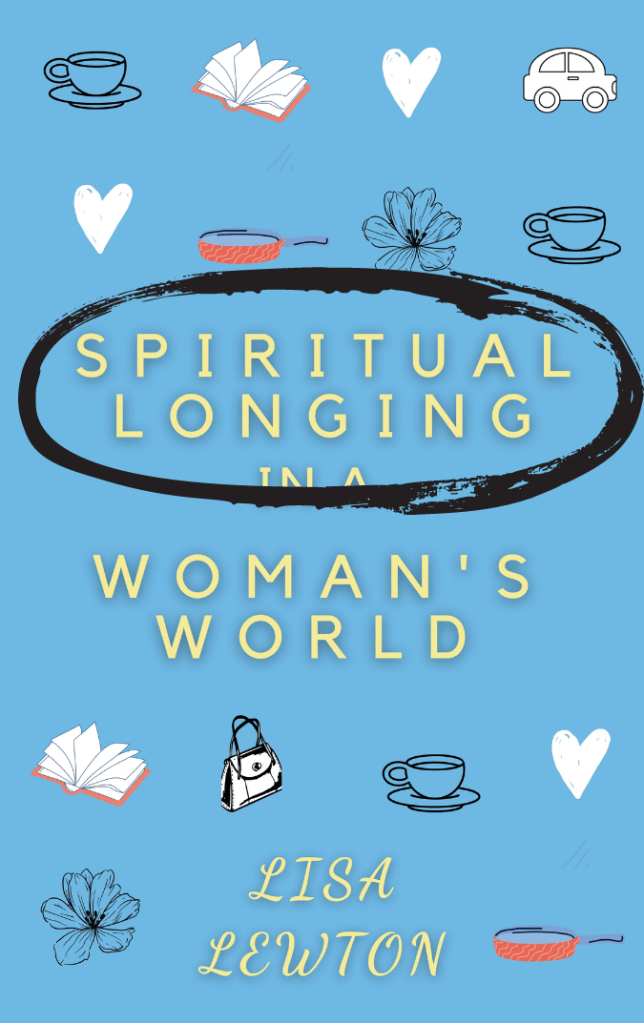

Can You Judge a Book By its Title?

A book is thousands of words that come to be known as a few words; or possibly as one word. A book is known as however many words the writer chooses for its title.

For the first year of its life, “Spiritual Longing in a Woman’s World” was known in my head as “Joy Comes in the Morning”. Names change. This is true when you are formulating a name for a child. Tom may have been Ella, Sam may have been Hannah, and Karis may have been Adam. Only the last chosen name matters.

Here is how the last chosen title came to be. It’s a long/short story.

We bought a dog. He needed walking. I needed walks.

One day on a walk on the corner closest to my house, the words “spiritual” and “longing” were given to me. Words are gifts, you know. Paul speaks of words given to him as a revelation in Galatians 1. Mary Oliver spoke of the famous poem “Wild Geese” as a set of words given to her. These two words that now begin the title of my book were simply given to me in the quiet space of a walk. The next words, “in a woman’s world” quickly followed.

Spiritual because we are spirit-filled bodies. We are so much more than limbs and brains. Longing because we are created for longing. We are created to long for only one thing: the love of God. And yet, so many other longings get in the way. We long for perfection, a different image, more money or power, for happiness. None of these longings fill us. Only the love of God meets the deep longing in our spirit-filled bodies.

On a walk, those two words were given to me. Words are not reserved for writers. I have a hunch there are words God has for you today. Words that meet that deep need in your soul. Words needed for healing, guidance, strength. Words for peace, hope, or mercy. Whatever words you need, you will know them when you hear them. They will be given to you.

Words meet you in the quiet spaces of your life. When you set down your device, take a deep breath or 20, and sit still. If your mind is too chatty for too long, there is no space for the words to get to you. Ask a partner, a neighbor, or a friend to help you locate the quiet space. We do need help to clear adequate space for quiet. You are not needy to need quiet space. You are human, therefore you require quiet space to let the words find you. God gives you people in your life who are there to do such things as clear quiet space for you.

I hope you judge this book by its cover and find yourself some quiet space. Let the words, the ones you need today, find you there.

Focus Beyond the Family (Part 1): Erasing Easy Answers to Faith Questions

(Photo by Justyn Warner on Unsplash)

*Welcome to a three-part series called “Focus Beyond the Family”, meant to widen the lens on the wild work of raising kids in the Christian faith. In the next three posts, I hope to get you wondering: (1) what you expect from church, (2) how you might talk about Jesus at home, and (3) understanding faith as an arrow that points us beyond our own families.

If your faith orientation is Christianity, you might have hopes of raising your kiddo(s) or grandkiddo(s) in the Christian faith. This is not easy work. Perhaps your child was baptized, goes to (went to) some Sunday School or Confirmation classes, and you sit (sat) together at church. Either you chose that church or your (your spouse’s) extended family chose it for you.

If you are doing the hard work of raising kiddo(s) in the Christian faith, here is a quick tip regarding churches. There are two kinds of churches: one kind provides all the answers, and the other kind does not. One kind quotes a singular verse from the library of books that is the Bible, the other tells you the mysterious, broad-stroke story of God who loved the world so much that God slipped into skin to experience it close up. One kind preaches morality (“be good”), the other preaches that you can never be good enough, so welcome to grace. One kind talks in “this or that” language, the other relies on the two words: “and yet”.

One kind of church promises that faith will make your life better. The other kind of church will never, ever make such a promise. The former kind of church, through the voices of beautiful faces and blindingly white teeth, proclaims that having faith will make your marriage better, your kids more obedient, and will pave the way toward a better future. The latter kind of church promises that you, child of God, are both beloved and broken, and Jesus Christ will always put you back together, and yet life will not always be better. The Christian life is a series of broken roads with no easy-to-follow answer signs, and a never-ending promise of Jesus’ mercy.

What does all of this distinguishing between two kinds churches have to do with you? With your faith? With your life?

I’m enjoying the book, Share Your Stuff. I’ll Go First. It is written by Laura Tremaine, who invites you into thoughtful conversation and reflection. I’ve been journaling my answers as I reflect and I’m looking forward to raising her relationship-deepening questions with friends. One question Tremaine asks is: “Where are you from?” This is a standard, yet telling question.

While she asks the question more generally, I invite you to wonder from a church perspective.

~If you are (or are not) part of a church community, how did you arrive at that decision? From where have you come along your faith walk?

~How has your past experience with the Christian Church shaped what you might expect from the church?

~Do you expect easy answers or more obedient kids or a better life?

~Do you expect church to help fix your problems or to help you live with your problems?

Today, peel the layers of what you expect church to be or do for you and your family as you recollect your own church origin stories. In the next two posts, we will use what you learned to erase the easy faith answers. Then, with a blank canvas, we can create a more lasting portrait of a life of Christian faith.

Week 3 of 3: The World Needs You to Pray (yes, the world)

(Photo by Louis Hansel on Unsplash)

Have you noticed lately the size of the world?

A couple of weeks ago, I told you prayer is a conversation and relationship with God. Listen, talk. Talk, Listen. Last week, I told you prayer begins in your home. Prayer for family members changes your relationship with them.

Now, widen your perspective beyond your own relationship with God, beyond your relationships with family members, and take in a view of the wider world. Could your meager prayer really do something in the great big world and universe in which we live?

Madeleine L’Engle write a book called “A Stone For a Pillow”, part of a trilogy commentary on Genesis. In it, she tells the story of a time her friend confided in her, telling Madeleine a secret. Soon after, that friend wrongly and angrily blamed Madeleine for leaking the secret. Madeleine was ticked. She earnestly prayed to process her sense of hurt and betrayal. Who had actually betrayed the secret? She would never know. And would her friend ever confide in her again?

In one of her prayers, she heard herself say and mean, “Oh God, bless the bastard.”

Site IconLisa Lewtonlisalewton.com

Visibility:Public

Publish:Immediately

Suggestion:Add tags

Share this post

Connect and select the accounts where you’d like to share your post.

  • Lisa Lewton
  • @LewtonLisa

Connect an account(opens in a new tab)Customize your message198 characters remaining

Twitter settings

Blessings are sticky business in which human beings are entrusted to one another. If it is the people whom we love and who love us back that receive our blessing, our wide world shrinks. It is easy to bless people who like us, but something else to bless the one who betrays us.

In a time of deep divide and animosity in the world, what might happen if we pray for the ones who think and live differently? Could the world take a deep breath if we replace angry rhetoric with curiosity and humility? If our response to the news is a prayerful question instead of condemnation, you know what changes?

You.

And if you change, and then a few other you’s change, and a few thousand you’s change…you get the idea.

Your prayer means something for you, for your family, and for the world. Your prayer might be no more than, “Bless the bastard.” If you don’t believe your prayer means something, try for a week to pray for people you do not like and if it doesn’t do anything to you, you’ve lost nothing. If it does work…Look. Out. World.

To Know and Be Known

(Photo by Gabby K on Pexels.com)

This is not a schmaltzy Valentine’s Day post, lest the photograph mislead you. Tomorrow is not my favorite day of the year, although I have found it to be a good excuse to buy my kids a new book and chocolate. The point of Valentine’s Day is to express our human love for one another, but with that comes heaps of opportunities for missed expectations (disappointment) which can lead to not loving moments on such a lovely day of the year. At least there is chocolate!

Because our staff is reading The Road Back to You: An Enneagram Journey to Self-Discovery, I better understand my relationship with Valentine’s Day. Turns out, Valentine’s Day, it’s not you, it’s me! Have you heard of this tool to understand our personalities? The Enneagram, as Ian Morgan Cron, co-author of the book explains, is “a tool that awakens our compassion for people just as they are, not the people we wish they would become so our lives would become easier.”

Yikes. Have you ever wished someone would be different and therefore easier to love? Guilty. Have you crossed your fingers hoping someone you love might change as the years go by? Guilty. Learning my enneagram number taught me that although I am a unique human being created in the image of God like no other human being, I am also like many other human beings in the world. We are people who avoid Valentine’s Day because it can be accompanied by disappointment. When we encounter disappointment on Valentine’s Day, we distance from the very person who is trying to love us.

Like other people who identify as a 5 (The Observer), I prefer to think more than feel. I have to work hard to process my feelings. I like learning and listening as long as it isn’t small talk, and when someone says, “Tell me about yourself”, I wish I had an invisibility cloak. I will know a hundred things about a friend or conversation partner before they know 10 things about me. Anyone who identifies as a 5 would describe themselves similarly.

This new understanding of myself has been clarifying in a life-giving way, just in time for Valentine’s Day. I know myself more truly as a pastor, mom, wife and friend. Most importantly, I know to be more gentle on myself and others, especially on Feb. 14th. I am a 5, my husband is a 2, and that could lead to a whole series of blogposts.

For now, remember you are known by the Maker as your true, broken, messy self, which makes slightly more sense when you know your own true, broken, messy self.

Easier Not To Have Them, Better If You Do

(Credit: Photo by Brett Jordan on Unsplash)

I know only part of the truth about me. I need others to help me know the rest.

I know part of the truth about myself, so I need you to help me know more truth about myself. I know part of the truth about the congregation I serve and I need others to uncover other truths I do not know or see (or that I ignore). I know part of the truth about my relationships with my kids, spouse, and family. I need them to help me understand the whole truth.

We walk around knowing only part of what is true. Only conversation brings out the truth.

I challenge you to think more deeply about your conversations this week, including conversations you have with yourself and with others. I’ve been inspired by Susan Scott’s book “Fierce Conversation: Achieving Success in Work and in Life One Conversation at a Time”.

Scott shares her revelation that conversations do not shape a relationship, but conversations are in fact the relationship. One conversation at a time, we see beyond our own perception of what is true about ourselves and others. You can guess by her title she suggests bold, honest, curious conversation. It has made me wonder how many truth-provoking conversations I actually have with staff, congregation members and myself. It is so much easier to err on the side of nice. Not only is it easier, in the Midwest polite conversation is culturally expected.

Today, what conversation needs to happen to let the truth be free? What honest words would bring growth to your own self or a relationship? What is keeping you from speaking those honest words? If we fear the relationship will be damaged, Scott suggests chances are it is already slowly happening. Truth is oxygen to a relationship. Too much of it all at once is dangerous, but a steady stream is life-giving.

In honor of a famous truth-teller who honestly proclaimed his dream, today is an appropriate day to imagine a world full of truth, one conversation at a time.

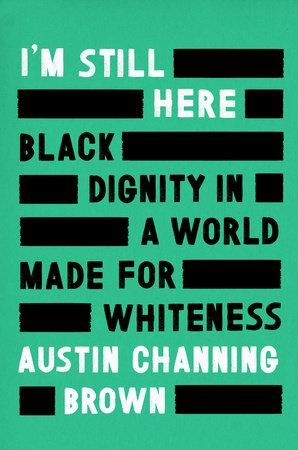
Book Review: “I’m Still Here: Black Dignity in a World Made for Whiteness”

One of our most grievous faults in this season of the world is our generalizations of people. Any sentence containing “those people” kind of words should alert us (as speaker or hearer) to our own sin (mine included) of separating humans based on our own criterion.

“Those Black Lives Matter people”, “those Pro-Trump people”, “those racist people”, “those white supremacists”, “those families”, “those non-maskers”, “those liberals”. (If this does not sound familiar to you, perhaps you substitute the word “people” with more colorful words.

This language can be a drug that distracts us from reality. “Those people” language falsely assures us that we belong to a people that is not “those people”. “My people” are not “those people”, the drug convinces you to believe.

In the past few years with the help of courageous authors, the lines of separation I had previously drawn between people has blurred. I’m not sure sure anymore which people are those people.

I think it started with “Between the World and Me”, by Ta Nehisi-Coates. This book is a letter written from father to son. It is famous and wise and heart-breaking. But I think the book that most profoundly created the blur was written by a woman named Patricia Williams, entitled “Rabbit: A Memoir”. (The Kindle edition is $2.99 for a limited time.) I listened to the audiobook. If you like audiobooks, it is a good read. The author grew up in Atlanta and experienced what is a normal life for many black and brown girls. While I was playing baseball with neighborhood boys at 12, she was having her first baby and her mom was too drugged up to care. Her story is devastating, but because she is a comedian, she has you laughing to crying before you even knew what happened. I could wish I hadn’t read it and didn’t know how awful life is at this very moment for so many young girls, but I did read and now I know. And the line is blurry.

The book I most recently read and loved that persists in wiping out the line of separation between people is Austin Channing Brown’s “I’m Still Here: Black Dignity in a World Made for Whiteness”. Channing Brown is about the same age as me, also raising kids, married, working, trying to make sense of the world and each person’s place in it and how we will leave it for future generations. My story is nothing like hers, which is why I need to hear what she has to say. I need a teacher who speaks from the edges into the comfortable middle where I live.

It is the Christian way to be wary of comfort. If we are comfortable with life, relationships, work, our faith practices, our prayers, watch out. Look around. Chances are, whenever we are comfortable, we begin to understand our own way of life as the ideal way of life. Our home, our routine, our neighborhood, our beliefs all become the right way to do things.

When I picture Jesus in the first century, I imagine him walking around edges, not in the middle. The edges of town, the edges of relationships, the edges of the synagogue and proclaiming the best news to the people outside the edges, on the other side of the blurry line (God willing the line remains blurry as opposed to rock solid).

Among Channing Brown’s wise words are these words about comfort: “Our only chance at dismantling racial injustice is being more curious about its origins than we are worried about our comfort. It’s not a comfortable conversation for any of us. It is risky and messy. It is haunting work to recall the sins of our past. But is this not the work we have been called to anyway? Is this not the work of the Holy Spirit to illuminate truth and inspire transformation? It’s haunting. But it’s also holy.”

The world is not yet as it should be. We have not arrived, but are always on the way. We know this to be true as long as the grievous phrase “those people” remains in our vocabulary.

Book Review: “Bless This Mess” *****

Beware of parenting books. They should all be read cautiously and with acute awareness that no parent is perfect, no two kids are the same, and we are all parenting with only our best guesses.

This book, however, is a breath of fresh air and an unfolding of wisdom. I’ve been a parent for quite a few years and I know stuff. After reading this book, I know more. I would love to hang out with these two witty and honest authors! Even the story of how a cool pastor and curious child psychologist became friends and united in the front line craziness of parenting and then co-wrote a book is Spirit-filled.

If you are wondering how to talk to your kids about money or sex or sexuality, read this book. If you are wondering whether to take kids to church and why you would even wonder whether to do that, read this book. You will find a healthy theology not based on protecting kids from everything “of this world”. The premise is to accompany kids rather than shield them. The answer isn’t “go to church” or “monitor screen time more”. I found both grace and guidance in these pages.

Parenting is an exercise in intensity. The younger years are intensely exhausting. The older years appear to be emotionally intense. It is so easy to sit back and cross my fingers, but much wiser to stay in the ring. The authors of “Bless This Mess” provide some of the moves and strength to do just that for each state of parenting preschoolers, middle schoolers and high schoolers.

Beware of parenting books, for sure. But this one is an exception.

Advent Week Four: Love’s Story

(Photo by Kaboompics .com from Pexels)

Advent candles flickering toward hope, peace, joy and finally love have been lit. We are two millennia past and two days away from love’s story.

Now, a story about stories.

It used to be we were limited to understanding the world and its people by where we lived and who we knew. B.I. (before internet) we were limited in knowledge to the dictionaries and encyclopedias we could access. We knew only the stories told on famous radio programs, a handful of television shows, and a limited number of books depending upon the ingenuity of the local librarian.

Long ago, Abraham Lincoln made time each morning to hear people’s stories. Franklin Delano Roosevelt did not read headlines of the newspapers he collected from across the country each day. He read editorials in order to understand people’s stories.

Now, you and I live in a land of innumerable stories. They fall into your lap each day. We are not limited to understanding the world and its people by a limited number of sources. But this is what we do when we depend on the news or your Facebook feed to tell stories. Stories need to be told by the bearers of the stories.

I’ve learned about the world and its people through stories, not the news. Ta Nehisi-Coates and Ibram X. Kendi taught me my micro-contributions to racism. Glennon Doyle helped me understand bulimia and addiction. Kristin Howerton gave me language for adoption and families with kids of different colors. Joel Stein visited folks in Roberts County, Texas and folks at elite conferences at ski resorts to teach me how America reached the unlikely conclusion to elect Donald Trump in 2016. Malcolm Gladwell, a storytelling wizard, blew my mind with his collection of stories that make sense of why violence befalls our black and brown siblings in Christ in shameful proportion to whites. Ada Calhoun listened to the stories of so many women in my generation and then broke the news to us that feminism did not free us to do everything all at once.

Stories are how we understand each other. They open a door to mingle in each others truths so that we might become a bit truer ourselves. Stories, when told so bravely, crack open love for one another.

Two millennia ago and two days from now, love became a story. It’s the story we tell about a starry night and a desperate couple. We tell the story freely and often, but we miss the love unleashed in it. Perhaps this year you might hear it differently. The story is not a love story, but love’s story, calling us to see love in all our stories.

Advent All Along

(Photo by Valeria Boltneva on Pexels.com)

We are a mere three Sundays from the first Sunday in Advent. Advent is a season, or time in the year when we turn down the volume. We dim the lights and slow the pace. Counter to our culture, we recklessly insist on hope and pray exclusively for peace. Week after week as the nights stretch out, we light more candles to push against the dark.

Advent and Lent are both seasons that lead to the two biggest celebrations of the church year, and both seasons call for quiet. They demand a thoughtful kind of waiting. For four weeks of Advent (literally “to arrive”) we are waiting for the arrival of the embodiment of God’s love in a way God had never shown up before.

Last year, our congregation journeyed through Advent with Amy-Jill Levine and her “Light of the World” book. She opens up the old stories with her even older Hebrew stories. And…she is delightful. This year, I may wait through Advent with “Present over Perfect”, by Shauna Niequist or “Waiting, Accepting, Journeying, Birthing”, by Sarah Bessey. I can’t decide. Both wise women push against the kind of dark that calls women to do more, be more, and have more.

Perhaps there has never been a more intense Advent for so many women in America. I heard Kristen Howerton tell Kate Bowler in a recent podcast the gift of feminism is that women can do anything. We just don’t have to do it all at once. And yet, women are keeping up with the majority of household work, bending our schedules to align with the hybrid schedule, usually leading the way in our marriages, scheduling kids’ appointments and activities, and working extra hard in our paid work. Oh, and the groceries! And now it is the eve of Christmas Eve and we do the shopping, send the cards, bake the goods, wrap the presents, and hide the freaking elf.

All this time before we even reach Advent, we are waiting. Waiting for “normal”, for less intensity, for a vaccine, for the busy lives we knew before and didn’t really like to come back. Every day we wait for the intense fog of our daily lives to lift. And it will, but not yet.

Not yet. Those are Advent words.

Life is not as it should be, not yet. Every day is Advent, not yet as it should be yet demanding reckless hope from you and prayers exclusively for peace for you. All this pandemic time, we have been waiting. So dim the lights and turn down the volume. Light a candle and insist the love of God that took shape in Jesus Christ is worth the wait.

While you wait, do not do more. Stop that. It’s ridiculous. There is no award for cutest tree, most precisely-wrapped gift, or most exhausted mama. There is only the love of God for which you need not wait.