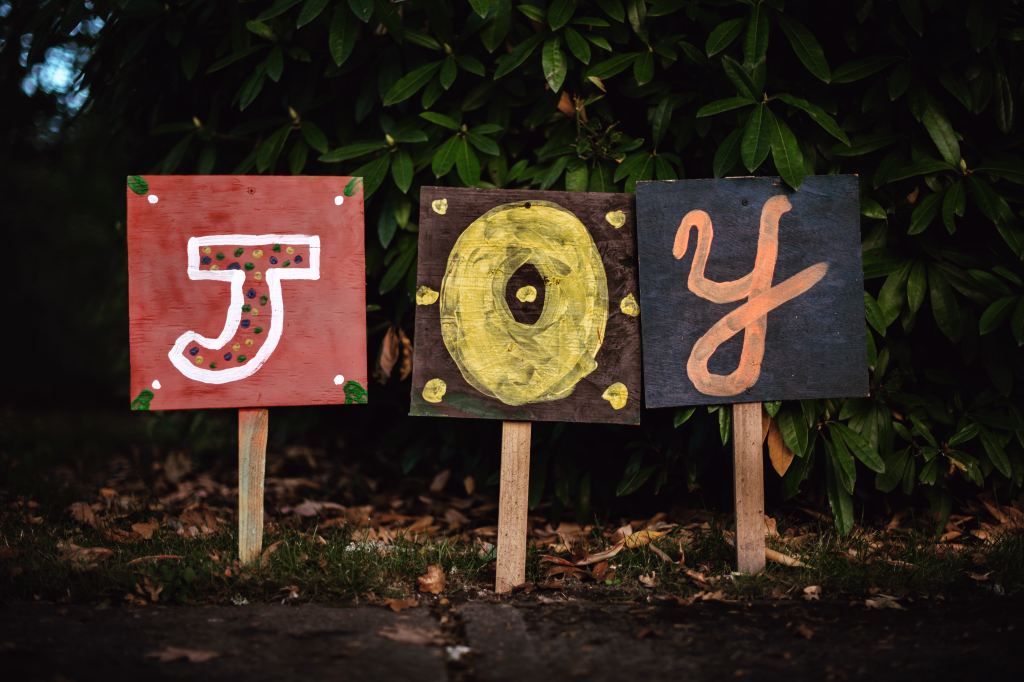
Your Homework: What to Set Aside

Thus the heavens and the earth were finished, and all their multitude. 2And on the seventh day God finished the work that he had done, and he rested on the seventh day from all the work that he had done. 3So God blessed the seventh day and hallowed it, because on it God rested from all the work that he had done in creation.

Genesis 2:1-3 (NRSV)

God was the first to intentionally set aside time. After six days of creating, the seventh day was set aside as a time to rest, disrupting the steady flow of one day spilling into the next.

Have you noticed how one day spills into the next? One week turns into the next one? The years run together.

God’s intentionality in the early moments of creation deserves our attention. God did not let the days run together, instead God set one of them aside. Just one.

It could not have been easy. God had plenty more work to do, and yet God set aside time to rest and then blessed that day. It is so wild that even God needed rest! But God did. To make rest happen, God was purposefully set some aside.

If you look ahead to the days and weeks on your calendar, can you set aside a time to rest? Can you schedule a two-hour block to visit with a friend and go for a walk by yourself? Can you find a day to hang out and relax with your favorite people? Is there a weekend you might block off for a mini-vacation?

Typically, these things do not magically happen, they require setting aside time before the days and weeks spill into one another.

Long before 21st century busyness, the writer of Ecclesiastes devoted most of a chapter to time. He argued there is enough time for what matters.

For everything there is a season, and a time for every matter under heaven.

Ecclesiastes 3:1 (NRSV)

The same is true for you. There is a time for every matter that matters in your life. So here is your homework: Set the time aside, like God’s seventh day, and let it be a blessing.

Photo by Malvestida on Unsplash

Not-So-New

It is the season of the new, yet no-so-new.

A new school year begins, surrounded by millions of school years that have come before and the millions that will come after.

New pencils and notebooks find new homes in desks previously occupied by other students, and someday occupied by other students.

The lockers frustrating this new class have seen those frustrated faces before, and not for the last time!

While a new school year may produce anxiety in kids, there are helpful reminders that what is new is also not-so-new. The new school year begins with the not-so-new presence of Christ. The new schedule unfolds with the not-so-new promise that Jesus hangs out in classrooms and hallways, on playgrounds and monkey bars, at lunch tables and lockers.

Jesus keeps us company with his not-so-new peace, not-so-new mercy, not-so-new tender love. With his not-so-newness, we begin a new school year, just as we did before, just as we will again. And we will see, not for the first or last time, that Jesus is already there.

Photo by moren hsu on Unsplash

Watch Out, Neighbor

In “Big Daddy,” the 1999 comedy with Adam Sandler, there is a scene in which Sandler’s 32-year-old character and a five-year-old boy he’s caring for go to a park. In classic 1990’s Sandler fashion, the two roll in laughter when they toss sticks on a path and watch the oncoming rollerbladers trip and fall.

Throughout the movie, Sandler’s character matures. Later, he and the boy go back to that very spot with a sign warning rollerbladers not to trip.

Everyone trips, even those of us too clumsy to put on rollerblades! We all trip and then furtively glance around hoping we’re the only one who noticed. Unless we’re under the age of four, tripping is embarrassing, and tiny band-aids tend not to make it all better.

We would rather not trip, and as Sandler’s matured character portrays, we would rather our neighbor not trip, either. Perhaps this movie line was inspired by the Apostle Paul, minus the rollerblades.

Let us therefore no longer pass judgment on one another, but resolve instead never to put a stumbling block or hindrance in the way of a brother or sister. 

Romans 14:13

Chapter 14 of Romans calls people who follow Jesus to warn others not to trip. Jesus followers are charged with the responsibility to pick up the sticks on the path and keep an eye out for oncoming neighbors who may be vulnerable to a fall.

Paul had tough words for people who had already begun to follow Christ and were getting in the way of new followers’ faith. The already-followers were creating stumbling blocks for those who were new to the Christian faith by instituting old laws related to food and drink. Jesus’ death had changed the importance of those laws. Instead of watching your neighbor trip, Paul offered:

Let us then pursue what makes for peace and for mutual upbringing.

Romans 14:19

In order for the Christian faith to grow, Christians had to stop getting in their own way with judgement and rules that had been overshadowed by Jesus’ death. The cross Christ died on had become the path on which all are welcome. The further down the path we go, the better we need to be at watching out for the followers around us; the more determined we must be to pursue peace and mutual upbringing.

I suspect this is an important reminder in a time when the Christian faith has failed to pick up the stumbling blocks and lovingly clear the path for our neighbor to follow Jesus. As Christians, we are charged with the enormous responsibility of meeting each and every neighbor with mercy and not judgement, to clear the path particularly for the neighbor whom you may not like – perhaps because it is the neighbor whom you do not understand.

Together, let us clear the path for the person who will enter the church for the first time in a long time, or who will log onto worship because it feels safer to join from home. Christians, let us pursue peace and mutually build one another up. Is someone missing from worship? What stumbling blocks have gotten in the way of that person’s faith? You might be the very one to clear the path and invite them back.

Everyone trips. By the love of Jesus Christ through you, everyone has a way back up.

Photo by Alexas_Fotos on Unsplash

Who Are Your People?

Prior to becoming a parent, I pictured our home as a welcoming space for our kids and their friends. I hoped ours would be the home where tweens and teens would hang out, eat snacks, and watch movies. I imagined I would stock the pantry with their favorite foods and every friend could grab their favorite soda and chips and feel at home in our home. The bottomless cookie jar would be a way for me to connect with my kids’ people – the peers who would surely influence my kids in many ways. 

Across the generations, every person needs people. Ideally, your people are a support while at the same time they challenge you to grow. Your people have a deeper understanding of you than others. They know you are a normal human being who falls apart, yet they do not judge you for it. Your people encourage you to think beyond yourself and they forgive you when you fail. 

I imagined encouraging my kids to gather with their people in our home because I know the importance of hanging out with your people. Your people shape who you become. 

One of my favorite definitions of church comes from a guy my age. He felt most at home one Sunday at worship when he looked around at the guys in his Bible Study group, also at worship with their families. These are my people, and this is my church, he explained. 

You, fragile human being, need people to call your own. People to reflect Christ’s mercy and remind you not to hustle through life or push through alone. Having people to call your own takes time. 

You, busy human being, need people to bring out your best. People with whom you can be comfortable in your own skin – the most honest and hopeful version of yourself. 

With a new season of fall and an academic year around the corner, how would you like to hang out with your people? How about… 

  • Create a standing, weekly appointment for morning or evening drinks. 
  • Take turns hosting in your homes each month. The host provides the space and the guests provide all the food. 
  • Go to church together and then donuts. No planning needed. 

It turns out, my kids do not gather often with their people at our house. I hope not, but there is a slim possibility that kids might be scared off by the superintendent and pastor in residence! Which is ironic. Our particular jobs can be lonely at times and my husband and I understand the importance of gathering with our people. We are most grateful for the people whom we call our people.  

I hope that we are modeling for my three favorite kids the importance of hanging out with trusted friends. Your people shape your life and you must be choosey and encourage your kids to do the same. Although my kids’ people are not often at our house, the cookie jar is almost always full, just in case. 

Photo by Gaelle Marcel on Unsplash 

You Need More Than a To-Do List

“For everything there is a season, a time for every matter under heaven.”

Ecclesiastes 3:1

This verse has been rattling around in my brain. It is the upcoming Scripture reading in the Narrative Lectionary, one of the readings for a wedding tomorrow, and the passage I shared earlier this week for chapel at the nursing homes.

Yet even without those connections, Ecclesiastes’ words hit home in August. For many of us, this is the season of school shopping and new schedules. The matters under heaven have to do with bus stops and books, phones and friends.

Last night I had a mini-date with my planner, where the seasons and matters under heaven are written.* Paging through the symmetry of the days and weeks, you can see Ecclesiastes is right – there is a box on the page for every matter. The seasons fit onto pages. We move from one box to the next, one page at a time. There is a sense of peace in seeing what comes next, at least according to what we’ve written out.

In Ecclesiastes, chapter three, he writes out the seasons as though he is constructing a planner page. There is a time for this and a time for that – a box, a page, a space. But his planner pages have no registration deadlines or meetings or medical appointments or early release days! In chapter three, there is more of a to-be list than a to-do list. The boxes and pages of the planner Ecclesiastes is writing contain instructions for how to be human.

  • One day you, you will laugh and be filled with joy. On another day, there will be time to weep.
  • In this space of time, be sure to keep silent, and over on this day speak up.
  • Take time here to dance, and take time there to mourn.

Does your planner remind you simply to be, amid all there is to do? In the busyness of the days and weeks, do you remember to laugh, weep, stay silent or speak? Is there a day for dancing and a day for mourning?

And whose planner is it, I might add? We can look at the days to come with only our best guesses. It is less of a planner and more of a guesser…which still won’t stop me from having a mini-date with my planner because it’s one of my favorite things.

But like most aspects of our lives, if we hold on too tightly, we miss what is important. With our eyes glued to the planner (or the guesser) we cannot also see what will make us laugh, or weep, or leave us speechless or emboldened to speak. The planner will tell you what to do, and Ecclesiastes will remind you to be.

If the upcoming months feel full, how might you remind your future self to take a moment in the mayhem to keep company with Jesus?

*If you are a person who nerds out over planning and planners enough to have a date with your planner, you might also find wisdom from Sarah Hart-Unger.

Photo by 2H Media on Unsplash

Is Like, Is Like, Is Like

Jesus spends most of Matthew chapter 13 speaking in parables. A parable is a teaching tool in which a quick story is told with exaggeration and familiar illustrations. Jesus uses parables to help others imagine “the kingdom of heaven.”

The kingdom of heaven is not an address in the land of Eternity. Instead, it is the in-breaking of Christ in our lives. The kingdom of heaven is God’s dream for people and creation; it is like everyday life with some heaven-dust sprinkled on top.

Several times, Jesus uses these two words: “is like.” The kingdom of heaven “is like” a mustard seed, “is like” yeast hidden in flour, “is like” a farmer who sowed good seed. In each of these parables, the kingdom of heaven starts small and ends big.

Here is another one Jesus may have forgotten. The kingdom of heaven is like friendship. Perhaps this parable was missed when the gospel accounts were finally written down. Around a campfire with his own friends, I imagine Jesus saying the kingdom of heaven is like friendship. One small act of compassion grows into immense joy. The generous work of listening becomes the wide embrace of being known. The hidden hopes tucked away like yeast in the flour move out of hiding and it is God’s wide embrace known among our neighbors.

The kingdom of heaven is like friendship – the few and far between kind. The kind in which one friend speaks truth, occasionally a hard-to-swallow truth, the sort of truth that helps the other friend mature. The kingdom of heaven is like friendship, offering the caring questions that clarify the other friend’s thinking while being gentle with the conveyor belt of feelings.

The kingdom of heaven is like friendship, as one person caring for another sprinkles heaven-dust upon an ordinary world and there is joy. Two people evolve into two more well-defined, true selves, who respond to Christ’s joy by whole-heartedly caring for their neighbors with joy.

Photo Credit: Tim Mossholder on Unsplash

The Land of Distraction

Of all the conveniences my phone offers, chief among them is distraction. Distraction conveniently distracts me. As long as my phone is within reach, I have a free ticket to Distraction, land of the unnecessary.

I can check the weather on my phone instead of stepping outside to feel the breeze and smell the fresh with a touch of Canadian haze North Dakota air.

I can scroll through my friend’s Facebook page instead of meeting up for coffee to fully show up in that person’s life.

I can clean off the counter that will most certainly re-clutter within the hour instead of looking into the faces of the beloved people responsible for the re-clutter.

There are a hundred distractions in a moment. Each distraction whisks you into the land of the unnecessary. You can scroll your way through an entire day only to miss the handful of delights. There are a handful of delights in a day, yours for the taking.

In the conversation or prayer, a view of the sky, the smell of a ripe peach, or the feel of someone’s hand in yours, the delights are uncomplicated. And there are enough of them to savor, to proclaim, and to wait attentively for the next one.

Photo by Pixabay: https://www.pexels.com/photo/facebook-application-icon-147413/

Nature, Nurture, and Option #3

Perhaps it is because my son turned 16. Or because I am on vacation and have room for wonder. Or maybe it’s because my mom saw me write my age on a document and kindly reminded me, “45? You’re getting old!”

Whatever the reason, I am struck by the wonder of watching a kid transform into an adult. It reminds me of something I often heard when I was pregnant. Women would say some version of, “There is just no way to be ready for how amazing it really is.” That’s how this phase of life feels, too. More amazing than I could be ready for.

Don’t get me wrong. Right now I’m on vacation, which means I can see a wider view of our lives. We aren’t rushing out the door in the morning; I’m not pleading with anyone to do their chores. Offering you extra time and energy, vacation can help adjust your vision to see your actual life: the joys, challenges, hopes and dreams. In the thick of everyday life, we cannot see the wonder, only the chores left undone.

But right now I’m seeing it. The way the people who belong to God and are entrusted to my husband and I are growing up. I can see the nature of my husband and I in them. I can see our nurturing, far from perfect, but our best efforts. I can also see option #3, the Spirit, accompanying and caring for them now and always.

A person need not be a parent to be part of the holy work of shaping young humans. It is also the work of attentive neighbors, loving aunts and all the encouraging people the Spirit sets in their lives. I heard it once from who knows where, that a good goal is for a kid to have seven caring adults in his or her life. Seven adults who are there when needed, who remember the birthdays and other big days, who do not judge, only affirm, who are part of the Spirit’s nurturing work of growing beloved grown-ups.

Who are the teenagers you know? Are you one of the seven for some lucky teenager? Today, how might you be a part of the Spirit’s work of accompanying growing grown-ups as they move from kid to adult? How might you remind that as so much changes in their lives, the steady love of Jesus does not.

Photo Credit: https://unsplash.com/photos/TyQ-0lPp6e4

A Key Word to Parenting Teenagers (when they wake up)

When parenting littles, there is constant urging to go to sleep. At bedtime and at naptime, we beg the tiny creatures to please, please, please close little their eyes. In the morning when they get up at 5:30 am because the sun is awake, we plead with them to go back to bed as strategically as one might negotiate with a terrorist.

The opposite is true when parenting teenagers. There is constant urging to get out of bed! When they sleep through breakfast and yet require a late afternoon nap, we beg them to open their eyes and stay out of bed.

Parents are required to respond differently to their kids’ sleep patterns as littles morph into teenagers. Respond is a key word in the work of parenting, which you already know because I bolded the word, twice! Responding means something different than reacting. To respond is to have thought through how you want to proceed.

Here are teenage examples:

  • She sleeps until 2:00 pm even though you asked her to start doing her chores by 10:00 am. Do you yell, imply that she is lazy, and assign her more chores? Or, do you wait until you are both calm and talk through a better sleep schedule, explaining how rest makes us better humans? (true story)
  • He rushes through chores to get to gaming and forgets for most of the day to take his clothes out of the dryer so that other people in the house might also do their laundry. Do you take away the controller and imply gaming is a waste of time and why can’t you do your chore from start to finish? Or, do you dump the clean and dried laundry on his head while he’s gaming, gently reminding him he’s forgotten to finish his chore. (true story)

The humbling work of parenting all ages, and in this case teenagers, assures you that you are never in control. It is the one guarantee. You cannot will a teenager to be who you want them to be. Your teen will never be exactly who you thought he or she might be. In the wild and privileged work of shaping people’s lives, you can only be in control of your own response.

When you are tired or hungry, your response to your kiddo will be abysmal. Don’t respond quickly in those times. Take a breath and explain to your beloved teenager that you need a moment to consider how you want to respond. This might be one of the best life lessons you pass along. Most of our responses to another human being (unless 911 is the obvious response) need not be so quick.

I wonder if a mistake we make as parents is to assume we should know how to respond. I’ve been a parent for 17 years. Shouldn’t I know by now what to do? Um, no. I don’t. That’s why I often need time to consider my response. This is one way to love the people entrusted to you: don’t hurry. You waited nine long months to meet these creatures who at first refused to sleep and later refused to get their butts out of bed. Each day they remind you how little control you actually have, and some days you get to dump clean laundry on them.

Photo by Rehina Sultanova on Unsplash

Please Don’t Make Me Polka

Summer is a delight. Where I live, one delightful summer day comes at the cost of a month of cold and terrible winter days. One month of winter opens the door to the taste of blueberries and the smell of fresh-cut grass. All the snow-shoveling makes a path toward cookie dough ice cream on a steamy day and the sounds of the crowd as you spectate your favorite summer sport. Summer is a delight.

Although, I find summer to be something of a bad dancing partner. It lacks rhythm. It is a fun time, for sure. But there is no “settling into summer.” The days are unpredictable when we spend so much time outside. Summer activities pepper the days but also change places on the calendar when weather does not permit. You planned for an outdoor gathering with friends? Or a day on the lake? Or a trip to the zoo? Or the last day of seeding a crop? Now you must listen to fall back into the rhythm because your dancing partner has none.

It took nearly 10 years for me to realize why dancing with my husband is slightly frustrating. He loves loves loves to dance so much more than I do. He especially loves to polka, which is popular in southwest N.D. I hold on tight as he bounces up and down. If you watch him on the dance floor you just hope he doesn’t swing an elbow into someone’s eye.

I could never seem to find the same beat to the music. He would move and I would be constantly catching up. But then I realized he was just moving, but not necessarily to the rhythm of the music! I won’t say he has no rhythm…so let’s move on!

The daily rhythm of summer can be slightly frustrating. We shape our days by the weather in this season more than any other.

  • How do you let go of what you thought would happen today, and how do you fall into a new rhythm?
  • Or even bigger, how do you let go of what you thought might happen in this season of your life and fall into a new rhythm?

Like dancing with my husband, life may not move to your rhythm. You fall behind until the rhythm catches you. Can you notice in your life where you might be waiting for the rhythm to catch you? Where in your life do you feel some discomfort, or even frustration? Can the Spirit be your dancing partner for now?

When you feel behind the rhythm, are you trying to take the lead that isn’t yours to take? Perhaps the Spirit has you in an elbow-swinging polka and all you can do is hold on tight! And the seasons come and go, temperatures rise and fall, snow-shoveling makes away for summer sports, and the rhythm catches you. And that is when you realize you weren’t the one holding on tight. You were the one being held.

Photo by Ardian Lumi on Unsplash