One of our most grievous faults in this season of the world is our generalizations of people. Any sentence containing “those people” kind of words should alert us (as speaker or hearer) to our own sin (mine included) of separating humans based on our own criterion.
“Those Black Lives Matter people”, “those Pro-Trump people”, “those racist people”, “those white supremacists”, “those families”, “those non-maskers”, “those liberals”. (If this does not sound familiar to you, perhaps you substitute the word “people” with more colorful words.
This language can be a drug that distracts us from reality. “Those people” language falsely assures us that we belong to a people that is not “those people”. “My people” are not “those people”, the drug convinces you to believe.
In the past few years with the help of courageous authors, the lines of separation I had previously drawn between people has blurred. I’m not sure sure anymore which people are those people.
I think it started with “Between the World and Me”, by Ta Nehisi-Coates. This book is a letter written from father to son. It is famous and wise and heart-breaking. But I think the book that most profoundly created the blur was written by a woman named Patricia Williams, entitled “Rabbit: A Memoir”. (The Kindle edition is $2.99 for a limited time.) I listened to the audiobook. If you like audiobooks, it is a good read. The author grew up in Atlanta and experienced what is a normal life for many black and brown girls. While I was playing baseball with neighborhood boys at 12, she was having her first baby and her mom was too drugged up to care. Her story is devastating, but because she is a comedian, she has you laughing to crying before you even knew what happened. I could wish I hadn’t read it and didn’t know how awful life is at this very moment for so many young girls, but I did read and now I know. And the line is blurry.
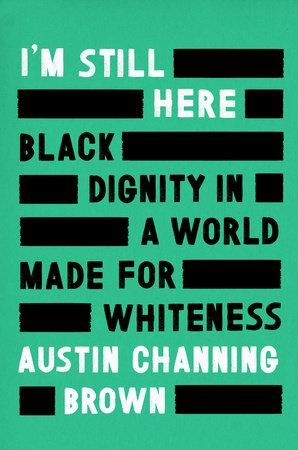
The book I most recently read and loved that persists in wiping out the line of separation between people is Austin Channing Brown’s “I’m Still Here: Black Dignity in a World Made for Whiteness”. Channing Brown is about the same age as me, also raising kids, married, working, trying to make sense of the world and each person’s place in it and how we will leave it for future generations. My story is nothing like hers, which is why I need to hear what she has to say. I need a teacher who speaks from the edges into the comfortable middle where I live.
It is the Christian way to be wary of comfort. If we are comfortable with life, relationships, work, our faith practices, our prayers, watch out. Look around. Chances are, whenever we are comfortable, we begin to understand our own way of life as the ideal way of life. Our home, our routine, our neighborhood, our beliefs all become the right way to do things.
When I picture Jesus in the first century, I imagine him walking around edges, not in the middle. The edges of town, the edges of relationships, the edges of the synagogue and proclaiming the best news to the people outside the edges, on the other side of the blurry line (God willing the line remains blurry as opposed to rock solid).
Among Channing Brown’s wise words are these words about comfort: “Our only chance at dismantling racial injustice is being more curious about its origins than we are worried about our comfort. It’s not a comfortable conversation for any of us. It is risky and messy. It is haunting work to recall the sins of our past. But is this not the work we have been called to anyway? Is this not the work of the Holy Spirit to illuminate truth and inspire transformation? It’s haunting. But it’s also holy.”
The world is not yet as it should be. We have not arrived, but are always on the way. We know this to be true as long as the grievous phrase “those people” remains in our vocabulary.

 Lisa Lewton